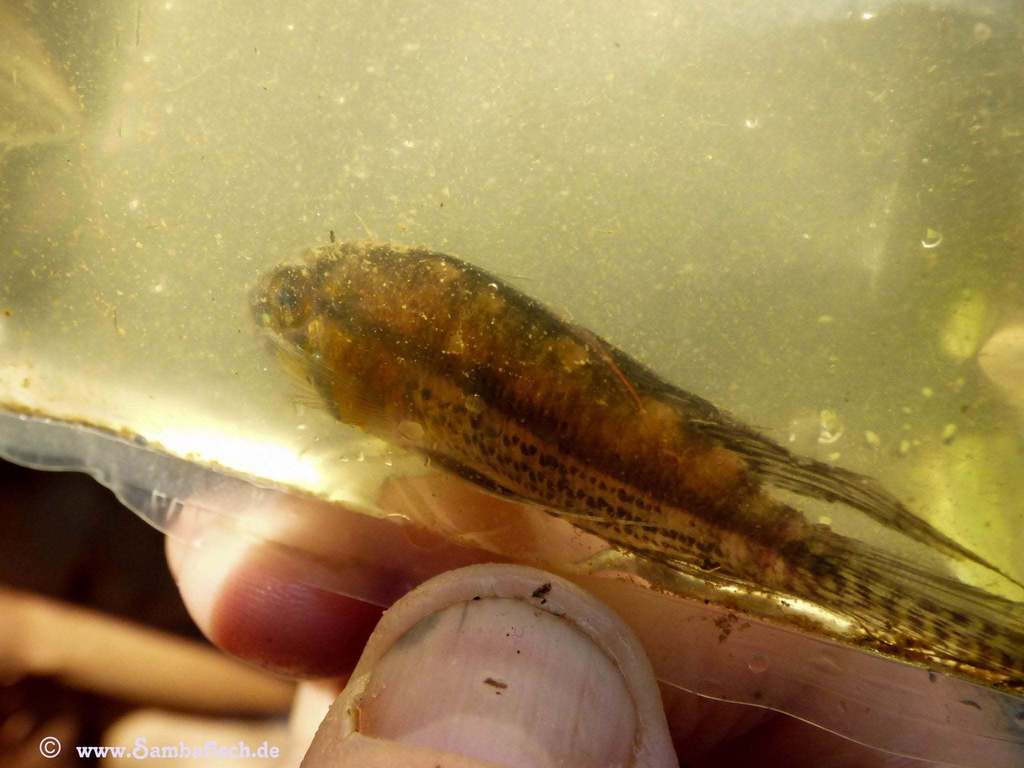
The Cockatoo dwarf cichlid (Apistogramma cacatuoides) is a freshwater fish of the family Cichlidae that grows up to 5 cm.
Description
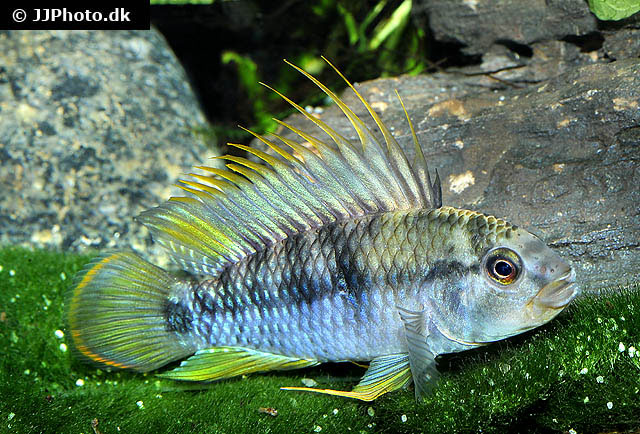
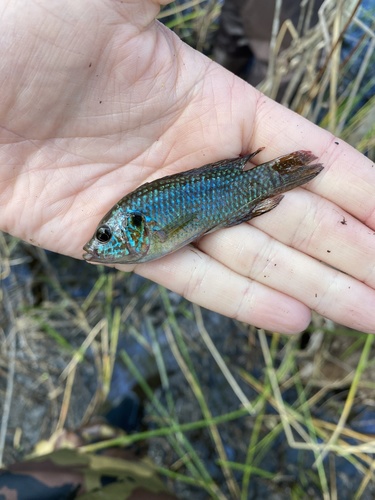
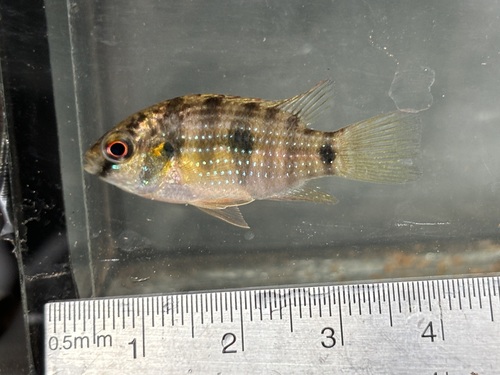
The Cockatoo dwarf cichlid is a dwarf cichlid from fresh water of South America. The species grows to about 5 cm; males have strongly elongate, raised front dorsal-fin rays reminiscent of a cockatoo crest, often with red and black accents. As a bottom-dweller it lives in soft, often blackwater streams among leaf litter and roots and eats small invertebrates and larvae. It is a cave or substrate brooder in which the female guards the brood. The fish is harmless to humans and is popular in the aquarium trade.
Frequently asked questions
How do you recognise the Cockatoo dwarf cichlid?
The Cockatoo dwarf cichlid has a torpedo-shaped body and is mainly yellow-gold.
Where does the Cockatoo dwarf cichlid live?
The Cockatoo dwarf cichlid lives in fresh water and is mostly found around mixed bottom.
How big does the Cockatoo dwarf cichlid get?
The Cockatoo dwarf cichlid grows to a maximum of about 5 cm.
Is the Cockatoo dwarf cichlid dangerous to humans?
No, the Cockatoo dwarf cichlid is harmless to humans.
Download Fin's Fish Guide
Identify fish in seconds, log your catches and dives. Join the TestFlight beta.
All data
Identification
Appearance
Habitat & distribution
Behaviour & biology
For anglers
Safety
Status & sources
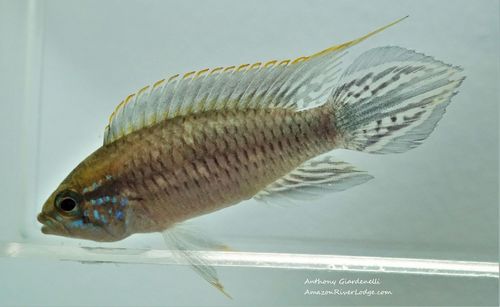
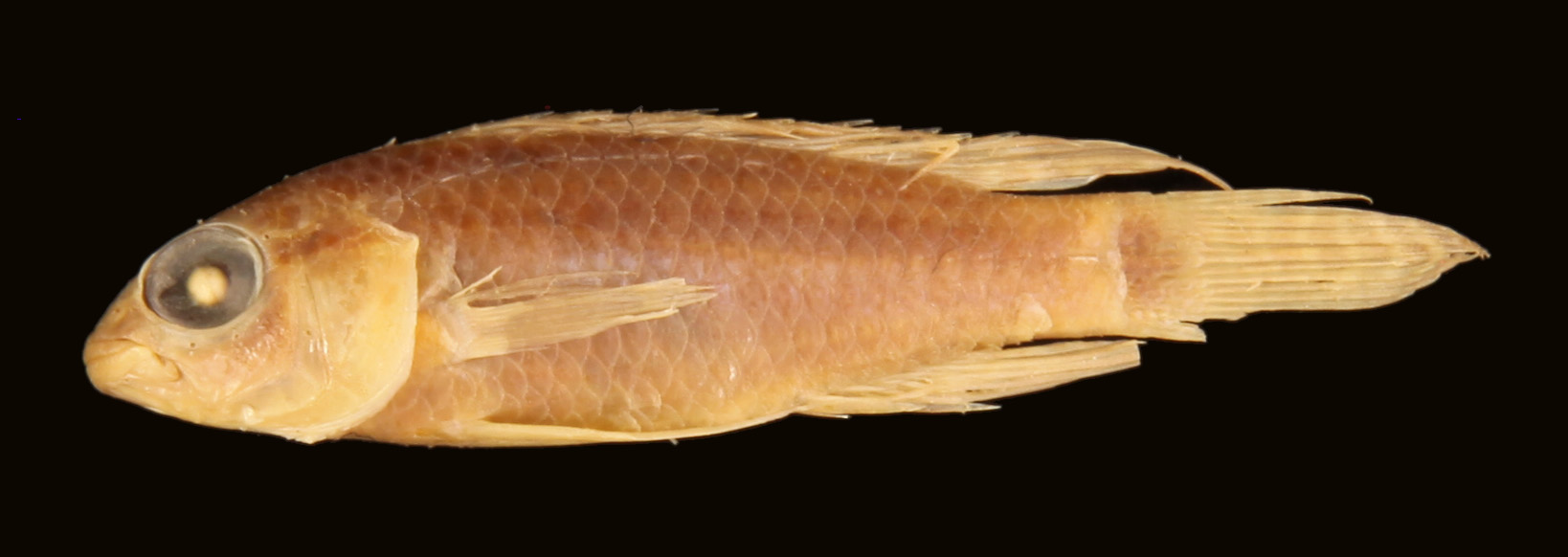
Same genus Apistogramma
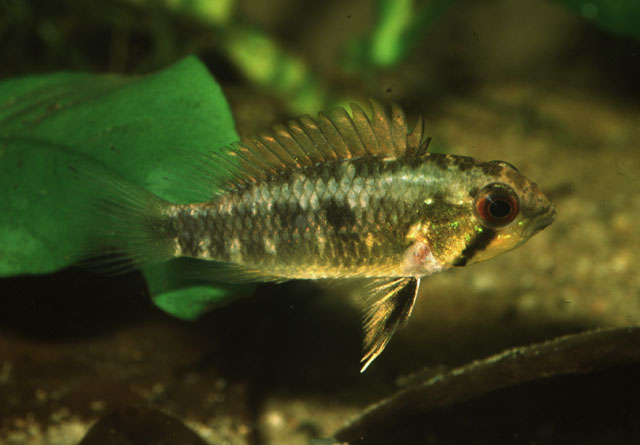
More from the family Cichlidae



Download Fin's Fish Guide
Identify fish in seconds, log your catches and dives. Join the TestFlight beta.