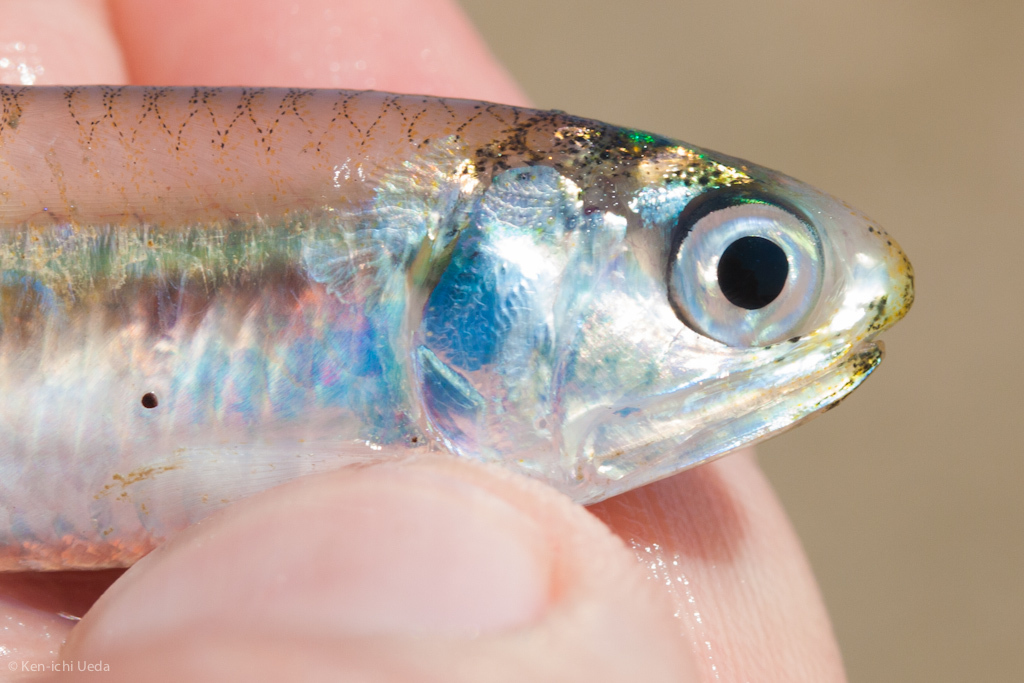
The Bay anchovy (Anchoa mitchilli) is a fish that lives in both fresh and salt water of the family Engraulidae that grows up to 10 cm.
Description
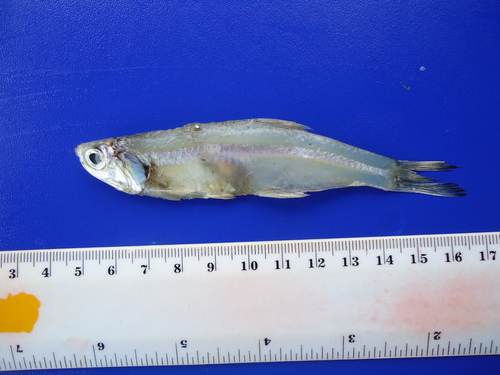
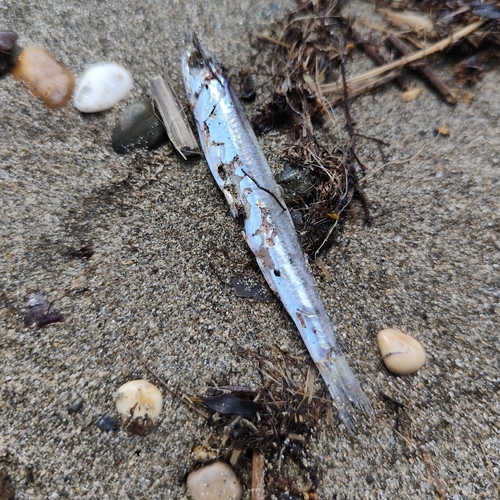
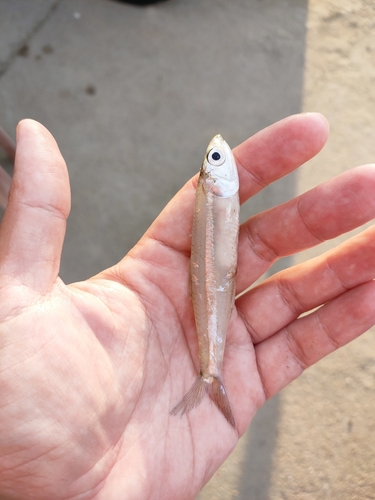
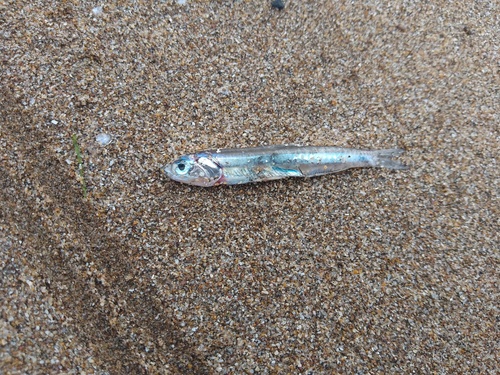
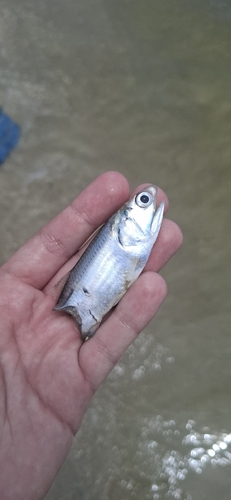
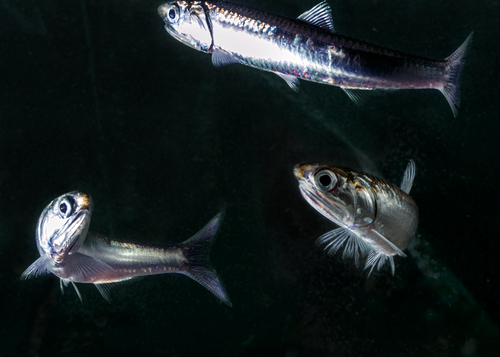
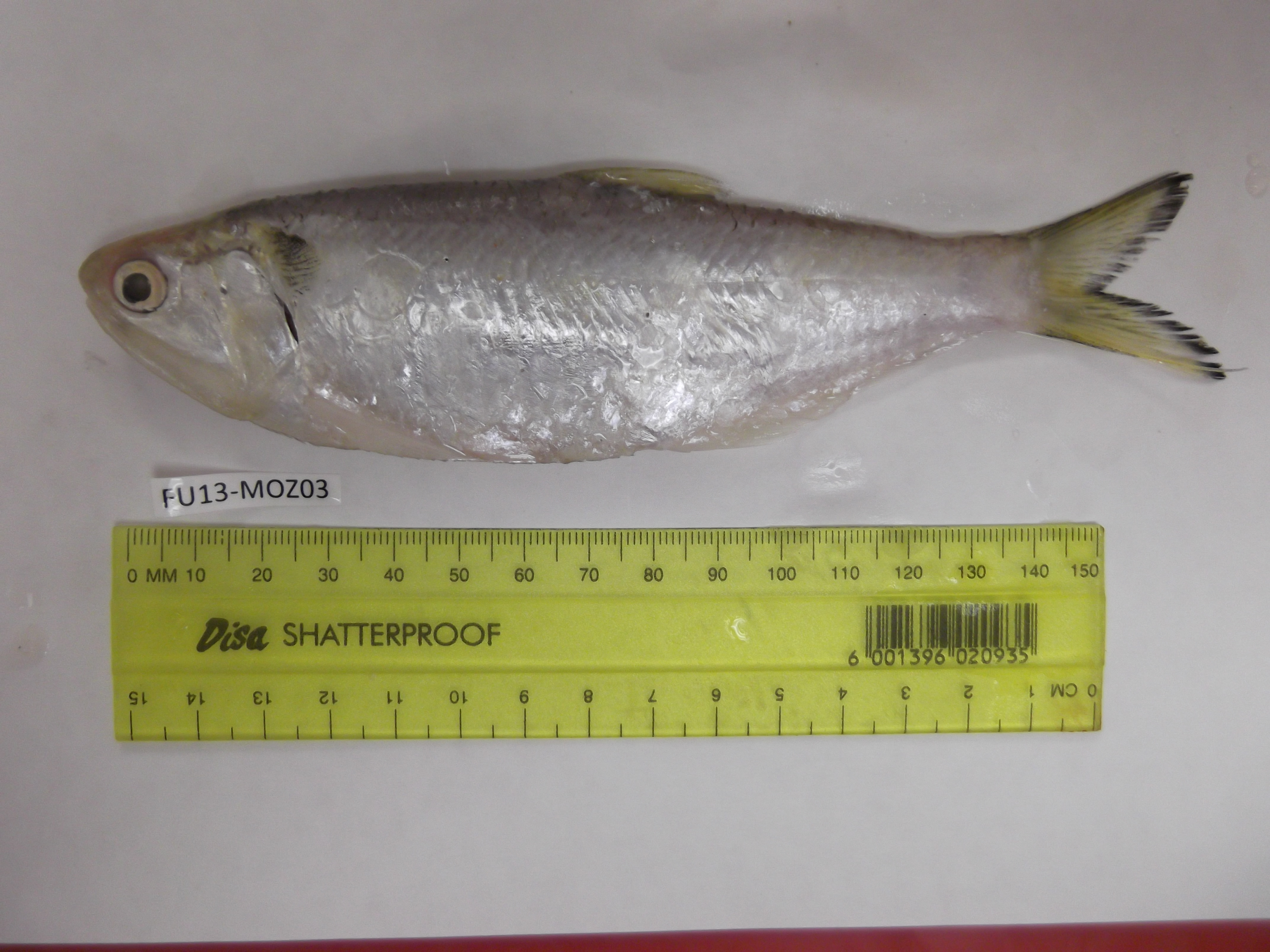
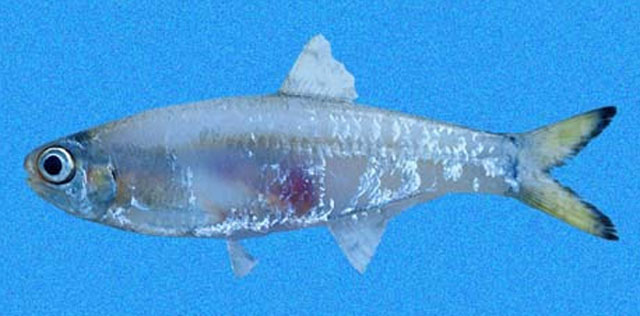
The bay anchovy is a small, translucent silvery anchovy of the family Engraulidae (anchovies) reaching about 10 cm. The slender body has a large mouth under a projecting snout and a shiny silvery lengthwise band along the flank. The species forms enormous schools in estuaries, bays and coastal water along the east coast of North America and the Gulf of Mexico and tolerates strongly varying salinities. It filters and hunts zooplankton, such as small crustaceans, larvae and fish eggs. Through its tremendous numbers the bay anchovy is one of the most abundant fish of the North American east coast and an indispensable prey for countless larger fish and seabirds.
Frequently asked questions
How do you recognise the Bay anchovy?
The Bay anchovy has an elongate, eel-like body, is mainly silver-grey and shows a horizontal stripes pattern.
Where does the Bay anchovy live?
The Bay anchovy lives in both fresh and salt water and is mostly found around open water.
How big does the Bay anchovy get?
The Bay anchovy grows to a maximum of about 10 cm. On average the species is around 6 cm.
Is the Bay anchovy dangerous to humans?
No, the Bay anchovy is harmless to humans.
Is the Bay anchovy edible?
The Bay anchovy is rarely eaten.
Download Fin's Fish Guide
Identify fish in seconds, log your catches and dives. Join the TestFlight beta.
All data
Identification
Appearance
Habitat & distribution
Behaviour & biology
For anglers
Safety
Status & sources
Same genus Anchoa


More from the family Engraulidae

Download Fin's Fish Guide
Identify fish in seconds, log your catches and dives. Join the TestFlight beta.