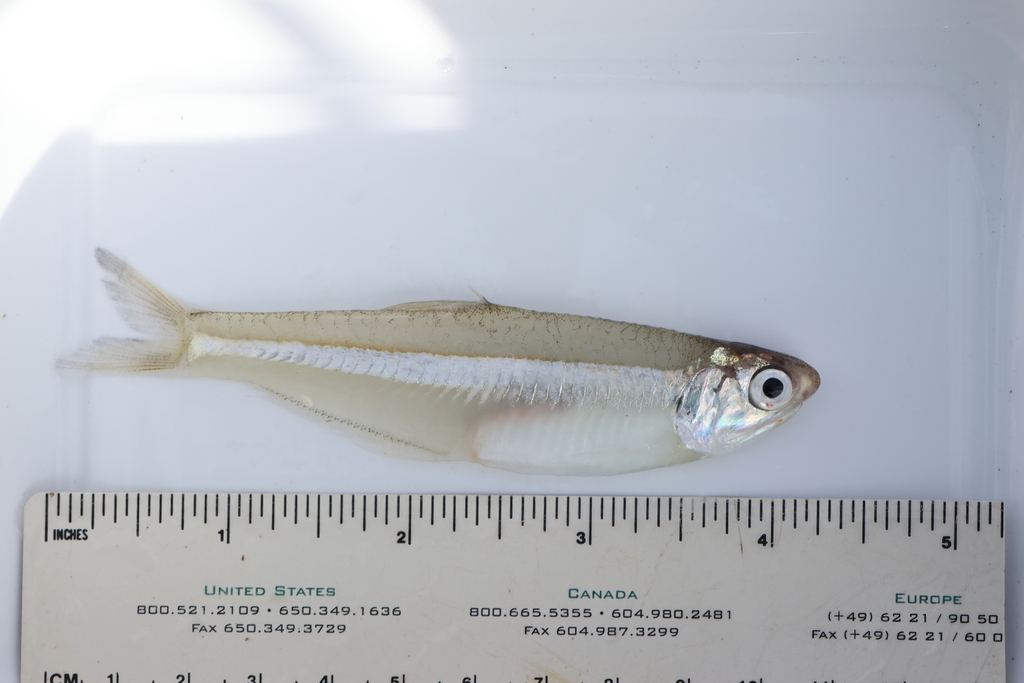
The Anchovy (Anchoa compressa) is a brackish-water fish of the family Engraulidae that grows up to 13 cm.
Description
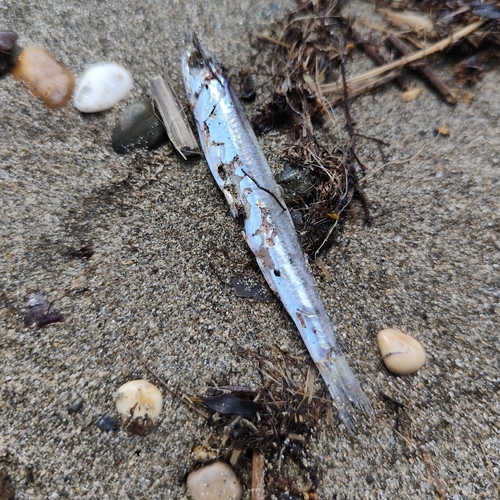
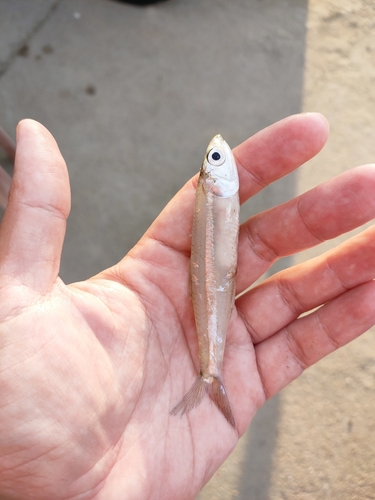
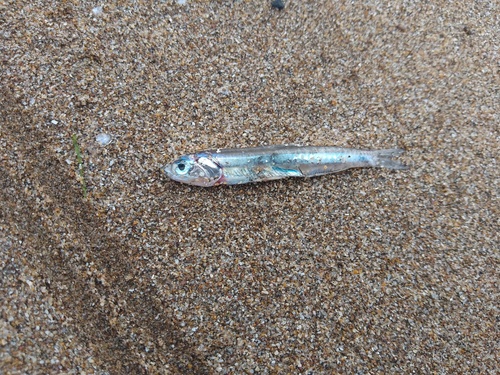
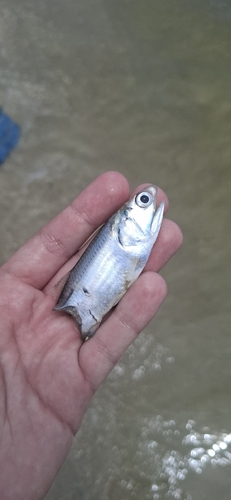
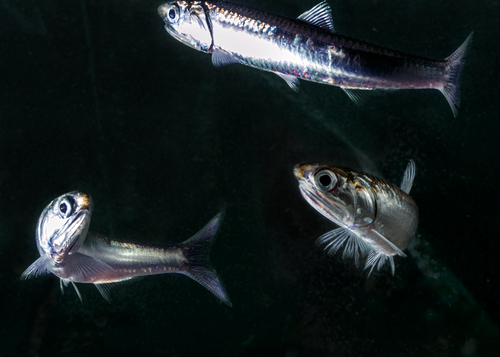
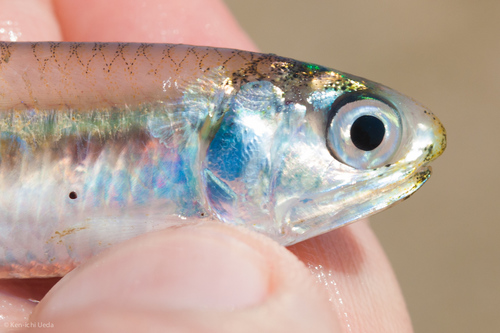
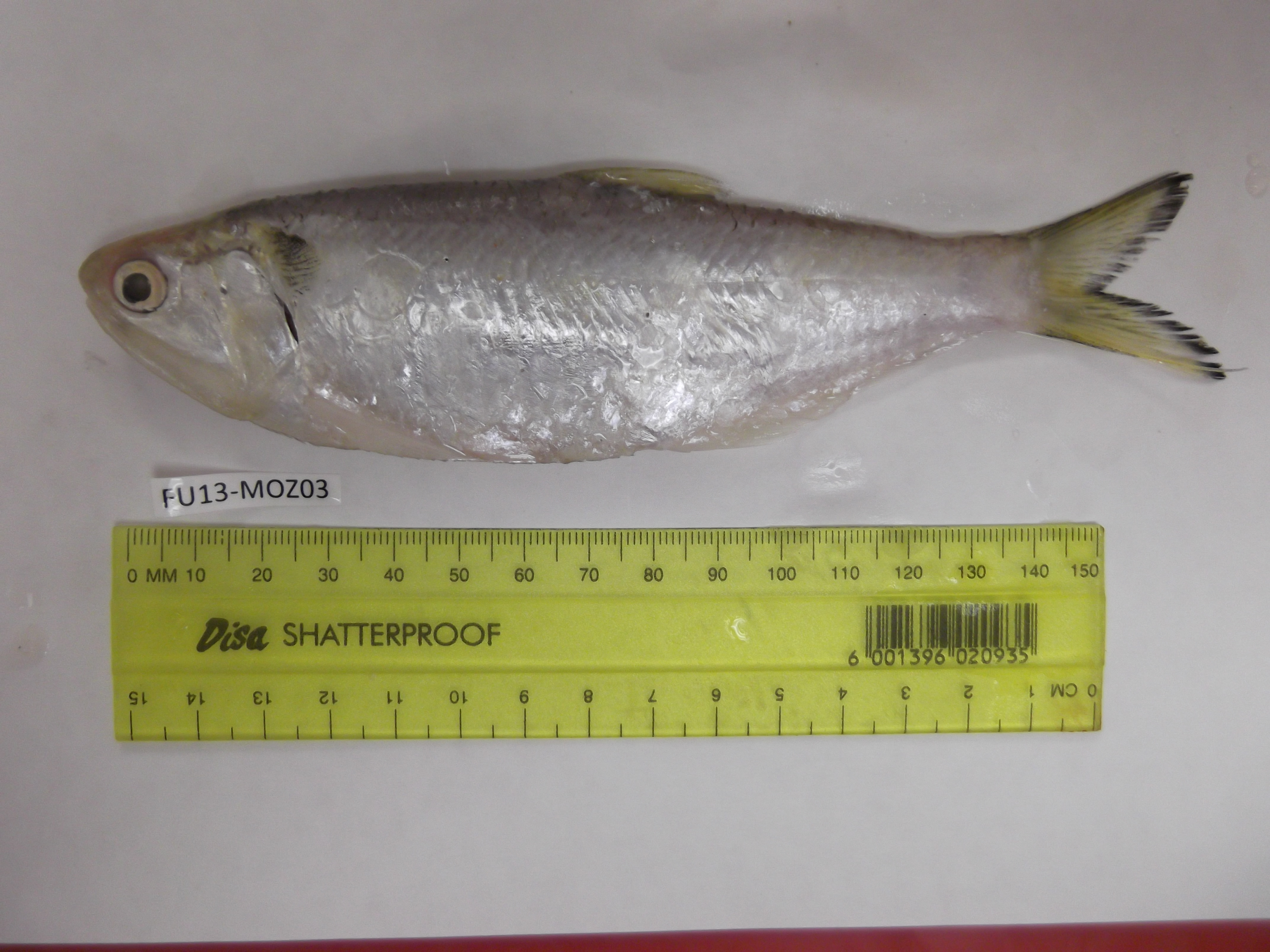
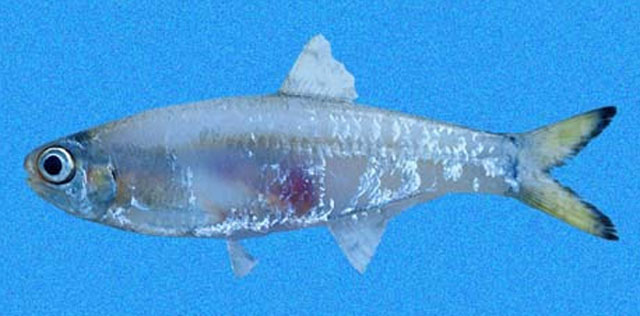
The deepbody anchovy is an anchovy (Engraulidae) from the eastern Pacific, from California to Baja California. The species reaches about 13 cm and, unlike most anchovies, has a relatively deep, strongly compressed, silvery body with an overhanging snout. It is a schooling fish most common in bays and inlets, where it is locally very abundant. It filters plankton from the water but can also selectively pick prey. The eggs and larvae are planktonic. The species is an important link in the coastal food web and is used as bait.
Frequently asked questions
How do you recognise the Anchovy?
The Anchovy has an elongate, eel-like body, is mainly silver-grey and shows a horizontal stripes pattern.
Where does the Anchovy live?
The Anchovy lives in brackish water and is mostly found around open water.
How big does the Anchovy get?
The Anchovy grows to a maximum of about 13 cm. On average the species is around 10 cm.
Is the Anchovy dangerous to humans?
No, the Anchovy is harmless to humans.
Is the Anchovy edible?
The Anchovy is rarely eaten.
Download Fin's Fish Guide
Identify fish in seconds, log your catches and dives. Join the TestFlight beta.
All data
Identification
Appearance
Habitat & distribution
Behaviour & biology
For anglers
Safety
Status & sources
Same genus Anchoa
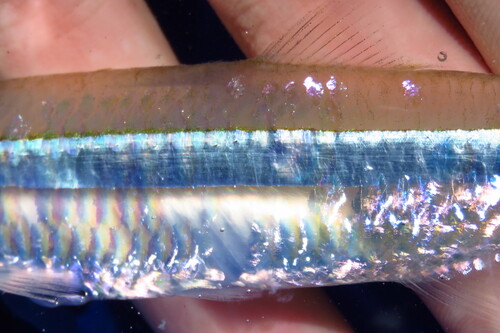

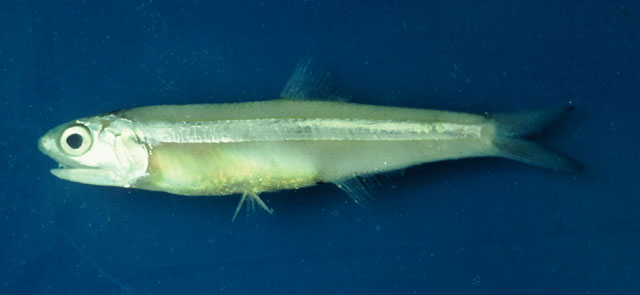
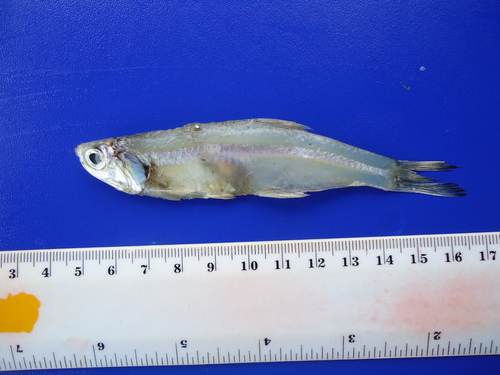

More from the family Engraulidae
Download Fin's Fish Guide
Identify fish in seconds, log your catches and dives. Join the TestFlight beta.