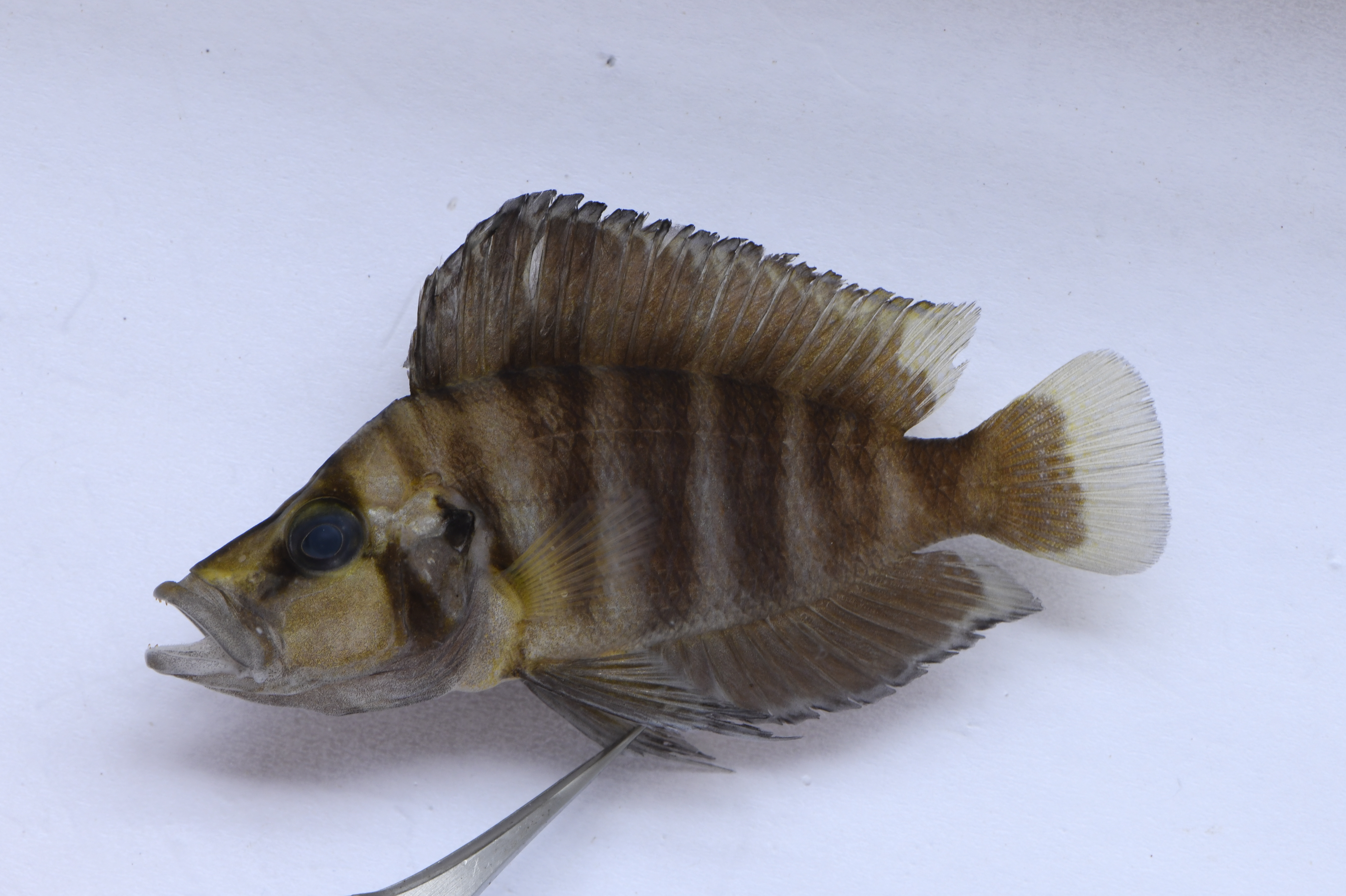
The Compressed cichlid (Altolamprologus compressiceps) is a freshwater fish of the family Cichlidae that grows up to 12 cm.
Description
Altolamprologus compressiceps is a remarkable cichlid endemic to Lake Tanganyika in East Africa. The species has a strongly laterally compressed, deep body with thick scales and reaches about 12 cm. Thanks to its narrow, compressed shape it can penetrate deep into rock crevices to seize prey there. As an ambush predator it hunts shrimps and fish eggs and fry, often those of other cichlids. It is a substrate spawner that lays and guards its eggs in a cavity or crevice; empty snail shells are also used. Owing to its peculiar build and behaviour the species is very popular with cichlid keepers.
Frequently asked questions
How do you recognise the Compressed cichlid?
The Compressed cichlid has a torpedo-shaped body, is mainly yellow-gold and shows a spots pattern.
Where does the Compressed cichlid live?
The Compressed cichlid lives in fresh water and is mostly found around mixed bottom.
How big does the Compressed cichlid get?
The Compressed cichlid grows to a maximum of about 12 cm.
Is the Compressed cichlid dangerous to humans?
No, the Compressed cichlid is harmless to humans.
Is the Compressed cichlid edible?
The Compressed cichlid is rarely eaten.
Download Fin's Fish Guide
Identify fish in seconds, log your catches and dives. Join the TestFlight beta.
All data
Identification
Appearance
Habitat & distribution
Behaviour & biology
For anglers
Safety
Status & sources
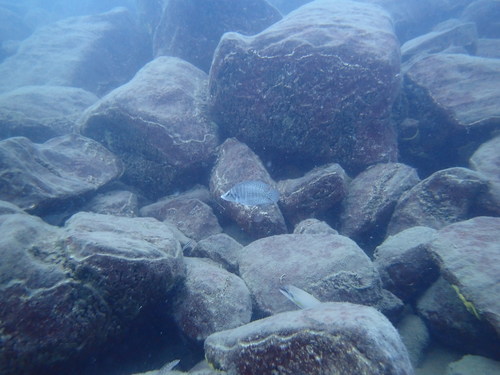
Same genus Altolamprologus
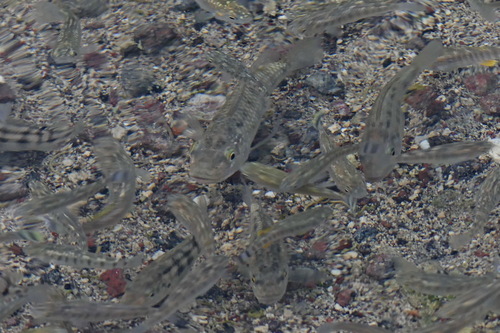
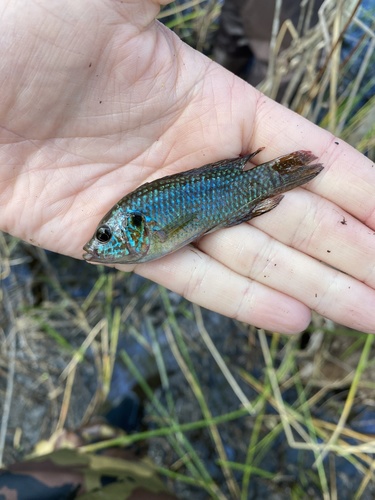
More from the family Cichlidae



Download Fin's Fish Guide
Identify fish in seconds, log your catches and dives. Join the TestFlight beta.