Home · Carangidae · Yellowtail amberjack
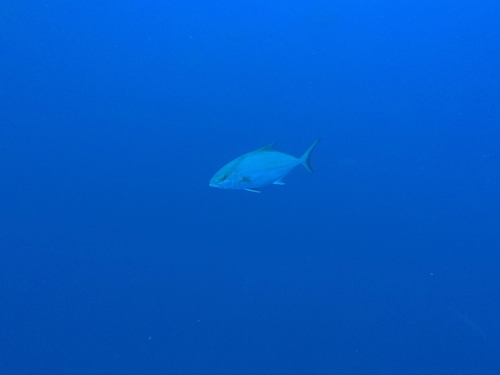
Yellowtail amberjack (Seriola lalandi) — Carangidae

Yellowtail amberjack

Seriola lalandi
Family: Carangidae
LC · Least Concern

The Yellowtail amberjack (Seriola lalandi) is a saltwater fish of the family Carangidae that grows up to 250 cm.

Length
250 cm
Water
Saltwater
Depth
3.0–825.0 m
Diet
Carnivore
Behaviour
Schooling
Activity
Diurnal
Body shape
Torpedo-shaped
Substrate
Open water
Danger
Harmless
Range
Temperate and subtropical seas in the southern hemisphere (around Australia, New Zealand, South Africa and South America) and the northern Pacific, pelagic near reefs, wrecks and rocky coasts.
Edibility
Highly prized

Want the complete picture on the Yellowtail amberjack?

Get the app

Description

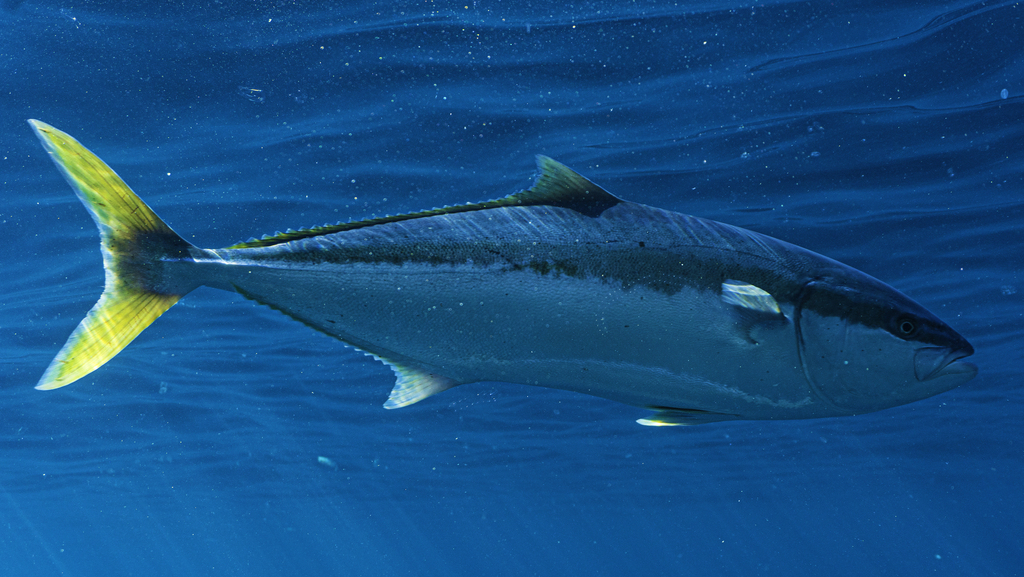
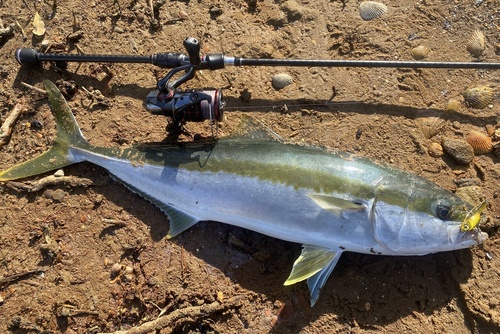
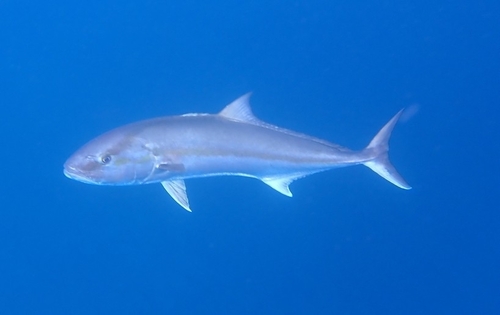
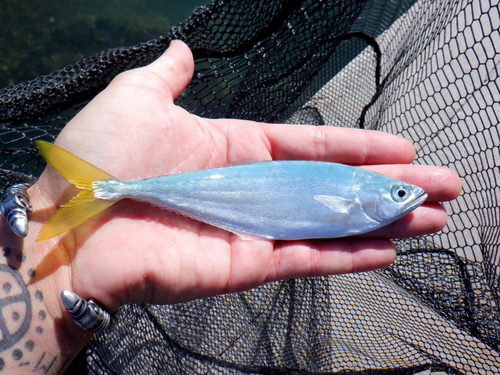
The yellowtail amberjack or kingfish is a large, powerful jack of the family Carangidae reaching about 2.5 metres. The streamlined, silvery-blue body bears a yellow lengthwise stripe along the flank and ends in a yellow, deeply crescent-shaped tail. The species lives pelagically in temperate and subtropical seas of the southern hemisphere and the northern Pacific, often around reefs, wrecks and rocky shores. In fast schools it hunts schooling fish, squid and crustaceans. The yellowtail amberjack is one of the most prized sport fish in the world, fighting hard on the line; it is also farmed and regarded as an excellent food fish (kingfish/hamachi).

Frequently asked questions

How do you recognise the Yellowtail amberjack?

The Yellowtail amberjack has a torpedo-shaped body, is mainly silver-grey and shows a horizontal stripes pattern. Large, powerful jack with a yellow longitudinal stripe and a yellow, deeply crescent-shaped tail; a fast open-water hunter.

Where does the Yellowtail amberjack live?

The Yellowtail amberjack lives in the sea (marine waters) and is mostly found around open water. Temperate and subtropical seas in the southern hemisphere (around Australia, New Zealand, South Africa and South America) and the northern Pacific, pelagic near reefs, wrecks and rocky coasts.

How big does the Yellowtail amberjack get?

The Yellowtail amberjack grows to a maximum of about 250 cm. On average the species is around 80 cm.

Is the Yellowtail amberjack dangerous to humans?

No, the Yellowtail amberjack is harmless to humans. None required: this species is harmless to humans.

Is the Yellowtail amberjack edible?

Yes, the Yellowtail amberjack is a highly prized food fish.

More photos

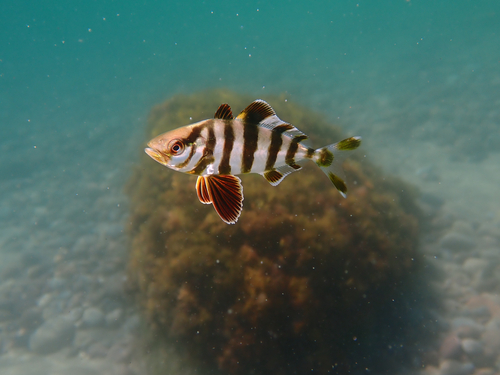
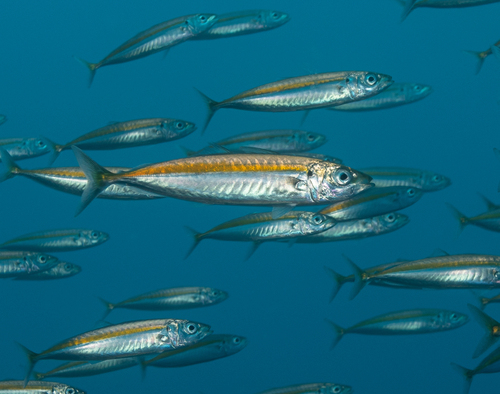
Yellowtail amberjack (Seriola lalandi) — Carangidae — 2
Wikimedia Commons — Nholtzha (CC BY-SA 3.0)
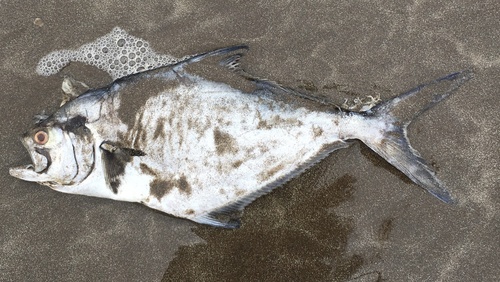
Yellowtail amberjack (Seriola lalandi) — Carangidae — 3
iNaturalist ((c) slenderp51, some rights reserved (CC BY-NC))
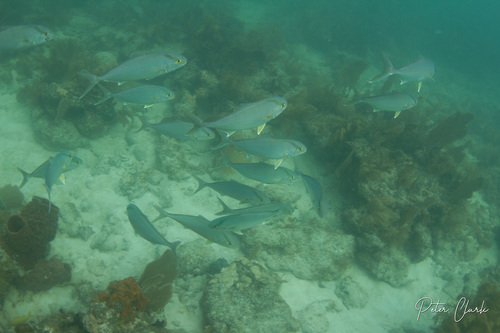
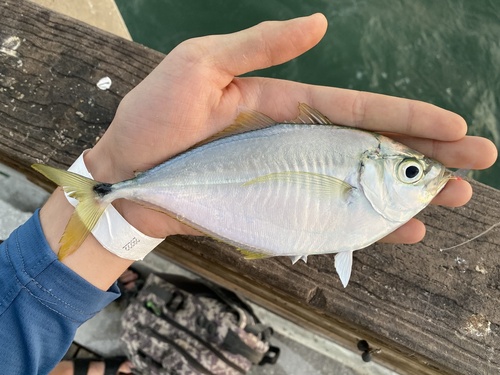
Yellowtail amberjack (Seriola lalandi) — Carangidae — 4
iNaturalist ((c) divercraig, some rights reserved (CC BY-NC))
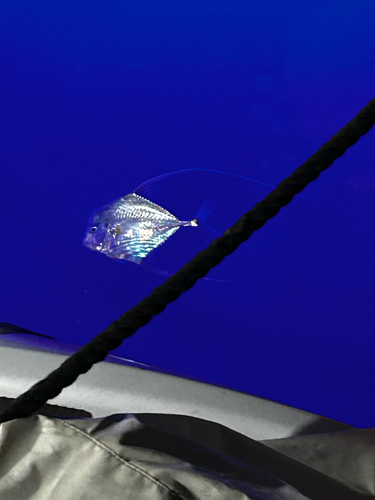
Yellowtail amberjack (Seriola lalandi) — Carangidae — 5
iNaturalist ((c) John Eichler, some rights reserved (CC BY-NC))
Fin

Want the complete picture on the Yellowtail amberjack?

Point your camera at the fish and Fin names the species in seconds. Free, and the Yellowtail amberjack is one of 12,519 species in the app.

Get the app →

All data

Identification

English name
Yellowtail amberjack verified
Scientific name
Seriola lalandi
Family
Carangidae
Other names
Albacore; Amber fish; Amber jack; Amberjack; Yellowtail kingfish; Yellowtail; California yellowtail; Giant yellowtail; Kingfish; Bandit; Cape yellowtail; Great ambejack verified

Appearance

Size class
Extra large verified
Max length (cm)
250.0 verified
Average length (cm)
80.0 verified
Body shape
Torpedo-shaped verified
Dominant colour
Silver / grey sourced
Pattern
Horizontal stripes sourced
Tail shape
Crescent (lunate) inferred
Mouth position
Terminal inferred
Lips
Thick / fleshy inferred
Barbels
No verified
Dorsal fins
Two separate sourced
Dorsal spines
Yes verified

Habitat & distribution

Water type
Saltwater verified
Substrate
Open water verified
Min depth (m)
3.0 verified
Max depth (m)
825.0 verified
Natural range
Temperate and subtropical seas in the southern hemisphere (around Australia, New Zealand, South Africa and South America) and the northern Pacific, pelagic near reefs, wrecks and rocky coasts. verified
Origin
Native verified

Behaviour & biology

Diet
Carnivore verified
Diet (detail)
Schooling fishes, squid and crustaceans sourced
Social behaviour
Schooling verified
Territorial
No verified
Activity
Diurnal inferred
Reproduction
Separate sexes verified
Sexual dimorphism
No verified
levensduur_max_jaar
12.0 verified
Seasonality
Forms fast shoals around reefs and wrecks; spawns in the warm months with floating eggs. sourced
Special features
Large, powerful jack with a yellow longitudinal stripe and a yellow, deeply crescent-shaped tail; a fast open-water hunter. sourced

For anglers

Edibility
Highly prized verified
Fishing method
Casting or trolling with lures or a baitfish near reefs and wrecks; a powerful, highly sought-after sport fish (kingfish) sourced
Regulations source
FishBase ↗ inferred

Safety

Danger to humans
Harmless verified
First aid
None required: this species is harmless to humans. sourced

Status & sources

Sources
FishBase via GBIF (DwC-A), CC-BY-NC 4.0

Same genus Seriola

More from the family Carangidae
Fin

Want the complete picture on the Yellowtail amberjack?

Point your camera at the fish and Fin names the species in seconds. Free, and the Yellowtail amberjack is one of 12,519 species in the app.

Get the app →
Is this the Yellowtail amberjack? Get the app