Home · Gadidae · Whiting
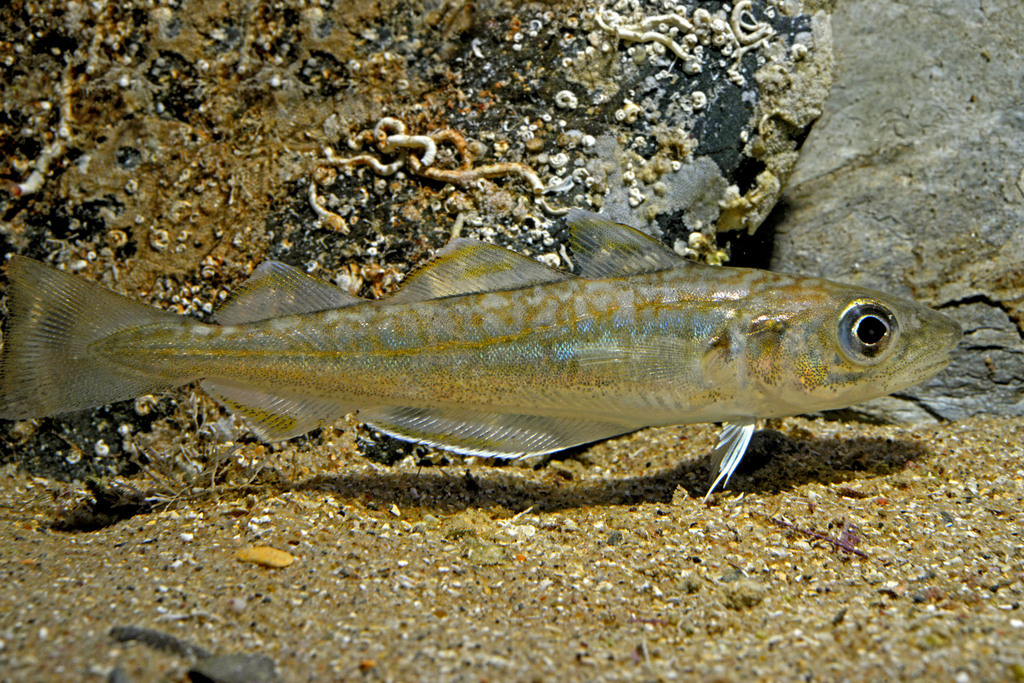
Whiting (Merlangius merlangus) — Gadidae

Whiting

Merlangius merlangus
Family: Gadidae
LC · Least Concern

The Whiting (Merlangius merlangus) is a brackish-water fish of the family Gadidae that grows up to 92 cm.

Length
91.5 cm
Water
Brackish
Depth
10.0–200.0 m
Diet
Carnivore
Behaviour
Schooling
Activity
Diurnal
Body shape
Torpedo-shaped
Substrate
Mixed bottom
Danger
Harmless
Range
Northeast Atlantic from Iceland to Portugal, including the North Sea, the Baltic Sea and the western Mediterranean Sea.
Edibility
Commonly eaten

Want the complete picture on the Whiting?

Get the app

Description

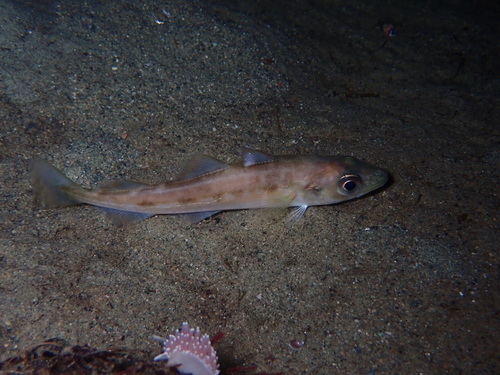
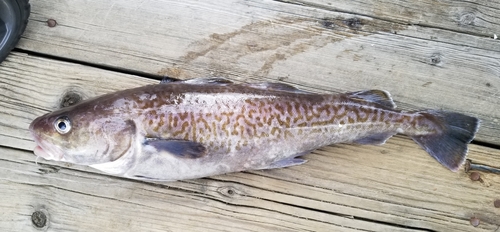
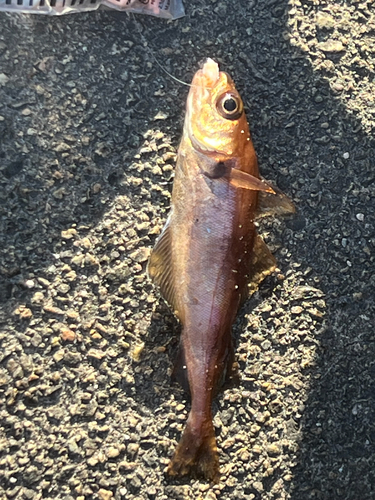
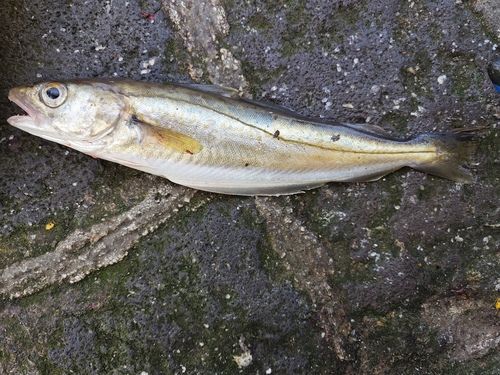
The whiting is a slender cod relative of the family Gadidae reaching about 90 cm but usually around 30 cm. The streamlined body is silvery-grey with a yellow-brown back and carries, typical of the cod family, three dorsal fins and two anal fins; usually there is a dark spot at the pectoral-fin base and the chin barbel is virtually absent. The species lives in schools over mixed bottoms of the north-eastern Atlantic, the North Sea and the Baltic, from shallow water to about 200 metres. It is an active hunter of shrimps, small fish and worms. Young whiting often shelter among the tentacles of jellyfish. The whiting is a much-caught food fish with soft, lean flesh.

Frequently asked questions

How do you recognise the Whiting?

The Whiting has a torpedo-shaped body, is mainly silver-grey and shows a plain pattern. Slender cod-like fish with three dorsal fins and two anal fins, usually a dark blotch at the pectoral fin base and hardly any or no chin barbel.

Where does the Whiting live?

The Whiting lives in brackish water and is mostly found around mixed bottom. Northeast Atlantic from Iceland to Portugal, including the North Sea, the Baltic Sea and the western Mediterranean Sea.

How big does the Whiting get?

The Whiting grows to a maximum of about 92 cm. On average the species is around 24 cm.

Is the Whiting dangerous to humans?

No, the Whiting is harmless to humans. None required: this species is harmless to humans.

Is the Whiting edible?

Yes, the Whiting is commonly eaten.

More photos
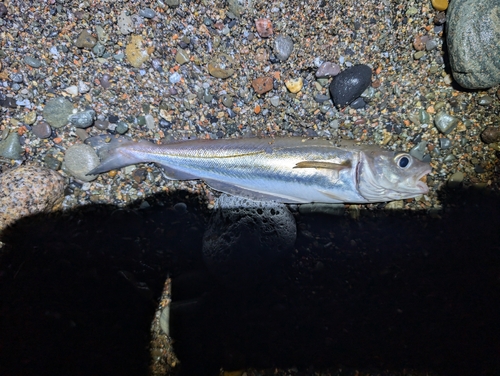
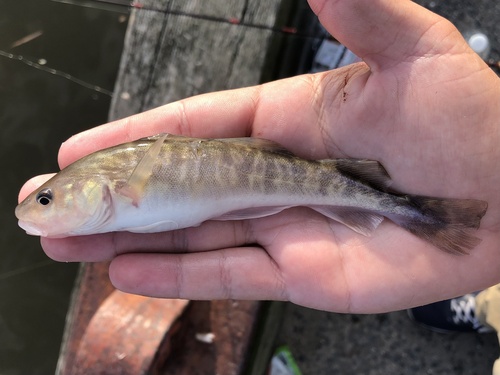
Whiting (Merlangius merlangus) — Gadidae — 2
iNaturalist ((c) ivanlee, some rights reserved (CC BY-NC))
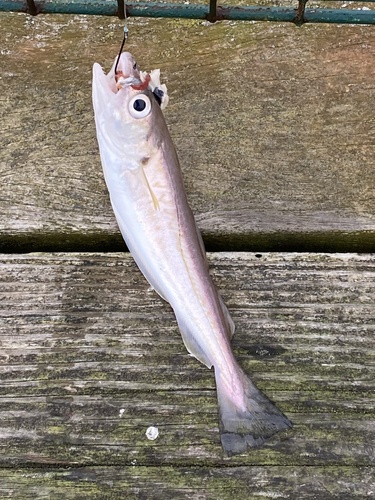
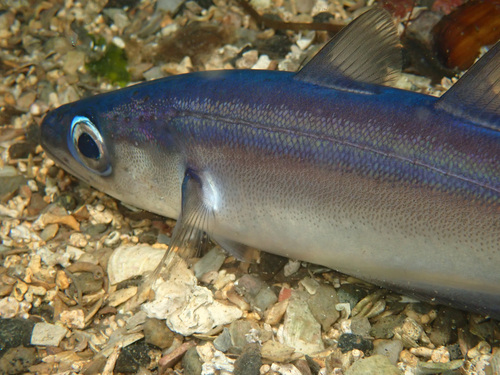
Whiting (Merlangius merlangus) — Gadidae — 3
scaryportdenny (http://creativecommons.org/licenses/by-nc/4.0/) via GBIF
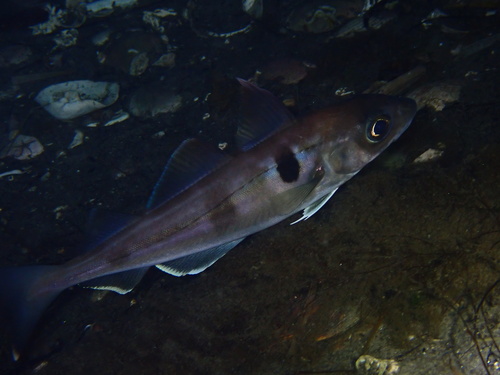
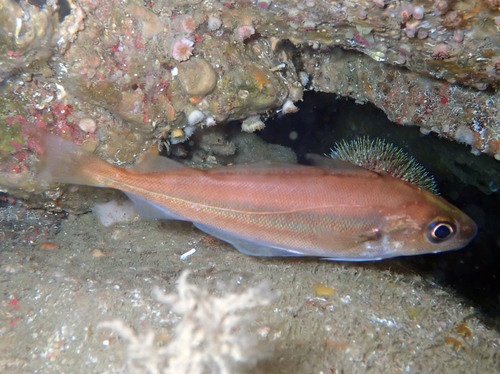
Whiting (Merlangius merlangus) — Gadidae — 4
iNaturalist ((c) rmjb, some rights reserved (CC BY))

Easily confused with

These species look like the Whiting and live in the same waters.
Fin

Want the complete picture on the Whiting?

Point your camera at the fish and Fin names the species in seconds. Free, and the Whiting is one of 12,519 species in the app.

Get the app →

All data

Identification

English name
Whiting verified
Scientific name
Merlangius merlangus
Family
Gadidae
Other names
European whiting; North Sea whiting; Spelding; Whiting; English whiting verified

Appearance

Size class
Extra large verified
Max length (cm)
91.5 verified
Average length (cm)
23.5 verified
Body shape
Torpedo-shaped sourced
Dominant colour
Silver / grey sourced
Pattern
Plain sourced
Tail shape
Straight inferred
Mouth position
Terminal inferred
Lips
Thin inferred
Barbels
No verified
Dorsal fins
Three separate sourced
Dorsal spines
No verified

Habitat & distribution

Water type
Brackish sourced
Substrate
Mixed bottom sourced
Min depth (m)
10.0 verified
Max depth (m)
200.0 verified
Natural range
Northeast Atlantic from Iceland to Portugal, including the North Sea, the Baltic Sea and the western Mediterranean Sea. verified
Origin
Native verified

Behaviour & biology

Diet
Carnivore verified
Diet (detail)
Shrimps, small fishes and worms sourced
Social behaviour
Schooling verified
Territorial
No verified
Activity
Diurnal inferred
Reproduction
Separate sexes verified
Sexual dimorphism
No verified
levensduur_max_jaar
20.0 verified
Seasonality
Spawns in spring in open water with floating eggs; young whiting often shelter among the tentacles of jellyfish. sourced
Special features
Slender cod-like fish with three dorsal fins and two anal fins, usually a dark blotch at the pectoral fin base and hardly any or no chin barbel. sourced

For anglers

Edibility
Commonly eaten verified
Fishing method
Bottom fishing from a boat or pier with fish or lugworm pieces sourced
Regulations source
FishBase ↗ inferred

Safety

Danger to humans
Harmless sourced
First aid
None required: this species is harmless to humans. sourced

Status & sources

Sources
FishBase via GBIF (DwC-A), CC-BY-NC 4.0

More from the family Gadidae

Fin

Want the complete picture on the Whiting?

Point your camera at the fish and Fin names the species in seconds. Free, and the Whiting is one of 12,519 species in the app.

Get the app →
Is this the Whiting? Get the app