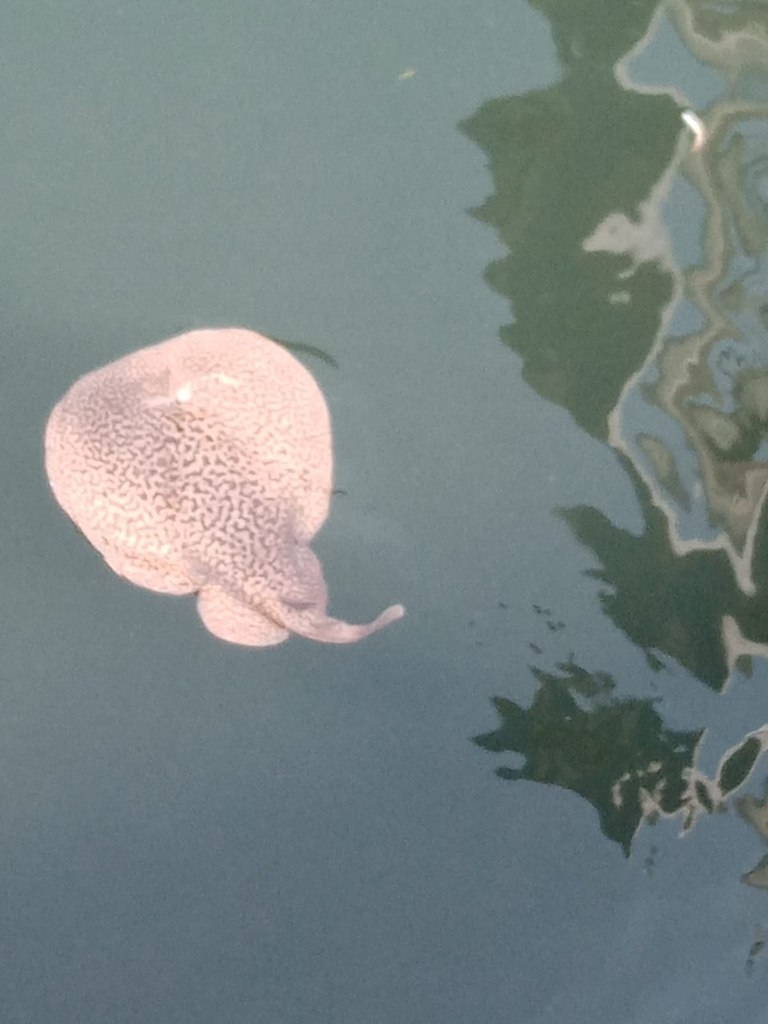
The Common crampfish (Torpedo marmorata) is a brackish-water fish of the family Torpedinidae that grows up to 100 cm.
Description
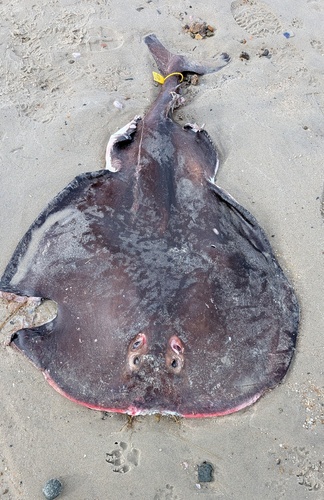
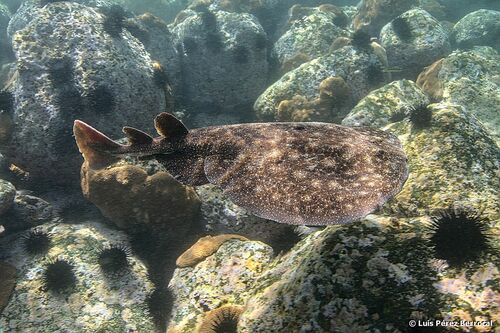
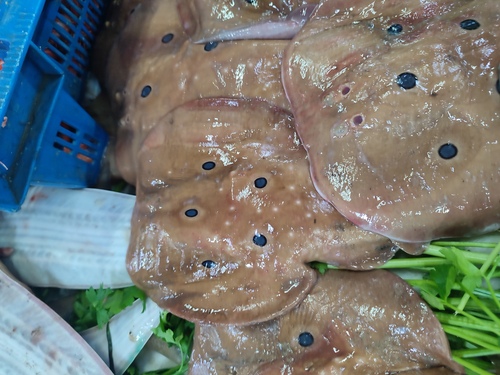
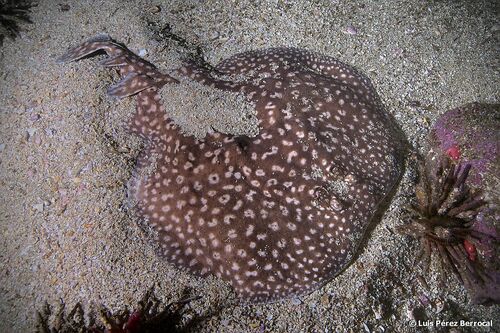
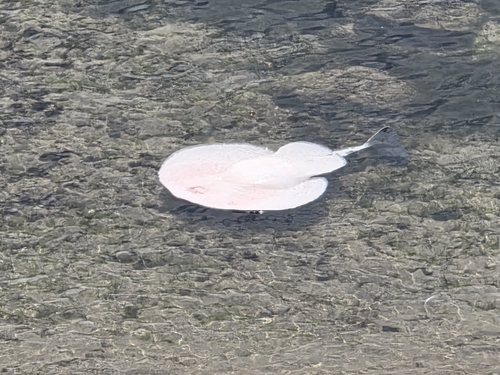
The marbled electric ray is a rounded electric ray of the family Torpedinidae reaching about 100 cm. The upper side carries a marbled brown pattern that camouflages it perfectly on the bottom, while the underside is white. Within the 'wings' lie powerful electric organs the ray uses to stun prey and defend itself with a shock of up to about 200 volts. The species lives over seagrass beds, rocky reefs and soft bottoms of the eastern Atlantic and Mediterranean, usually to 70 m, ambushing small fish and crustaceans at night. Fishing pressure has left it assessed as Vulnerable; it should never be handled.
Frequently asked questions
How do you recognise the Common crampfish?
The Common crampfish has an irregular in shape body, is mainly brown and shows a marbled pattern.
Where does the Common crampfish live?
The Common crampfish lives in brackish water and is mostly found around stony or rocky ground.
How big does the Common crampfish get?
The Common crampfish grows to a maximum of about 100 cm. On average the species is around 60 cm.
Is the Common crampfish dangerous to humans?
The Common crampfish can cause injury; handle it with care.
Is the Common crampfish edible?
The Common crampfish is rarely eaten.
Download Fin's Fish Guide
Identify fish in seconds, log your catches and dives. Join the TestFlight beta.
All data
Identification
Appearance
Habitat & distribution
Behaviour & biology
For anglers
Safety
Status & sources
Same genus Torpedo
More from the family Torpedinidae

Download Fin's Fish Guide
Identify fish in seconds, log your catches and dives. Join the TestFlight beta.