Home · Acanthuridae · Squarenose unicornfish
Squarenose unicornfish (Naso mcdadei) — Acanthuridae

Squarenose unicornfish

Naso mcdadei
Family: Acanthuridae

The Squarenose unicornfish (Naso mcdadei) is a saltwater fish of the family Acanthuridae that grows up to 75 cm.

Length
75 cm
Water
Saltwater
Depth
5.0–65.0 m
Diet
Herbivore
Activity
Diurnal
Body shape
Torpedo-shaped
Substrate
Stone or rock
Danger
Can cause injury
Range
Asia: Australia, Indonesia, Maldives, Mauritius, Philippines, South Africa and others

Want the complete picture on the Squarenose unicornfish?

Get the app

Description

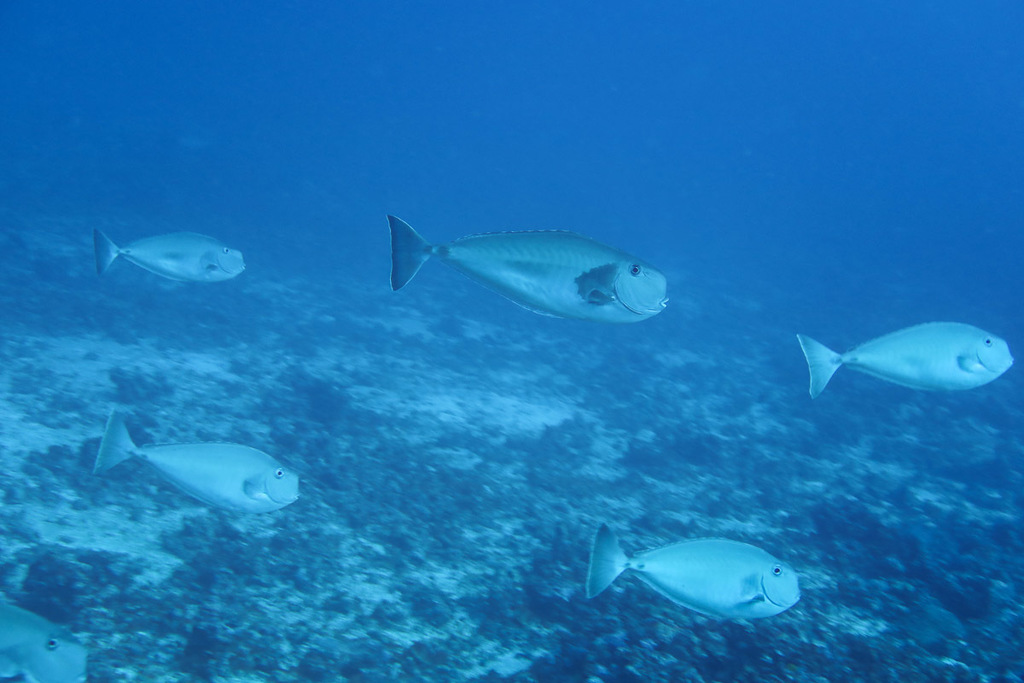
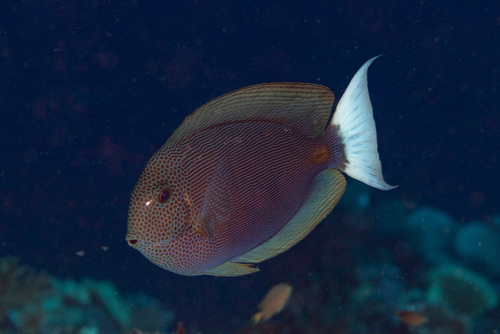
The squarenose unicornfish is a surgeonfish (Acanthuridae) from the Indo-West Pacific. The species grows to about 75 cm and has a deep, grey-blue body with an angular, square snout without a true horn. On the tail base it carries two pairs of sharp, scalpel-like bony keels. As a reef-dweller it hovers above deeper reef slopes and grazes weed and picks zooplankton. The tail keels can cause deep cuts when handled; otherwise the fish is harmless to humans.

Frequently asked questions

How do you recognise the Squarenose unicornfish?

The Squarenose unicornfish has a torpedo-shaped body and is mainly blue. Bears sharp spines, plates or strong jaws that can cause cuts or puncture wounds; handle with care.

Where does the Squarenose unicornfish live?

The Squarenose unicornfish lives in the sea (marine waters) and is mostly found around stony or rocky ground. Asia: Australia, Indonesia, Maldives, Mauritius, Philippines, South Africa and others

How big does the Squarenose unicornfish get?

The Squarenose unicornfish grows to a maximum of about 75 cm.

Is the Squarenose unicornfish dangerous to humans?

The Squarenose unicornfish can cause injury; handle it with care. Do not grab the fish by the tail: surgeonfishes carry sharp, scalpel-like bony plates on the tail base that can cause deep cuts. For a cut: clean, apply pressure to stop bleeding and cover with a sterile dressing; for a deep wound seek medical assessment and check tetanus status.

More photos

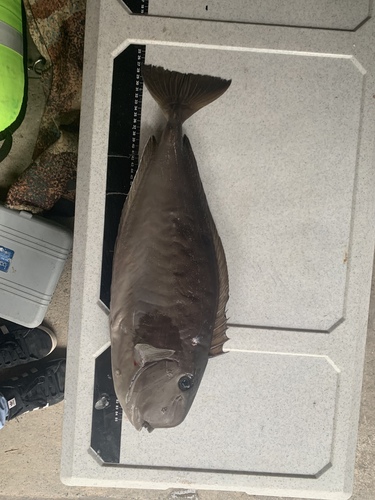
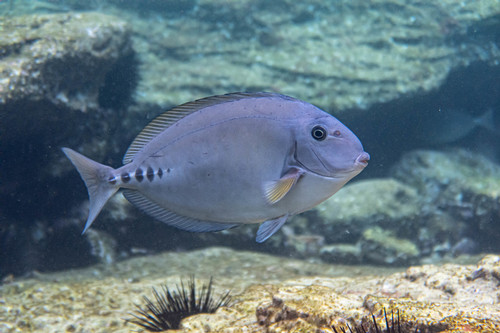
Squarenose unicornfish (Naso mcdadei) — Acanthuridae — 2
Wikimedia Commons — Mireille Farjo (CC BY 3.0)
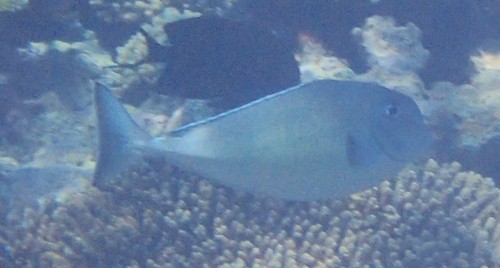
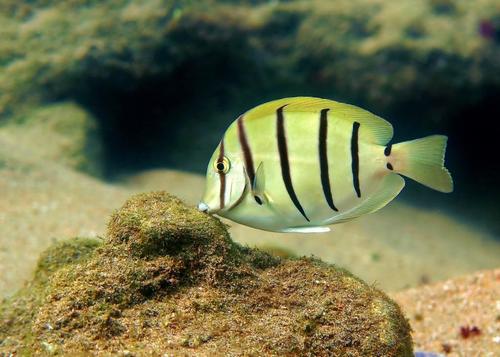
Squarenose unicornfish (Naso mcdadei) — Acanthuridae — 3
iNaturalist ((c) Josh Bowden, some rights reserved (CC BY-NC))
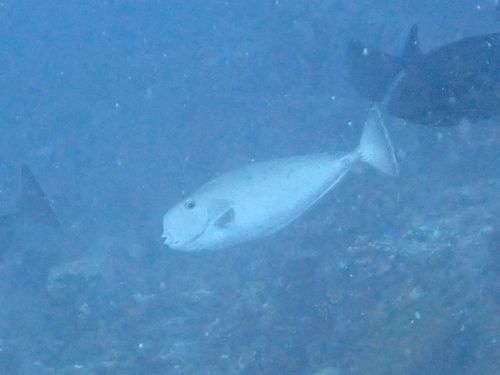
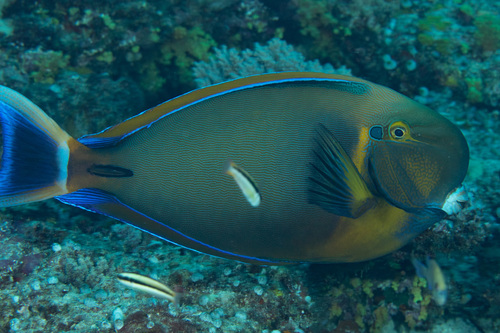
Squarenose unicornfish (Naso mcdadei) — Acanthuridae — 4
iNaturalist ((c) amfstocker, some rights reserved (CC BY))
Squarenose unicornfish (Naso mcdadei) — Acanthuridae — 5
iNaturalist ((c) Ben Costamagna, some rights reserved (CC BY))
Fin

Want the complete picture on the Squarenose unicornfish?

Point your camera at the fish and Fin names the species in seconds. Free, and the Squarenose unicornfish is one of 12,519 species in the app.

Get the app →

All data

Identification

English name
Squarenose unicornfish sourced
Scientific name
Naso mcdadei
Family
Acanthuridae
Other names
Squarenose unicornfish verified

Appearance

Size class
Large verified
Max length (cm)
75.0 verified
Body shape
Torpedo-shaped sourced
Dominant colour
Blue sourced
Tail shape
Crescent (lunate) inferred

Habitat & distribution

Water type
Saltwater sourced
Substrate
Stone or rock sourced
Min depth (m)
5.0 verified
Max depth (m)
65.0 verified
Natural range
Asia: Australia, Indonesia, Maldives, Mauritius, Philippines, South Africa and others sourced
Origin
Native inferred

Behaviour & biology

Diet
Herbivore sourced
Diet (detail)
Algae, seaweeds and plant material inferred
Territorial
No inferred
Activity
Diurnal inferred
Reproduction
Separate sexes inferred
Sexual dimorphism
No inferred
Seasonality
Present year-round in its habitat; no pronounced seasonality known. inferred
Special features
Bears sharp spines, plates or strong jaws that can cause cuts or puncture wounds; handle with care. inferred

For anglers

Fishing method
Fishing with natural bait (fish, shrimp, worm) or lures close to reef and rock structures. inferred
Regulations source
FishBase ↗ inferred

Safety

Danger to humans
Can cause injury verified
First aid
Do not grab the fish by the tail: surgeonfishes carry sharp, scalpel-like bony plates on the tail base that can cause deep cuts. For a cut: clean, apply pressure to stop bleeding and cover with a sterile dressing; for a deep wound seek medical assessment and check tetanus status. sourced

Status & sources

Sources
FishBase via GBIF (DwC-A), CC-BY-NC 4.0

Same genus Naso

More from the family Acanthuridae
Fin

Want the complete picture on the Squarenose unicornfish?

Point your camera at the fish and Fin names the species in seconds. Free, and the Squarenose unicornfish is one of 12,519 species in the app.

Get the app →
Is this the Squarenose unicornfish? Get the app