 Fin's Fish Guide
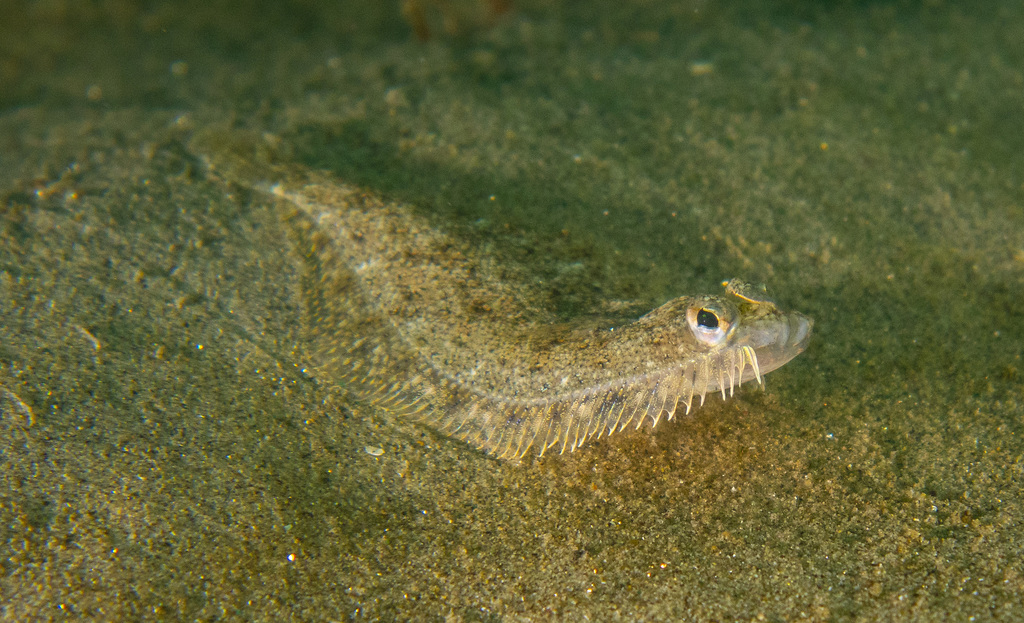
The Speckled sanddab (Citharichthys stigmaeus) is a saltwater fish of the family Paralichthyidae that grows up to 17 cm.
Northeast Pacific, on sandy bottoms from close inshore to about 366 m depth.
Description
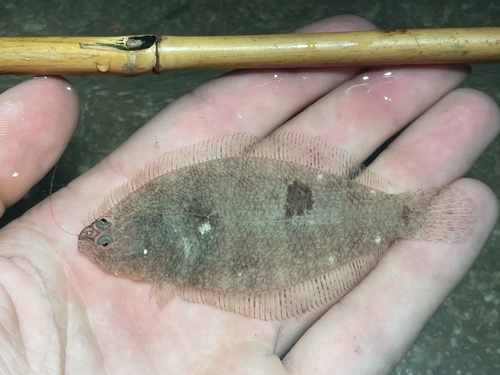
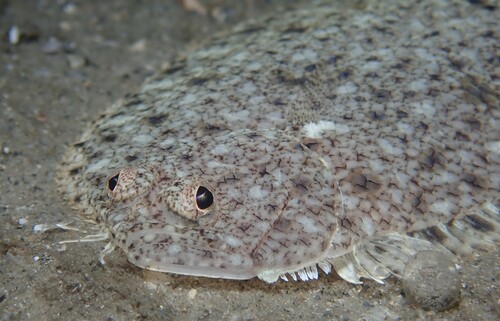
The speckled sanddab is a small left-eyed flatfish (family Paralichthyidae) of the north-eastern Pacific. The species reaches about 17 cm and has an oval, flattened, brown body with fine dark speckles and both eyes on the left side. It lives on sandy bottoms, from near shore to about 366 m depth. Its diet consists of small crustaceans, worms and other bottom invertebrates. Because of its small size the species is of little commercial value, though it is landed as bycatch. It is harmless to humans and often lies camouflaged buried in the sand.
Frequently asked questions
How do you recognise the Speckled sanddab?
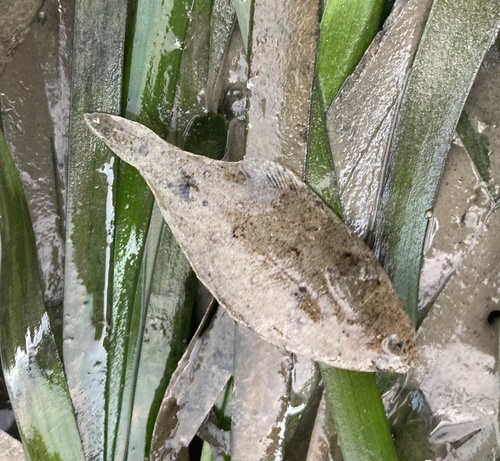
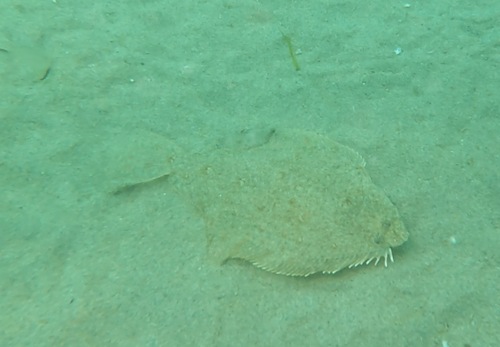
The Speckled sanddab has a flattened, disc-shaped body, is mainly brown and shows a spots pattern. Small left-eyed sanddab; too small for much commercial value.
Where does the Speckled sanddab live?
The Speckled sanddab lives in the sea (marine waters) and is mostly found around sand or mud bottom. Northeast Pacific, on sandy bottoms from close inshore to about 366 m depth.
How big does the Speckled sanddab get?
The Speckled sanddab grows to a maximum of about 17 cm.
Is the Speckled sanddab dangerous to humans?
No, the Speckled sanddab is harmless to humans. None required: this species is harmless to humans.
Is the Speckled sanddab edible?
The Speckled sanddab is rarely eaten.
More photos



Want the complete picture on the Speckled sanddab?
Point your camera at the fish and Fin names the species in seconds. Free, and the Speckled sanddab is one of 12,519 species in the app.
All data
Identification
Appearance
Habitat & distribution
Behaviour & biology
For anglers
Safety
Status & sources
Same genus Citharichthys


More from the family Paralichthyidae


Want the complete picture on the Speckled sanddab?
Point your camera at the fish and Fin names the species in seconds. Free, and the Speckled sanddab is one of 12,519 species in the app.