Home · Carcharhinidae · Spadenose shark
Spadenose shark (Scoliodon laticaudus) — Carcharhinidae

Spadenose shark

Scoliodon laticaudus

The Spadenose shark (Scoliodon laticaudus) is a brackish-water fish of the family Carcharhinidae that grows up to 100 cm.

Length
100 cm
Water
Brackish
Depth
10.0–13.0 m
Body shape
Torpedo-shaped
Substrate
Sand / mud bottom
Danger
May bite
Range
Asia: Bahrain, Bangladesh, Brunei Darsm, Myanmar, Cambodia, Sri Lanka and others
Edibility
Commonly eaten

Want the complete picture on the Spadenose shark?

Get the app

Description

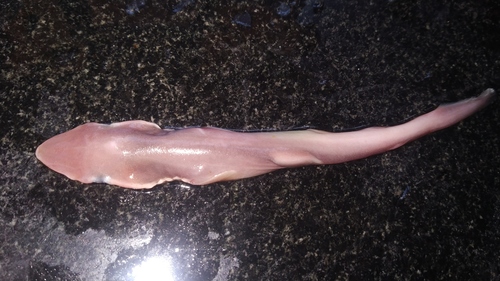
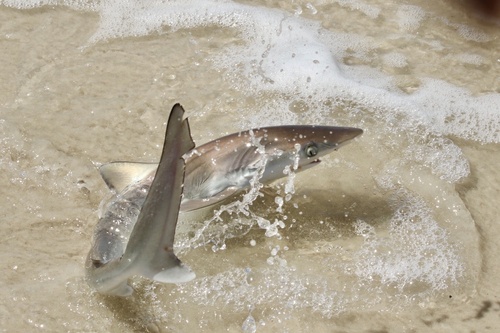
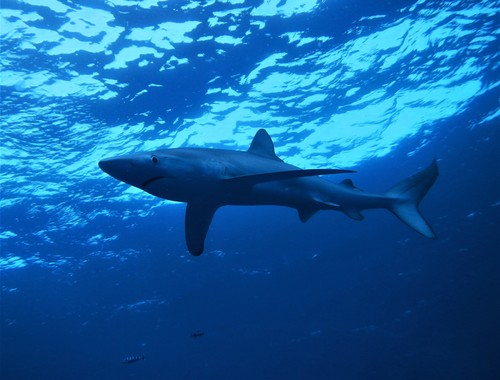
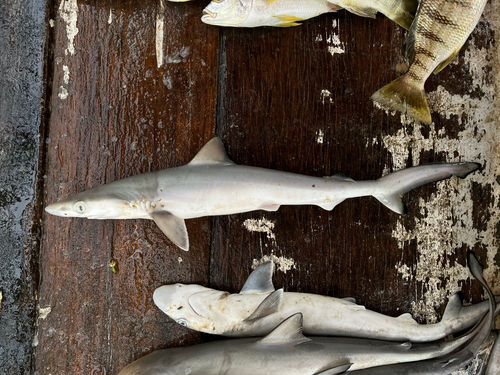
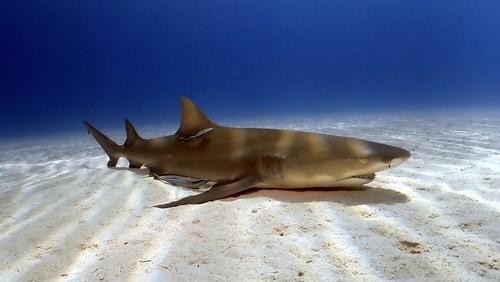
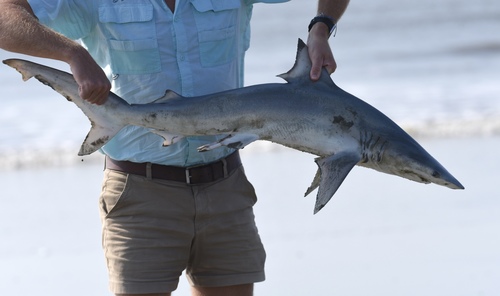
The spadenose shark is a small requiem shark (Carcharhinidae) from shallow coastal and estuarine waters of the Indo-West Pacific. The species grows to about 1 metre and has a slender, grey body with a strikingly flattened, spade-shaped snout. As a predator it hunts small fish, shrimp and squid in schools. It is usually shy of people, but as a requiem shark it can bite if disturbed or in fisheries; caution is advised.

Frequently asked questions

How do you recognise the Spadenose shark?

The Spadenose shark has a torpedo-shaped body and is mainly silver-grey. Can bite with sharp teeth or powerful jaws; handle with care.

Where does the Spadenose shark live?

The Spadenose shark lives in brackish water and is mostly found around sand or mud bottom. Asia: Bahrain, Bangladesh, Brunei Darsm, Myanmar, Cambodia, Sri Lanka and others

How big does the Spadenose shark get?

The Spadenose shark grows to a maximum of about 100 cm.

Is the Spadenose shark dangerous to humans?

The Spadenose shark can bite, but is otherwise not dangerous to humans. Keep your distance and handle caught animals carefully. For a bite: apply firm pressure to stop bleeding, rinse with clean water and cover with a sterile dressing. Shark bites are deep and prone to infection: always seek medical assessment and check tetanus status.

Is the Spadenose shark edible?

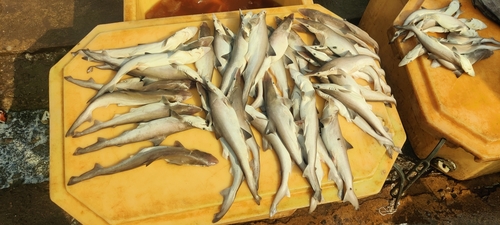
Yes, the Spadenose shark is commonly eaten.

More photos

Spadenose shark (Scoliodon laticaudus) — Carcharhinidae — 2
Wikimedia Commons — Hamid Badar Osmany (CC BY 3.0)
Spadenose shark (Scoliodon laticaudus) — Carcharhinidae — 3
iNaturalist ((c) Ashwit Shetty, some rights reserved (CC BY))
Spadenose shark (Scoliodon laticaudus) — Carcharhinidae — 4
iNaturalist ((c) Vivek.N.Rathod, some rights reserved (CC BY-NC-SA))
Spadenose shark (Scoliodon laticaudus) — Carcharhinidae — 5
Wikimedia Commons — Dr. Raju Kasambe (CC BY-SA 4.0)
Fin

Want the complete picture on the Spadenose shark?

Point your camera at the fish and Fin names the species in seconds. Free, and the Spadenose shark is one of 12,519 species in the app.

Get the app →

All data

Identification

English name
Spadenose shark sourced
Scientific name
Scoliodon laticaudus
Family
Carcharhinidae
Other names
Indian dog shark; Indian dogshark; Sharp nosed shark; Spadenose shark; Yellow dog shark; Yellow dogshark; Dog shark; Trowel nose shark; Yellow dog-shark verified

Appearance

Size class
Extra large verified
Max length (cm)
100.0 verified
Body shape
Torpedo-shaped sourced
Dominant colour
Silver / grey sourced
Tail shape
Crescent (lunate) inferred

Habitat & distribution

Water type
Brackish sourced
Substrate
Sand / mud bottom sourced
Min depth (m)
10.0 verified
Max depth (m)
13.0 verified
Natural range
Asia: Bahrain, Bangladesh, Brunei Darsm, Myanmar, Cambodia, Sri Lanka and others sourced
Origin
Native inferred

Behaviour & biology

Territorial
No inferred
Reproduction
Separate sexes inferred
Sexual dimorphism
No inferred
levensduur_max_jaar
6.0 verified
Seasonality
Present year-round in its habitat; no pronounced seasonality known. inferred
Special features
Can bite with sharp teeth or powerful jaws; handle with care. inferred

For anglers

Edibility
Commonly eaten inferred
Fishing method
Bottom fishing with natural bait (worm, shrimp or fish) on or just above the seabed. inferred
Regulations source
FishBase ↗ inferred

Safety

Danger to humans
May bite verified
First aid
Keep your distance and handle caught animals carefully. For a bite: apply firm pressure to stop bleeding, rinse with clean water and cover with a sterile dressing. Shark bites are deep and prone to infection: always seek medical assessment and check tetanus status. sourced

Status & sources

Sources
FishBase via GBIF (DwC-A), CC-BY-NC 4.0

More from the family Carcharhinidae
Fin

Want the complete picture on the Spadenose shark?

Point your camera at the fish and Fin names the species in seconds. Free, and the Spadenose shark is one of 12,519 species in the app.

Get the app →
Is this the Spadenose shark? Get the app