Home · Haemulidae · Smallmouth grunt
Smallmouth grunt (Haemulon chrysargyreum) — Haemulidae

Smallmouth grunt

Haemulon chrysargyreum
Family: Haemulidae

The Smallmouth grunt (Haemulon chrysargyreum) is a saltwater fish of the family Haemulidae that grows up to 23 cm.

Length
23 cm
Water
Saltwater
Diet
Carnivore
Behaviour
Large groups
Activity
Nocturnal
Body shape
Torpedo-shaped
Substrate
Stone or rock
Danger
Harmless
Range
Western Atlantic and Caribbean; coral reefs, at night sand and seagrass.
Edibility
Commonly eaten

Want the complete picture on the Smallmouth grunt?

Get the app

Description

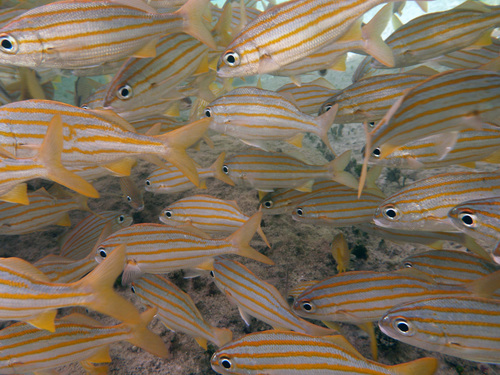
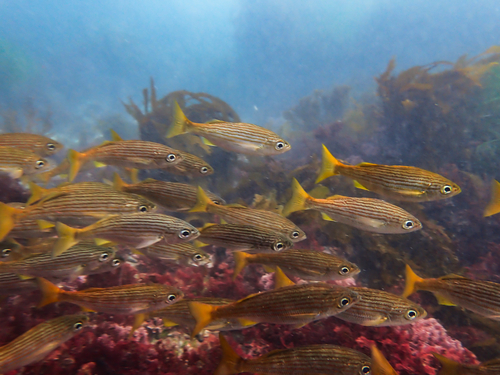
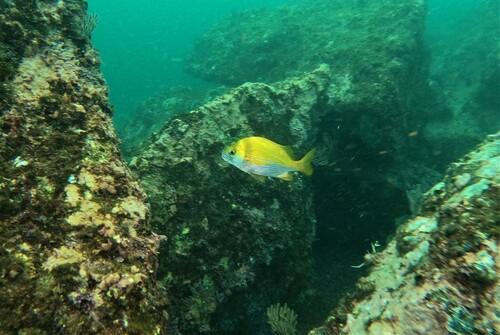
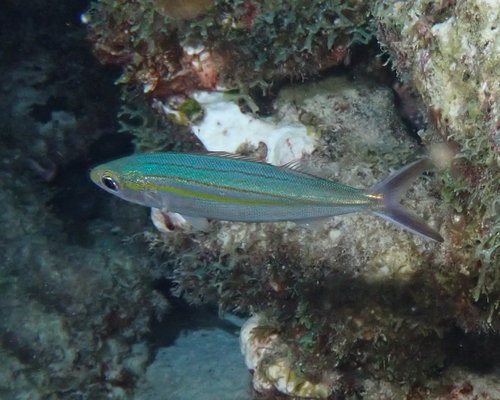
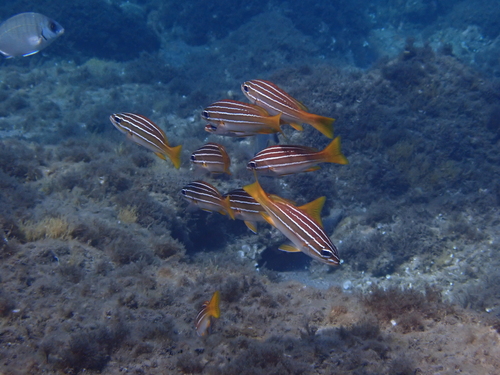
The smallmouth grunt is a grunt of the family Haemulidae from the western Atlantic and Caribbean. The species grows to about 23 cm and has a silvery body with several bright yellow longitudinal stripes and yellow fins. By day it forms dense schools above coral reefs, sheltering among the coral; at night it disperses over sand and seagrass flats to forage. As a bottom searcher it feeds on small zooplankton and small invertebrates. Grunts make a grunting sound with the pharyngeal teeth. The smallmouth grunt is a local food fish and is harmless to humans.

Frequently asked questions

How do you recognise the Smallmouth grunt?

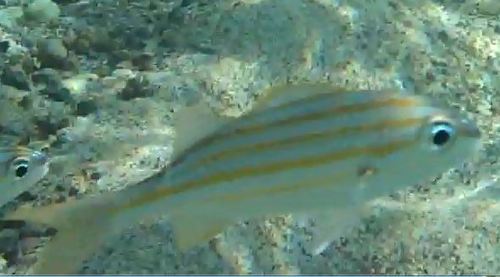
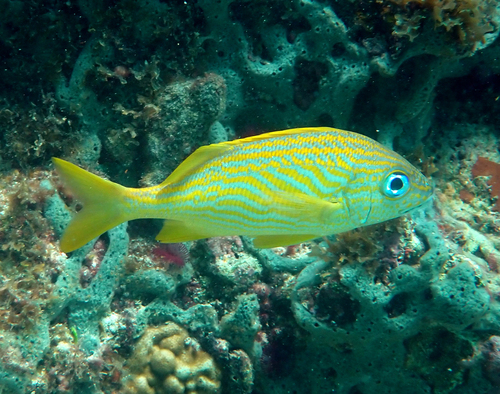
The Smallmouth grunt has a torpedo-shaped body, is mainly silver-grey and shows a horizontal stripes pattern. Bright yellow longitudinal stripes; forms dense shoals on the reef during the day and produces sound with its pharyngeal teeth.

Where does the Smallmouth grunt live?

The Smallmouth grunt lives in the sea (marine waters) and is mostly found around stony or rocky ground. Western Atlantic and Caribbean; coral reefs, at night sand and seagrass.

How big does the Smallmouth grunt get?

The Smallmouth grunt grows to a maximum of about 23 cm.

Is the Smallmouth grunt dangerous to humans?

No, the Smallmouth grunt is harmless to humans. None required: this species is harmless to humans.

Is the Smallmouth grunt edible?

Yes, the Smallmouth grunt is commonly eaten.

More photos
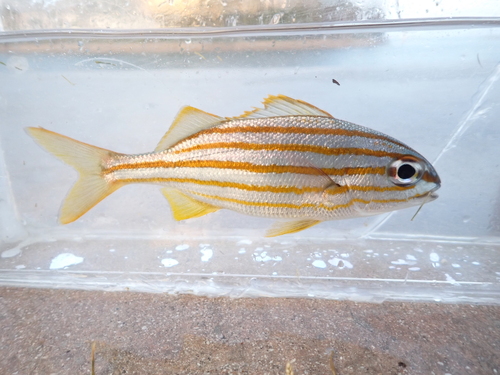
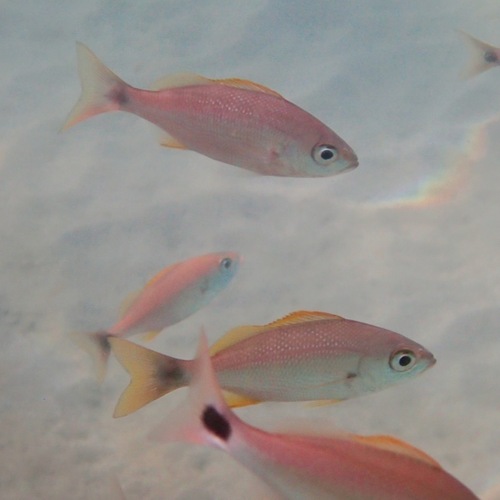
Smallmouth grunt (Haemulon chrysargyreum) — Haemulidae — 2
iNaturalist ((c) californiafishlover, some rights reserved (CC BY-NC))
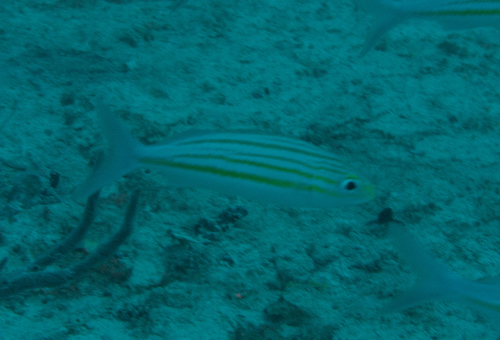
Smallmouth grunt (Haemulon chrysargyreum) — Haemulidae — 3
iNaturalist ((c) Chandler Olson, some rights reserved (CC BY-NC))
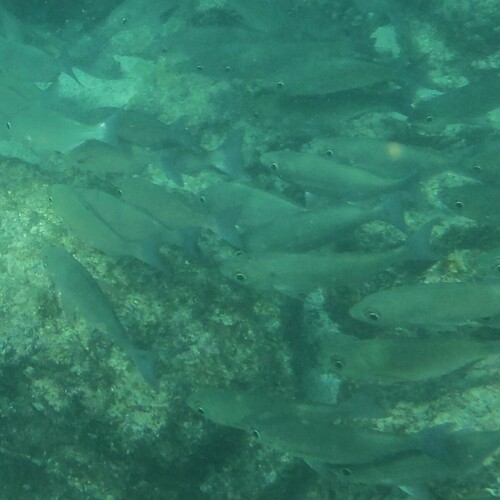
Smallmouth grunt (Haemulon chrysargyreum) — Haemulidae — 4
iNaturalist ((c) Eric Knight, some rights reserved (CC BY))
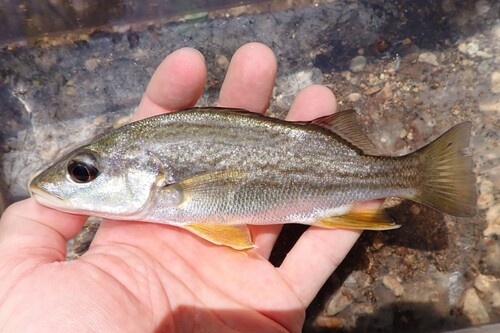
Smallmouth grunt (Haemulon chrysargyreum) — Haemulidae — 5
Wikimedia Commons — This photo has been taken by Matthieu Sontag (User:Mirgolth) and released under the licenses stated below. You are free to use it for any purpose as long as you credit me as author, Wikimedia Commons as site and follow the terms of the licenses. Could you be kind enough to leave me a message on this page to inform me about your use of this picture. (CC BY-SA 3.0)
Fin

Want the complete picture on the Smallmouth grunt?

Point your camera at the fish and Fin names the species in seconds. Free, and the Smallmouth grunt is one of 12,519 species in the app.

Get the app →

All data

Identification

English name
Smallmouth grunt sourced
Scientific name
Haemulon chrysargyreum
Family
Haemulidae
Other names
Bronze grunt; Banana grunt; Grunt; Smallmouth; Yellowstripe grunt

Appearance

Size class
Medium
Max length (cm)
23 sourced
Body shape
Torpedo-shaped sourced
Dominant colour
Silver / grey inferred
Pattern
Horizontal stripes inferred
Tail shape
Forked inferred
Mouth position
Terminal inferred
Lips
Thick / fleshy inferred
Barbels
No sourced
Dorsal fins
One continuous inferred
Dorsal spines
Yes sourced

Habitat & distribution

Water type
Saltwater sourced
Substrate
Stone or rock sourced
Natural range
Western Atlantic and Caribbean; coral reefs, at night sand and seagrass. inferred
Origin
Native sourced

Behaviour & biology

Diet
Carnivore sourced
Diet (detail)
Small zooplankton and small invertebrates sourced
Social behaviour
Large groups inferred
Territorial
No inferred
Activity
Nocturnal inferred
Reproduction
Separate sexes sourced
Sexual dimorphism
No inferred
Seasonality
Present year-round in its habitat; no pronounced seasonality known. inferred
Special features
Bright yellow longitudinal stripes; forms dense shoals on the reef during the day and produces sound with its pharyngeal teeth. sourced

For anglers

Edibility
Commonly eaten sourced
Regulations source
FishBase ↗ inferred

Safety

Danger to humans
Harmless sourced
First aid
None required: this species is harmless to humans. sourced

Status & sources

Sources
FishBase via GBIF (DwC-A), CC-BY-NC 4.0

Same genus Haemulon

More from the family Haemulidae
Fin

Want the complete picture on the Smallmouth grunt?

Point your camera at the fish and Fin names the species in seconds. Free, and the Smallmouth grunt is one of 12,519 species in the app.

Get the app →
Is this the Smallmouth grunt? Get the app