 Fin's Fish Guide
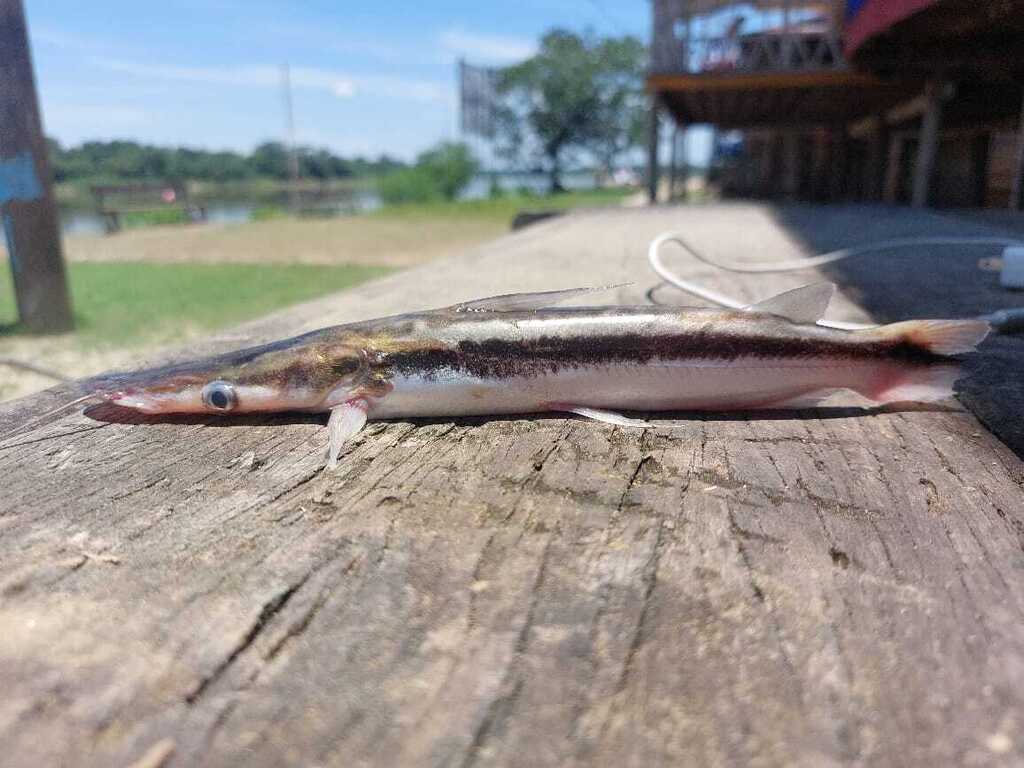
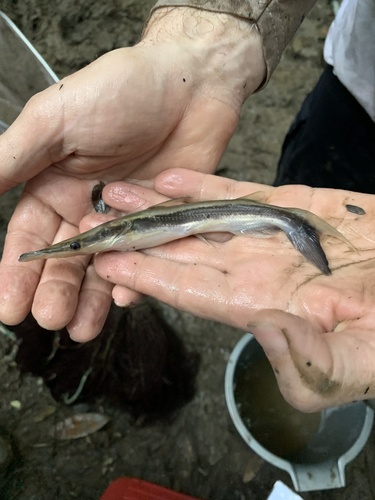
The Slender shovelnose catfish (Sorubim elongatus) is a freshwater fish of the family Pimelodidae that grows up to 32 cm.
South America: Bolivia, Brazil, Colombia, Ecuador, Guyana, Peru and others
Description
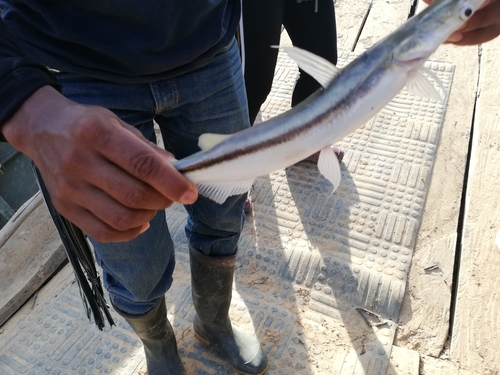
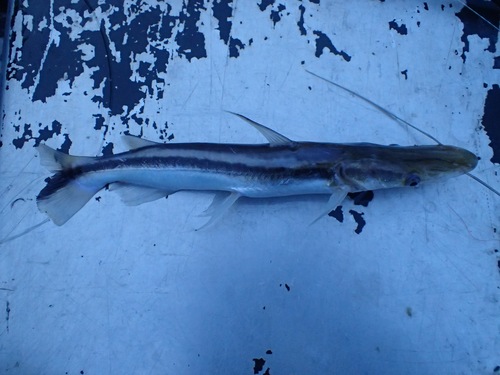
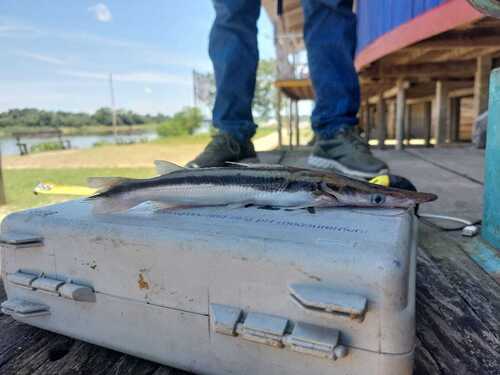
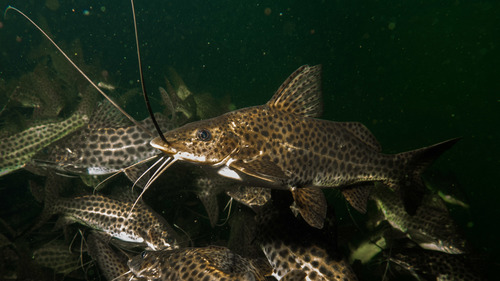
The slender shovelnose catfish is a long-whiskered catfish (Pimelodidae) from large rivers of the Amazon and Orinoco basin in South America. The species grows to about 30 cm and has an elongate, silver-grey body with a strikingly flat, shovel-shaped snout, a projecting upper jaw and long barbels. As a nocturnal bottom hunter it scoops with its flat head through sand and mud searching for small fish, shrimp and insect larvae. The stout pectoral and dorsal spines can give a painful puncture wound when handled.
Frequently asked questions
How do you recognise the Slender shovelnose catfish?
The Slender shovelnose catfish has an elongate, eel-like body and is mainly silver-grey. Bears sharp spines, plates or strong jaws that can cause cuts or puncture wounds; handle with care.
Where does the Slender shovelnose catfish live?
The Slender shovelnose catfish lives in fresh water and is mostly found around sand or mud bottom. South America: Bolivia, Brazil, Colombia, Ecuador, Guyana, Peru and others
How big does the Slender shovelnose catfish get?
The Slender shovelnose catfish grows to a maximum of about 32 cm.
Is the Slender shovelnose catfish dangerous to humans?
The Slender shovelnose catfish can cause injury; handle it with care. For a cut or puncture from a sharp fin spine: rinse the wound with clean water, apply pressure to stop bleeding and cover with a sterile dressing. Check that no spine fragment remains and watch for signs of infection; for a deep wound update tetanus protection.
Is the Slender shovelnose catfish edible?
The Slender shovelnose catfish is rarely eaten.
More photos

Want the complete picture on the Slender shovelnose catfish?
Point your camera at the fish and Fin names the species in seconds. Free, and the Slender shovelnose catfish is one of 12,519 species in the app.
All data
Identification
Appearance
Habitat & distribution
Behaviour & biology
For anglers
Safety
Status & sources
Same genus Sorubim
More from the family Pimelodidae



Want the complete picture on the Slender shovelnose catfish?
Point your camera at the fish and Fin names the species in seconds. Free, and the Slender shovelnose catfish is one of 12,519 species in the app.