 Fin's Fish Guide

The Sharpsnout stingray (Fontitrygon geijskesi) is a brackish-water fish of the family Dasyatidae that grows up to 150 cm.
South America: Brazil, French Guiana, Guyana, Suriname, Trinidad Tobago, Venezuela
Description
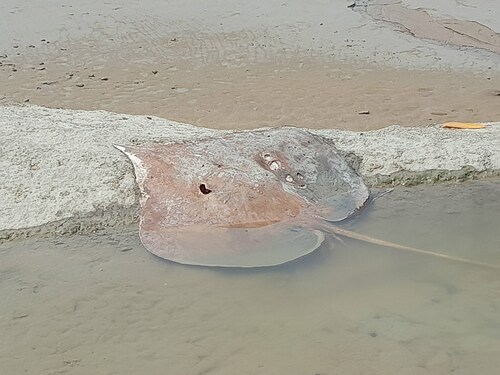
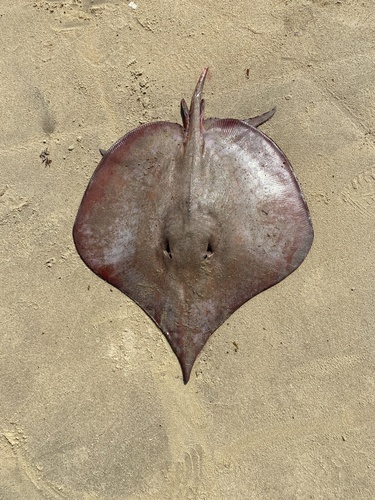
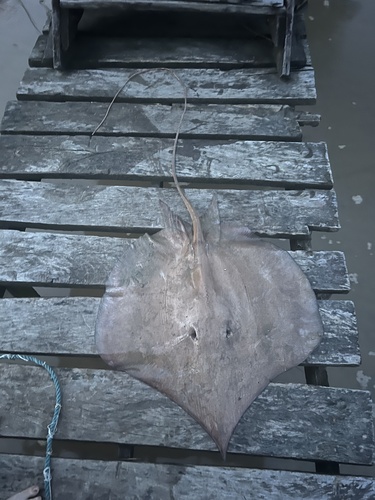
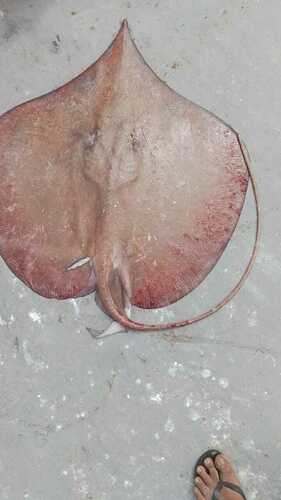
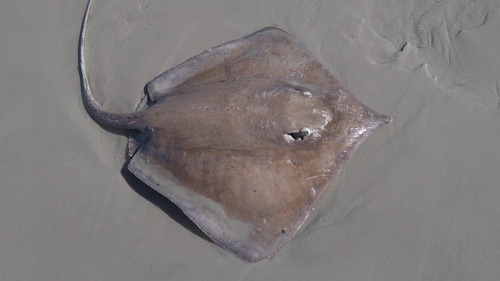
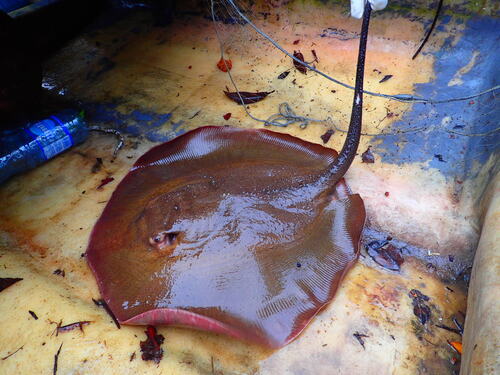
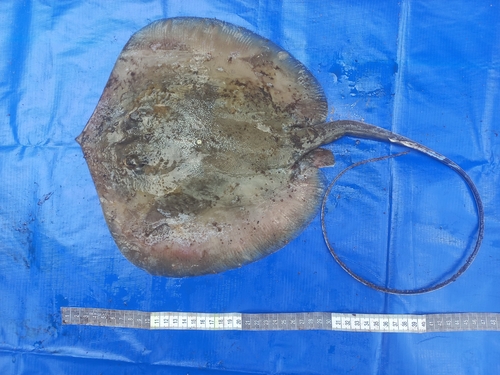
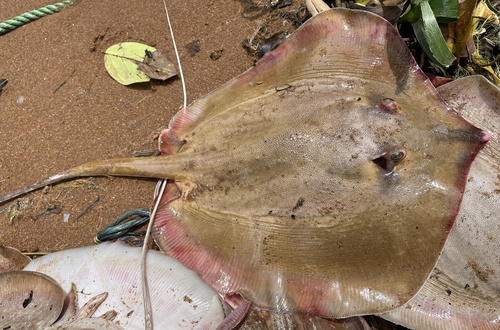
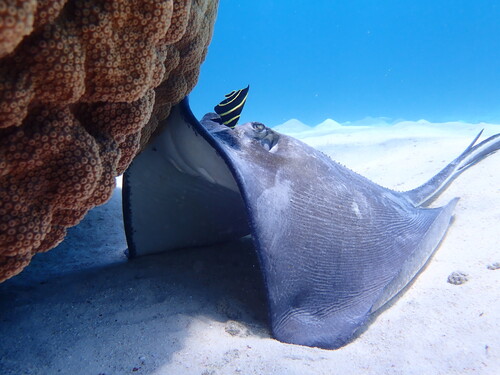
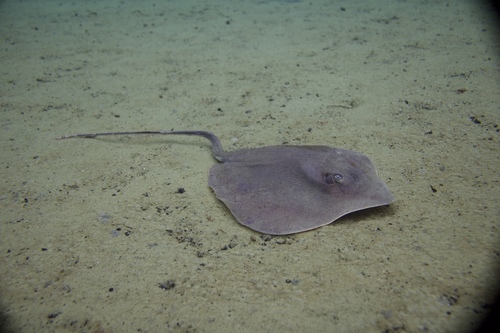
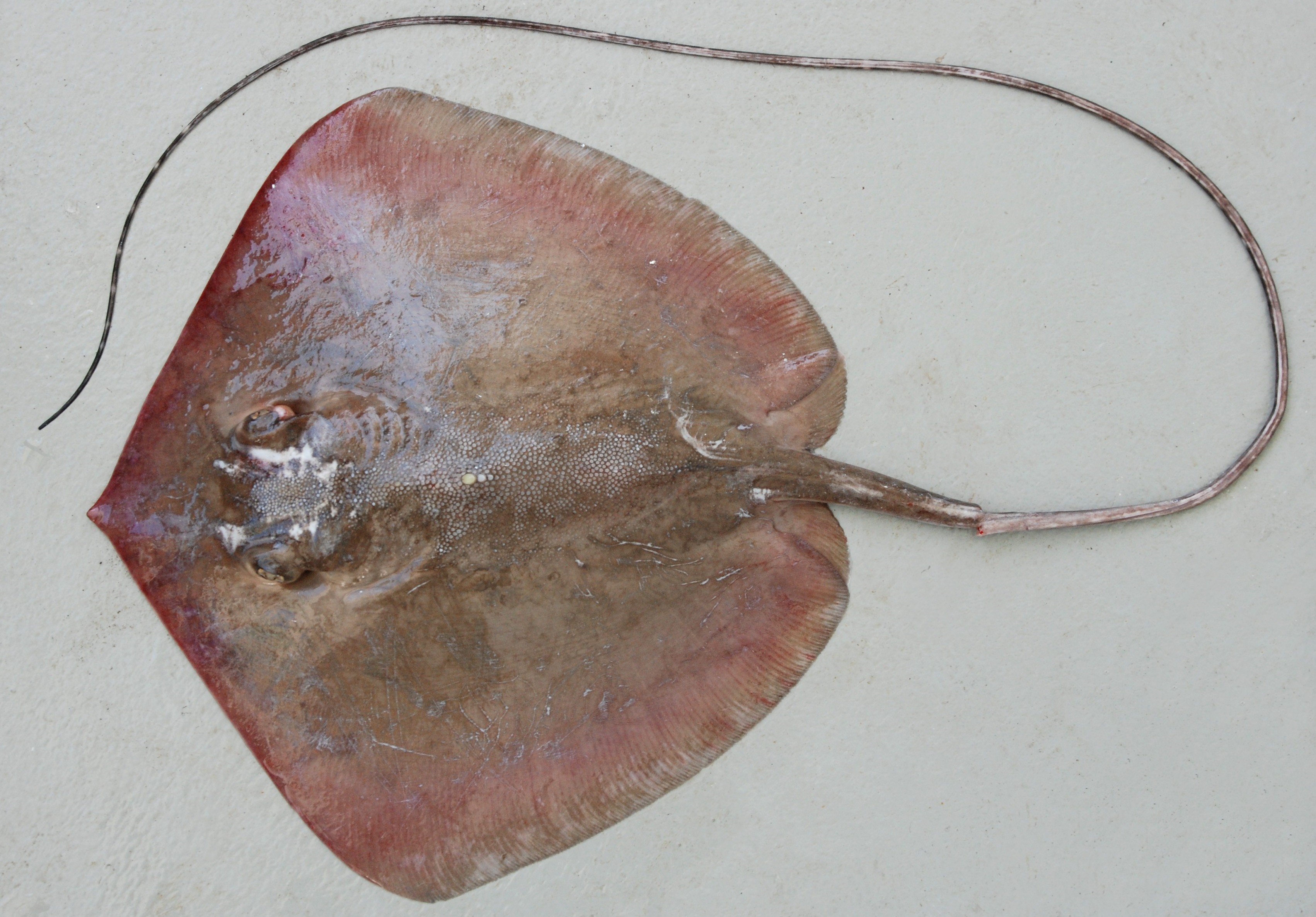
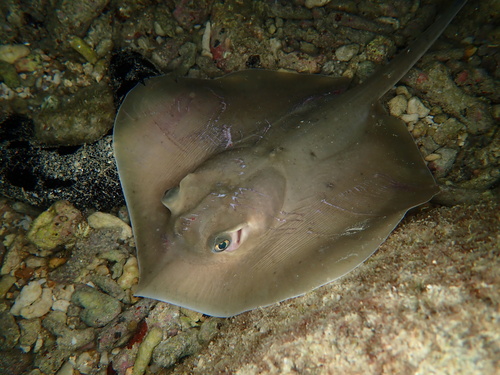
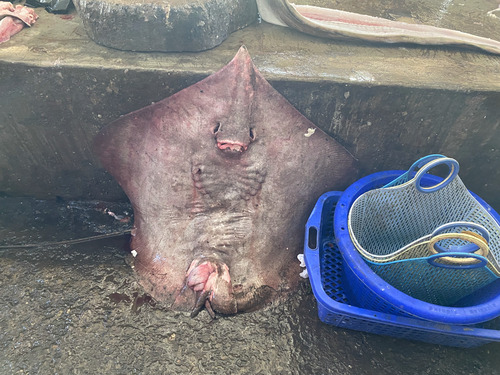
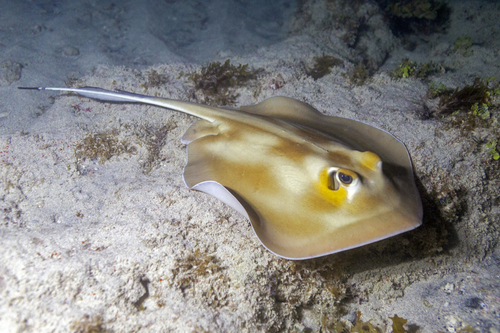
The Sharpsnout stingray is a stingray (Dasyatidae) from shallow coastal and estuarine water of the western Atlantic off the Guianas and Brazil. The species reaches about 60 cm across the disc and has a round to diamond-shaped, flat, brown disc and a long, whip-like tail. Half-buried in sand or mud it searches for molluscs, crustaceans and bottom fish. In its tail it carries a venomous, serrated spine that gives a very painful wound; it stings only in defence when touched or stepped on.
Frequently asked questions
How do you recognise the Sharpsnout stingray?
The Sharpsnout stingray has a flattened, disc-shaped body and is mainly brown. Bears venomous spines or tissue; handle with great care.
Where does the Sharpsnout stingray live?
The Sharpsnout stingray lives in brackish water and is mostly found around sand or mud bottom. South America: Brazil, French Guiana, Guyana, Suriname, Trinidad Tobago, Venezuela
How big does the Sharpsnout stingray get?
The Sharpsnout stingray grows to a maximum of about 150 cm. On average the species is around 70 cm.
Is the Sharpsnout stingray dangerous to humans?
The Sharpsnout stingray is venomous — handle spines with care and seek medical help after a sting if needed. A sting from the tail's venomous spine is very painful: rinse the wound, remove any visible spine fragments and immerse the part for 30-90 minutes in water as hot as can be tolerated (about 45 C). Because of the risk of a deep wound and retained tissue, medical assessment is advised; update tetanus protection and watch for signs of infection.
Is the Sharpsnout stingray edible?
Yes, the Sharpsnout stingray is commonly eaten.
More photos

Want the complete picture on the Sharpsnout stingray?
Point your camera at the fish and Fin names the species in seconds. Free, and the Sharpsnout stingray is one of 12,519 species in the app.
All data
Identification
Appearance
Habitat & distribution
Behaviour & biology
For anglers
Safety
Status & sources
Same genus Fontitrygon
More from the family Dasyatidae


Want the complete picture on the Sharpsnout stingray?
Point your camera at the fish and Fin names the species in seconds. Free, and the Sharpsnout stingray is one of 12,519 species in the app.