 Fin's Fish Guide
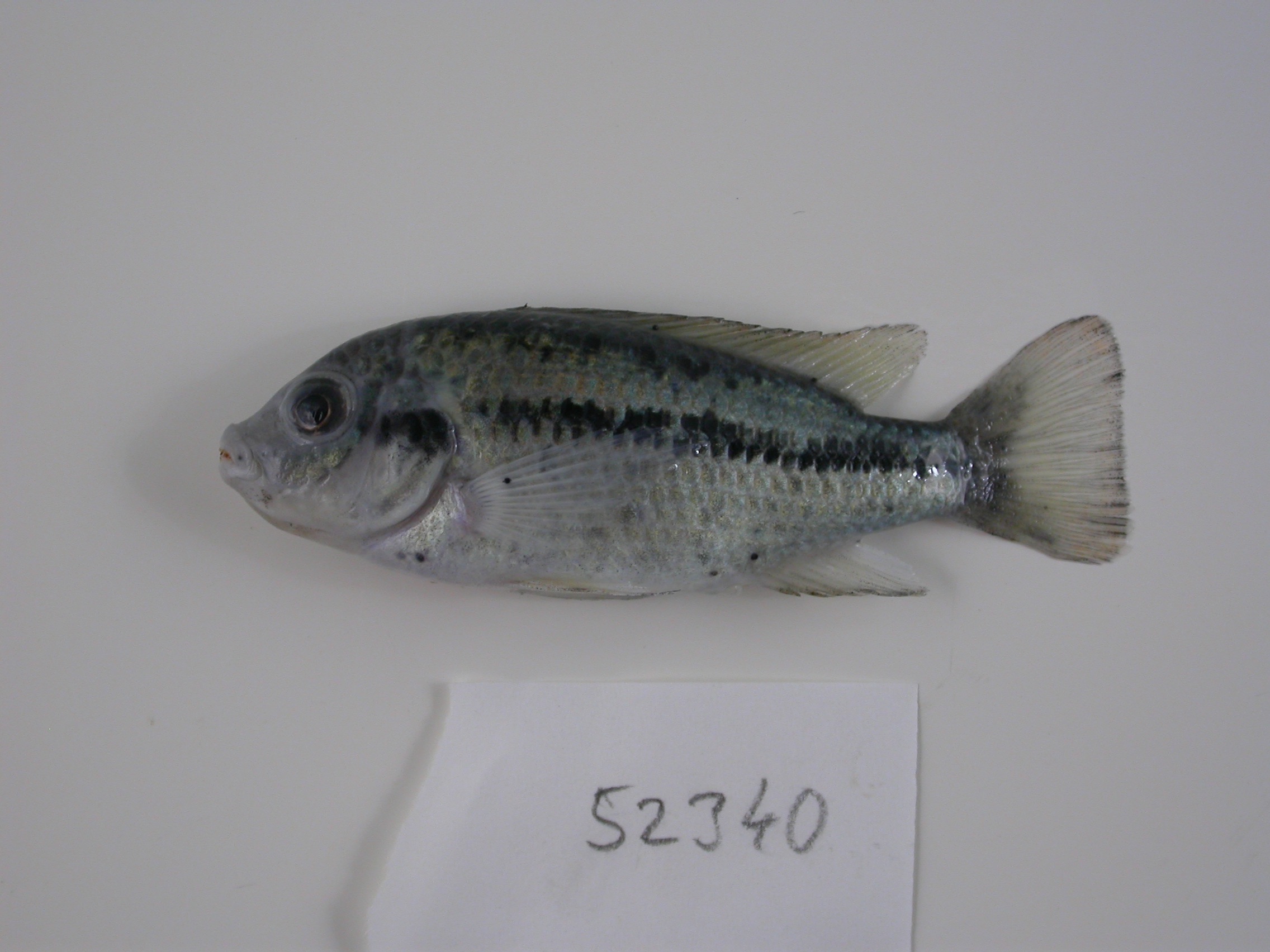
The Pungu (Pungu maclareni) is a freshwater fish of the family Cichlidae that grows up to 10 cm.
Endemic to the crater lake Barombi Mbo in Cameroon; shallow shore zone.
Description
The pungu is a cichlid endemic to the crater lake Barombi Mbo in Cameroon. The species has a fairly deep body and usually keeps in small groups in the shallow shore water of the lake, less than four metres deep. Notably, its food is unusual: it feeds mainly on sponges, a rare diet among fishes. As a cichlid it is a maternal mouthbrooder. Owing to its very limited range in a single crater lake it is considered critically endangered. It is harmless to humans.
Frequently asked questions
How do you recognise the Pungu?
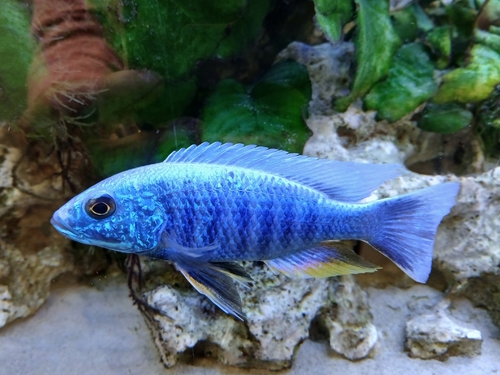
The Pungu has a torpedo-shaped body, is mainly brown and shows a plain pattern. Eats mainly sponges (a rare diet); endemic to a single crater lake, critically endangered, mouthbrooder.
Where does the Pungu live?
The Pungu lives in fresh water and is mostly found around sand or mud bottom. Endemic to the crater lake Barombi Mbo in Cameroon; shallow shore zone.
How big does the Pungu get?
The Pungu grows to a maximum of about 10 cm.
Is the Pungu dangerous to humans?
No, the Pungu is harmless to humans. None required: this species is harmless to humans.
Is the Pungu edible?
The Pungu is rarely eaten.

Want the complete picture on the Pungu?
Point your camera at the fish and Fin names the species in seconds. Free, and the Pungu is one of 12,519 species in the app.
All data
Identification
Appearance
Habitat & distribution
Behaviour & biology
For anglers
Safety
Status & sources
More from the family Cichlidae




Want the complete picture on the Pungu?
Point your camera at the fish and Fin names the species in seconds. Free, and the Pungu is one of 12,519 species in the app.