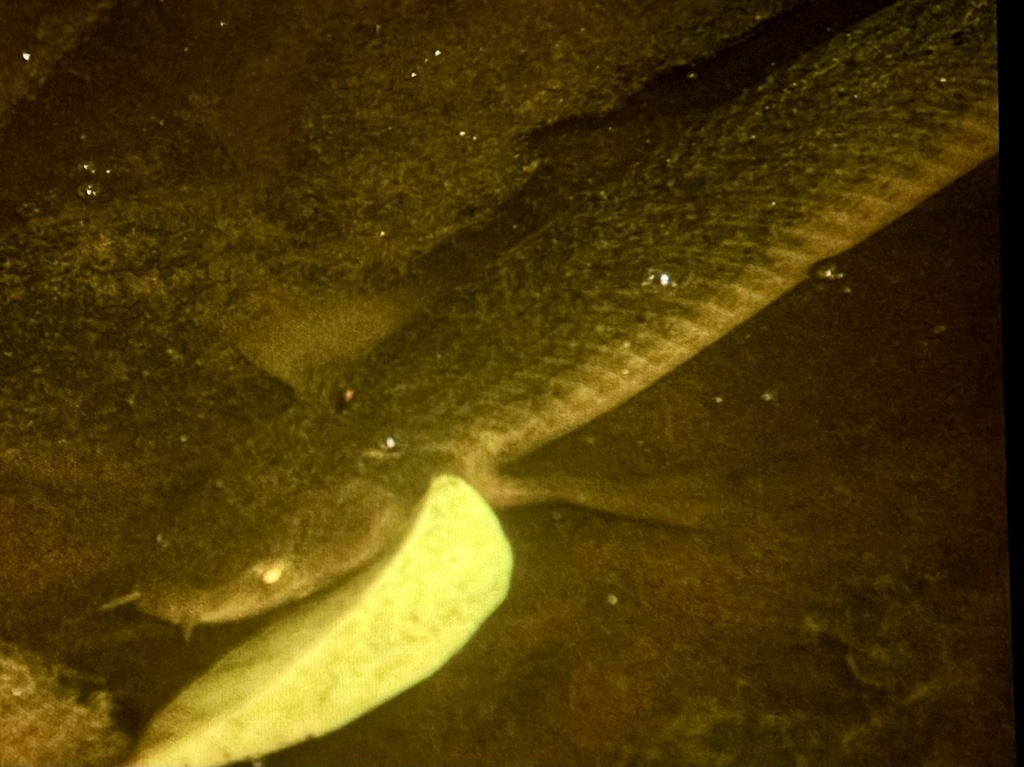
The Marbled bichir (Polypterus palmas) is a freshwater fish of the family Polypteridae that grows up to 35 cm.
Description
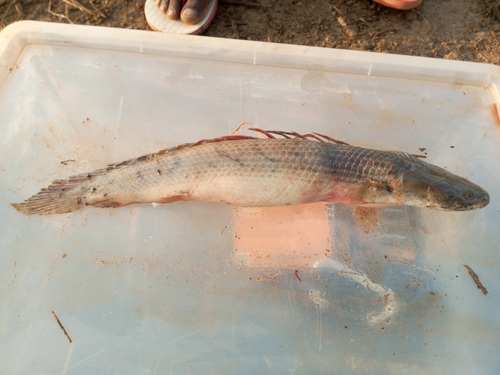
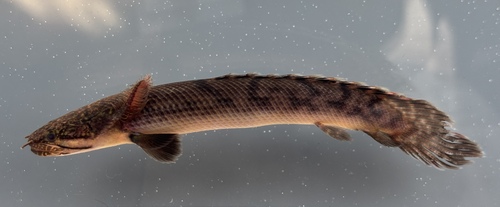
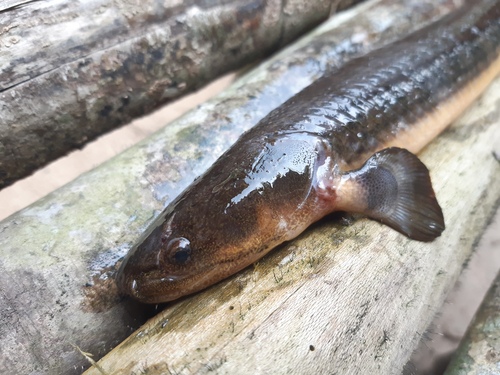
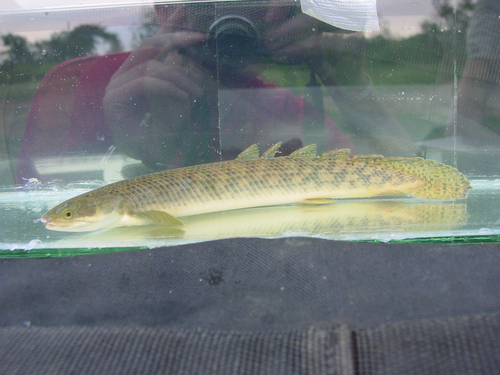
The marbled bichir is a small, archaic ray-finned fish from fresh waters of West Africa. The species grows to about 35 cm and has an elongate body armoured with rhombic scales and a row of separate finlets along the back. Its ground colour is brown with a marbled pattern, from which it takes its name. With a pair of lung-like swim bladders it can gulp air and so survive in low-oxygen water. It lives in streams, swamps and marginal zones, where as a nocturnal predator it hunts small fishes and invertebrates. The species is kept in the aquarium hobby and is harmless to humans.
Frequently asked questions
How do you recognise the Marbled bichir?
The Marbled bichir has an elongate, eel-like body, is mainly brown and shows a marbled pattern.
Where does the Marbled bichir live?
The Marbled bichir lives in fresh water and is mostly found around sand or mud bottom.
How big does the Marbled bichir get?
The Marbled bichir grows to a maximum of about 35 cm.
Is the Marbled bichir dangerous to humans?
No, the Marbled bichir is harmless to humans.
Is the Marbled bichir edible?
The Marbled bichir is not usually eaten.
Download Fin's Fish Guide
Identify fish in seconds, log your catches and dives. Join the TestFlight beta.
All data
Identification
Appearance
Habitat & distribution
Behaviour & biology
For anglers
Safety
Status & sources
Same genus Polypterus
More from the family Polypteridae


Download Fin's Fish Guide
Identify fish in seconds, log your catches and dives. Join the TestFlight beta.