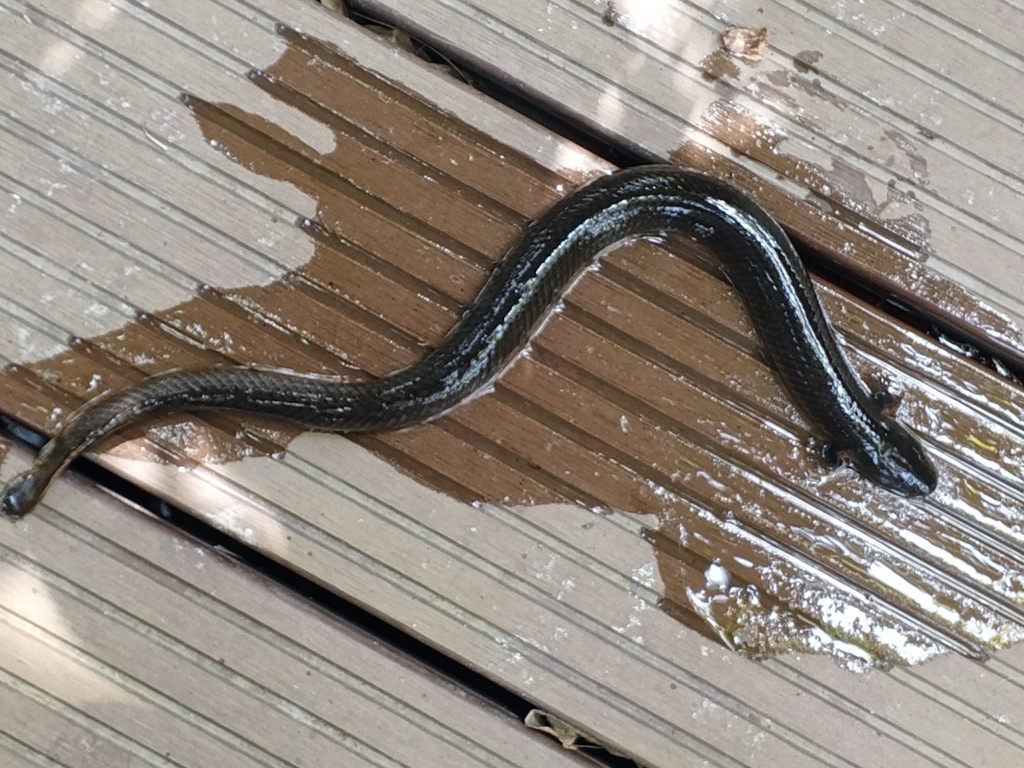
The Reed (Erpetoichthys calabaricus) is a brackish-water fish of the family Polypteridae that grows up to 37 cm.
Description
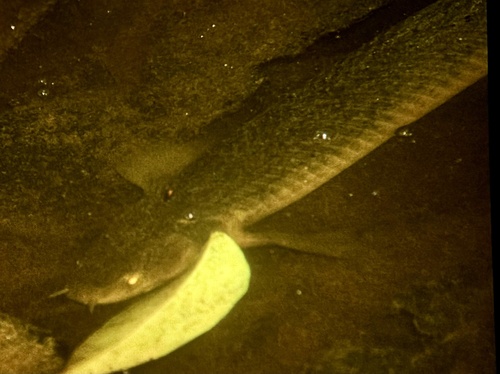
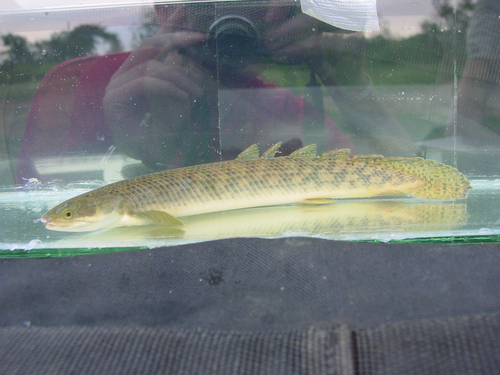
The reedfish, also known as the ropefish, is a snake-like, ancient ray-finned fish (family Polypteridae) of West and Central Africa. The species reaches about 37 cm and has a strongly elongate, armoured, brown-green body with a row of separate dorsal finlets and no pelvic fins. It inhabits slow-flowing rivers and stagnant waters, especially reedy habitats, and moves snake-wise over the bottom. With a lung-like swim bladder it can breathe air and crawl over land for short periods. Its diet consists of worms, crustaceans, insects and small fishes. The species is considered Near Threatened (NT) and is harmless to humans.
Frequently asked questions
How do you recognise the Reed?
The Reed has a snake-like body, is mainly brown and shows a plain pattern.
Where does the Reed live?
The Reed lives in brackish water and is mostly found around sand or mud bottom.
How big does the Reed get?
The Reed grows to a maximum of about 37 cm.
Is the Reed dangerous to humans?
No, the Reed is harmless to humans.
Is the Reed edible?
The Reed is rarely eaten.
Download Fin's Fish Guide
Identify fish in seconds, log your catches and dives. Join the TestFlight beta.
All data
Identification
Appearance
Habitat & distribution
Behaviour & biology
For anglers
Safety
Status & sources
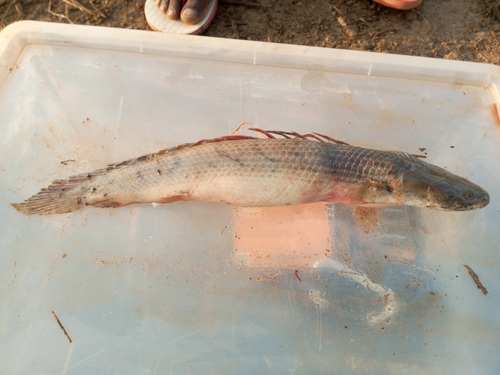
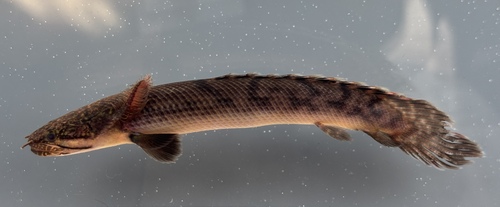
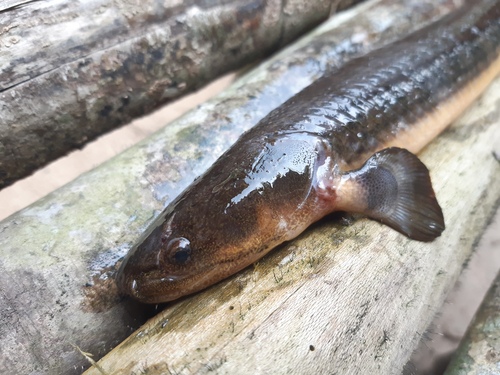
More from the family Polypteridae


Download Fin's Fish Guide
Identify fish in seconds, log your catches and dives. Join the TestFlight beta.