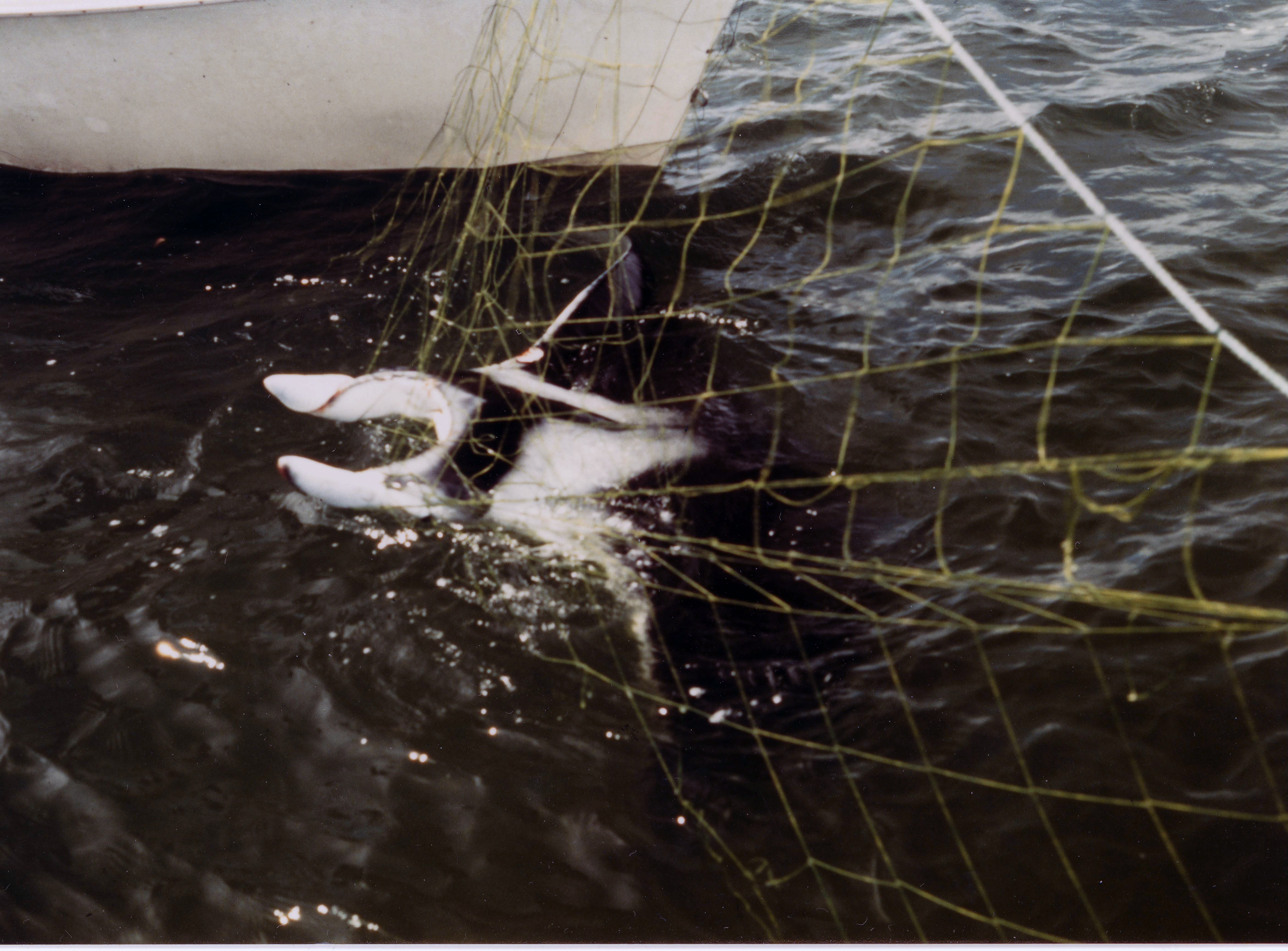
The Giant manta ray (Manta birostris) is a fish of the family Myliobatidae that grows up to 700 cm.
Description
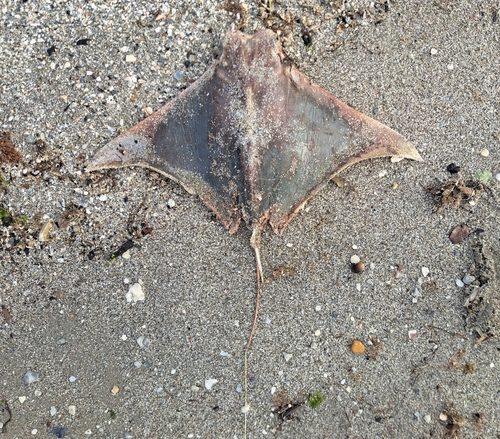
The giant manta ray is the largest ray species in the world; the span between the pectoral fin tips can reach about 7 metres. It has a flat, rhomboid body disc with large, wing-like pectoral fins and, on either side of the mouth, two extendable 'cephalic fins' with which it channels water toward its mouth. Despite its size it is completely harmless to humans: it is a filter feeder that, while swimming, sifts large volumes of water and so extracts zooplankton. It lives oceanically in warm seas worldwide and is viviparous. Owing to fishing and bycatch the species is under pressure.
Frequently asked questions
How do you recognise the Giant manta ray?
The Giant manta ray is mainly black and shows a spots pattern.
Where does the Giant manta ray live?
The Giant manta ray is mostly found around open water.
How big does the Giant manta ray get?
The Giant manta ray grows to a maximum of about 700 cm.
Is the Giant manta ray dangerous to humans?
No, the Giant manta ray is harmless to humans.
Is the Giant manta ray edible?
The Giant manta ray is rarely eaten.
Download Fin's Fish Guide
Identify fish in seconds, log your catches and dives. Join the TestFlight beta.
All data
Identification
Appearance
Habitat & distribution
Behaviour & biology
For anglers
Safety
Status & sources
More from the family Myliobatidae
Download Fin's Fish Guide
Identify fish in seconds, log your catches and dives. Join the TestFlight beta.