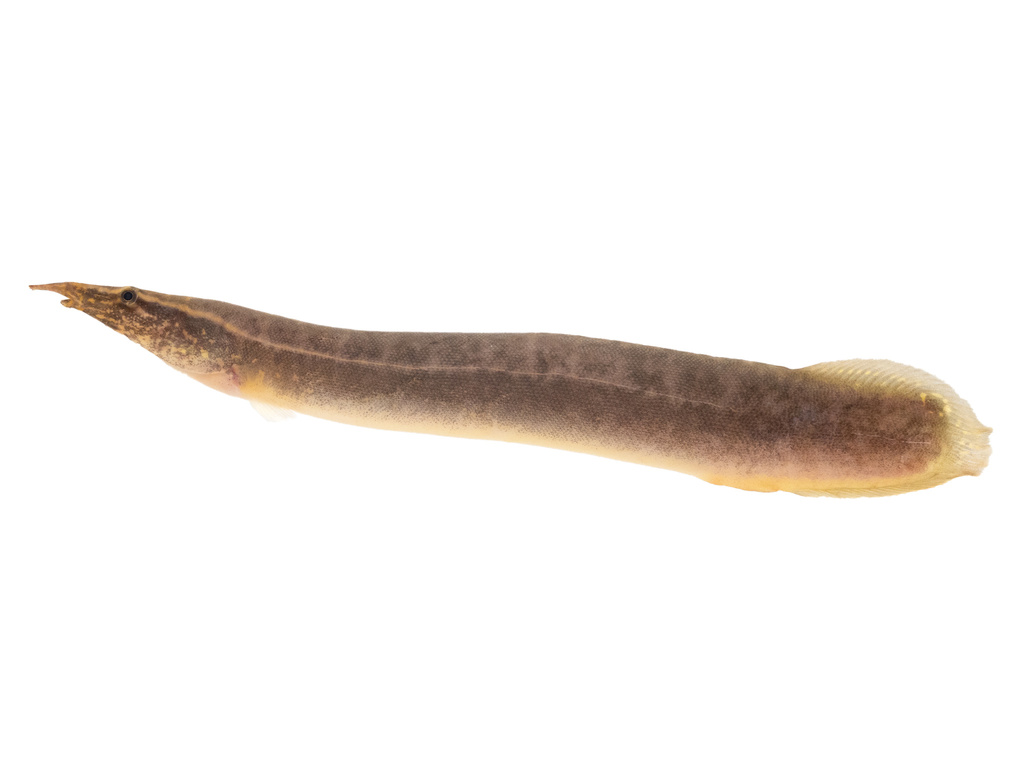
The Peacock eel (Macrognathus siamensis) is a freshwater fish of the family Mastacembelidae that grows up to 30 cm.
Description
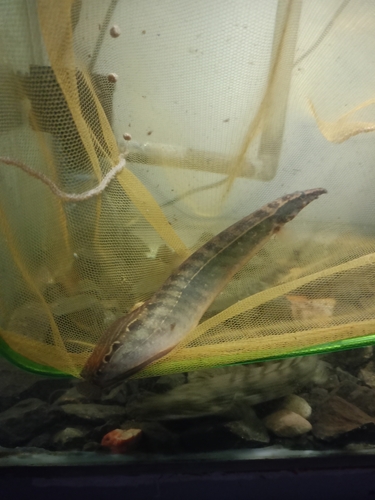
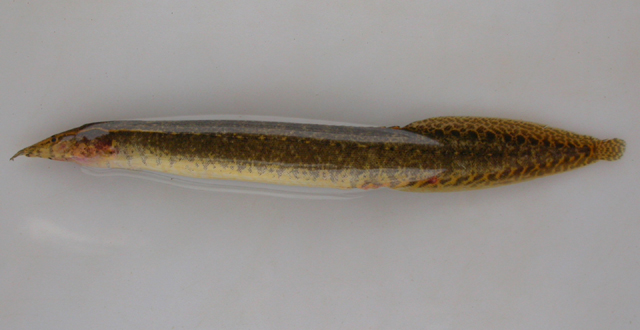
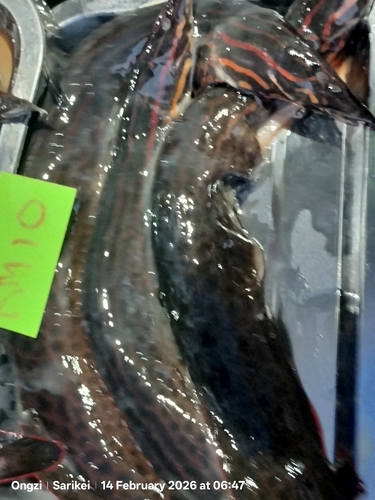
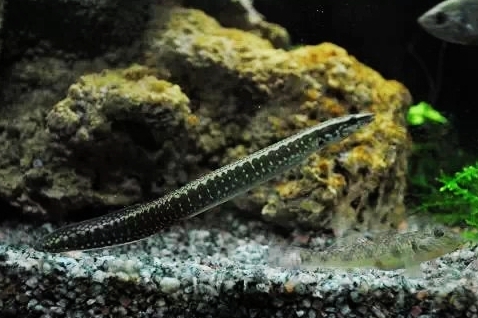
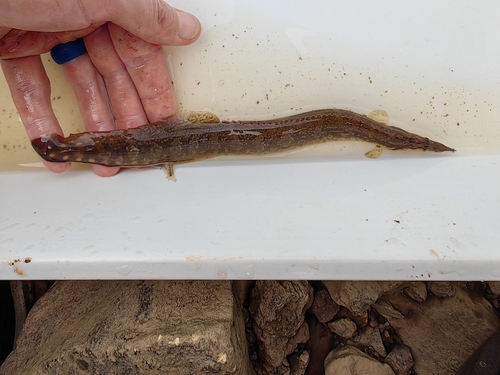
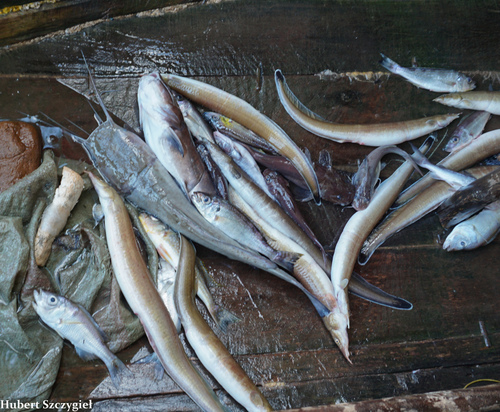
The peacock eel is a spiny eel (Mastacembelidae) from fresh water of Southeast Asia, including the Mekong and Chao Phraya basins. The species grows to about 30 cm and has an eel-shaped, light-brown body with a row of eyespots near the dorsal-fin base, a pointed mobile snout and a row of separate spinelets before the dorsal fin. As a nocturnal bottom-dweller it buries itself in soft sand by day and searches for worms, larvae and small crustaceans at night. The fish is harmless to humans and is known from the aquarium trade.
Frequently asked questions
How do you recognise the Peacock eel?
The Peacock eel has a snake-like body, is mainly brown and shows a spots pattern.
Where does the Peacock eel live?
The Peacock eel lives in fresh water and is mostly found around mixed bottom.
How big does the Peacock eel get?
The Peacock eel grows to a maximum of about 30 cm.
Is the Peacock eel dangerous to humans?
No, the Peacock eel is harmless to humans.
Is the Peacock eel edible?
Yes, the Peacock eel is commonly eaten.
Download Fin's Fish Guide
Identify fish in seconds, log your catches and dives. Join the TestFlight beta.
All data
Identification
Appearance
Habitat & distribution
Behaviour & biology
For anglers
Safety
Status & sources
Same genus Macrognathus
More from the family Mastacembelidae


Download Fin's Fish Guide
Identify fish in seconds, log your catches and dives. Join the TestFlight beta.