Home · Cyprinidae · Longnose dace
Longnose dace (Rhinichthys cataractae) — Cyprinidae

Longnose dace

Rhinichthys cataractae
Family: Cyprinidae
LC · Least Concern

The Longnose dace (Rhinichthys cataractae) is a freshwater fish of the family Cyprinidae that grows up to 23 cm.

Length
22.5 cm
Water
Freshwater
Diet
Carnivore
Behaviour
Small groups
Activity
Nocturnal
Body shape
Elongated (eel-like)
Substrate
Stone or rock
Danger
Harmless
Range
Fresh water of much of North America, in fast-flowing, stony streams and rivers (riffles) and along wave-washed shores of lakes.
Edibility
Not eaten

Want the complete picture on the Longnose dace?

Get the app

Description

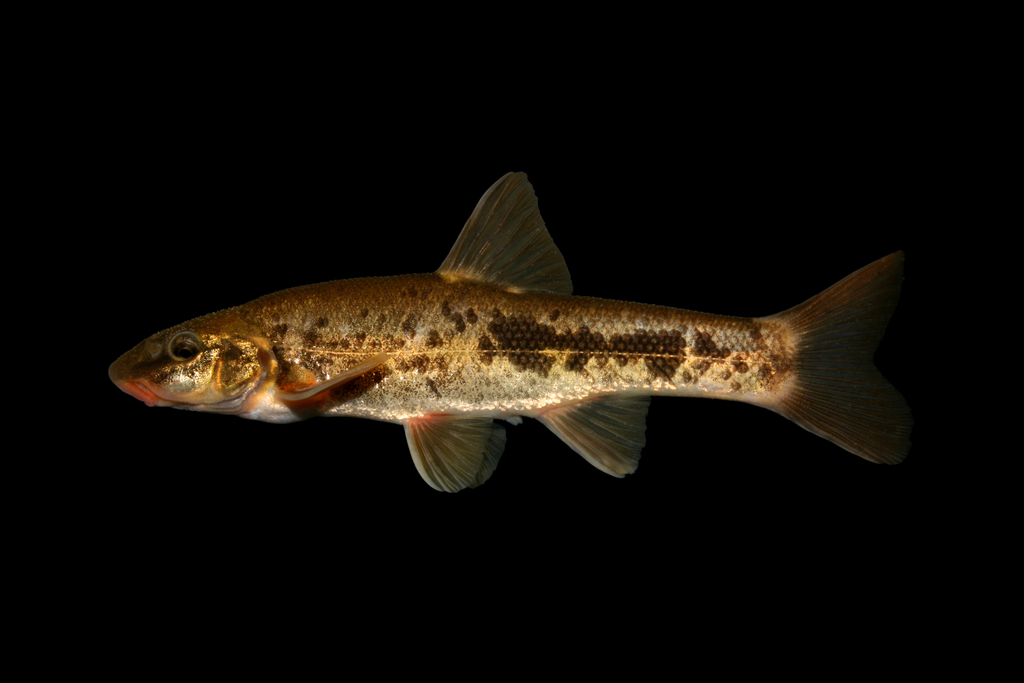
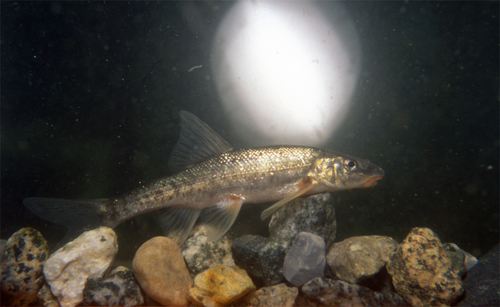
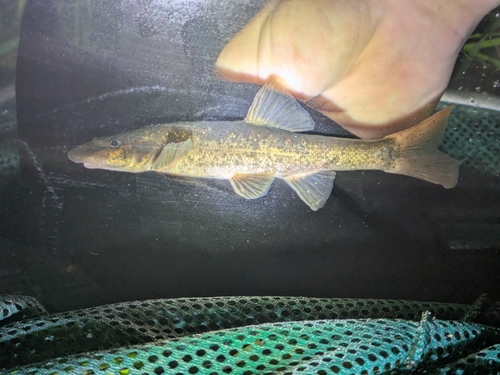
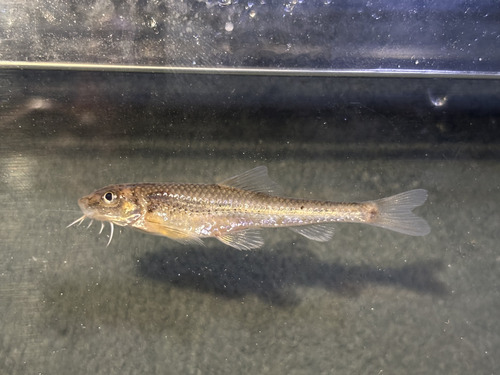
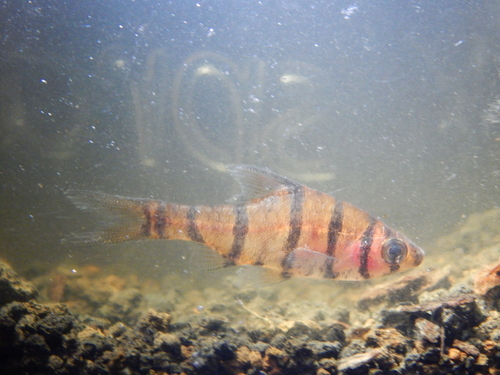
The longnose dace is a stocky, bottom-living cyprinid of the family Leuciscidae reaching about 22 cm. The brownish, mottled body has a long, fleshy snout overhanging the inferior mouth, with a small barbel at the corner of the mouth - a build suited to life on the bottom of fast-flowing water. The species is one of the most widespread freshwater fish of North America and lives in fast, stony streams and rivers (riffles) and along wave-washed lake shores. Among the stones it searches, mainly at night, for insect larvae, small crustaceans and algae. Because of its small size it has no fishery value, but it is an important prey fish.

Frequently asked questions

How do you recognise the Longnose dace?

The Longnose dace has an elongate, eel-like body, is mainly brown and shows a spots pattern. Stocky, bottom-living cyprinid with a long snout projecting over the mouth and an inferior mouth; lives in fast-flowing water.

Where does the Longnose dace live?

The Longnose dace lives in fresh water and is mostly found around stony or rocky ground. Fresh water of much of North America, in fast-flowing, stony streams and rivers (riffles) and along wave-washed shores of lakes.

How big does the Longnose dace get?

The Longnose dace grows to a maximum of about 23 cm. On average the species is around 9 cm.

Is the Longnose dace dangerous to humans?

No, the Longnose dace is harmless to humans. None required: this species is harmless to humans.

Is the Longnose dace edible?

The Longnose dace is not usually eaten.

More photos

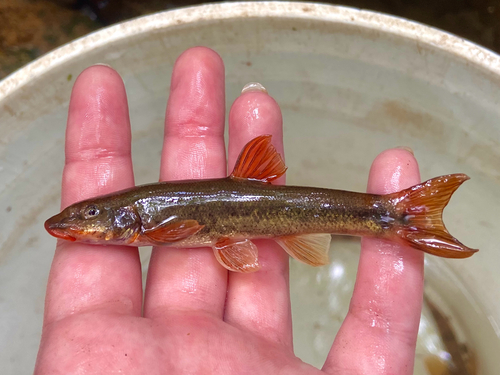
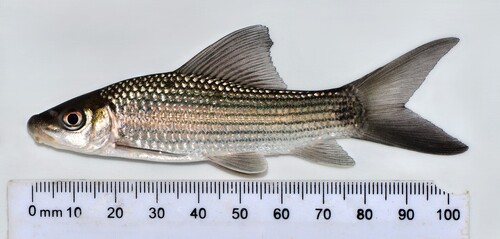
Longnose dace (Rhinichthys cataractae) — Cyprinidae — 2
Wikimedia Commons — U.S. Fish and Wildlife Service (Public domain)
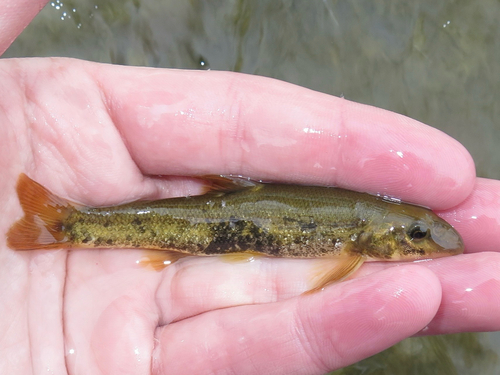
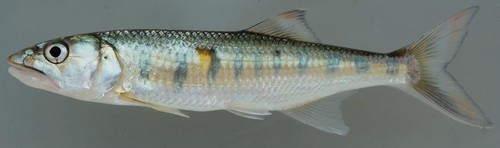
Longnose dace (Rhinichthys cataractae) — Cyprinidae — 3
iNaturalist ((c) Katy Tramel Wilson, some rights reserved (CC BY-NC))
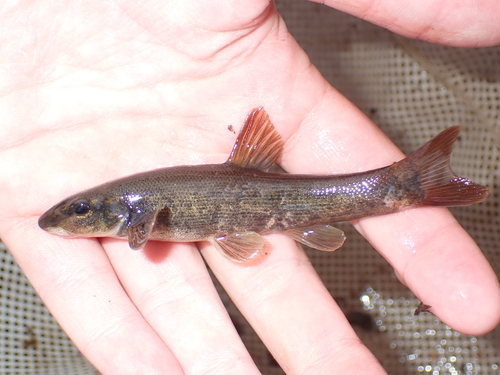
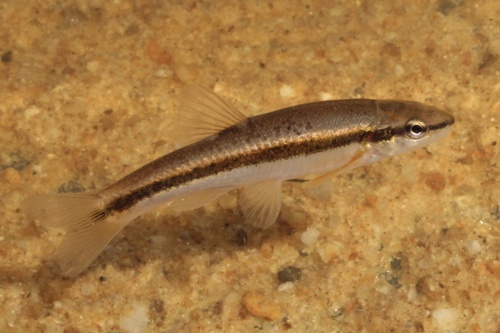
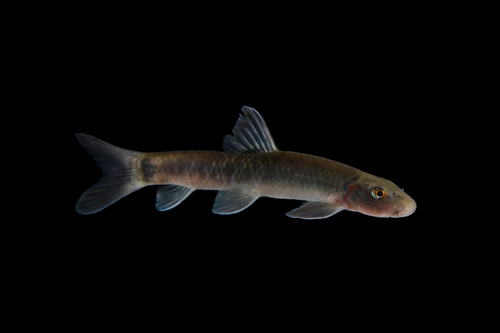
Longnose dace (Rhinichthys cataractae) — Cyprinidae — 4
Alexander Skevington (CC BY-NC 4.0) via GBIF — iNaturalist
Longnose dace (Rhinichthys cataractae) — Cyprinidae — 5
iNaturalist ((c) Oscar Upson, some rights reserved (CC BY-NC))
Fin

Want the complete picture on the Longnose dace?

Point your camera at the fish and Fin names the species in seconds. Free, and the Longnose dace is one of 12,519 species in the app.

Get the app →

All data

Identification

English name
Longnose dace verified
Scientific name
Rhinichthys cataractae
Family
Cyprinidae
Other names
Longnose dace; Great Lakes longnose dace verified

Appearance

Size class
Medium verified
Max length (cm)
22.5 verified
Average length (cm)
9.4 verified
Body shape
Elongated (eel-like) sourced
Dominant colour
Brown sourced
Pattern
Spots sourced
Tail shape
Forked inferred
Mouth position
Inferior (downward) inferred
Lips
Thick / fleshy inferred
Barbels
Yes verified
Dorsal fins
One continuous sourced
Dorsal spines
No verified

Habitat & distribution

Water type
Freshwater verified
Substrate
Stone or rock verified
Natural range
Fresh water of much of North America, in fast-flowing, stony streams and rivers (riffles) and along wave-washed shores of lakes. verified
Origin
Native verified

Behaviour & biology

Diet
Carnivore verified
Diet (detail)
Insect larvae, small crustaceans and algae from the bottom sourced
Social behaviour
Small groups verified
Territorial
Yes verified
Activity
Nocturnal inferred
Reproduction
Separate sexes verified
Sexual dimorphism
No verified
levensduur_max_jaar
5.0 verified
Seasonality
Spawns in spring on gravel banks; the male defends a territory on the bottom. sourced
Special features
Stocky, bottom-living cyprinid with a long snout projecting over the mouth and an inferior mouth; lives in fast-flowing water. sourced

For anglers

Edibility
Not eaten verified
Fishing method
Fishing with natural bait (fish, shrimp, worm) or lures close to reef and rock structures. inferred
Regulations source
FishBase ↗ inferred

Safety

Danger to humans
Harmless verified
First aid
None required: this species is harmless to humans. sourced

Status & sources

Sources
FishBase via GBIF (DwC-A), CC-BY-NC 4.0

Same genus Rhinichthys

More from the family Cyprinidae

Fin

Want the complete picture on the Longnose dace?

Point your camera at the fish and Fin names the species in seconds. Free, and the Longnose dace is one of 12,519 species in the app.

Get the app →
Is this the Longnose dace? Get the app