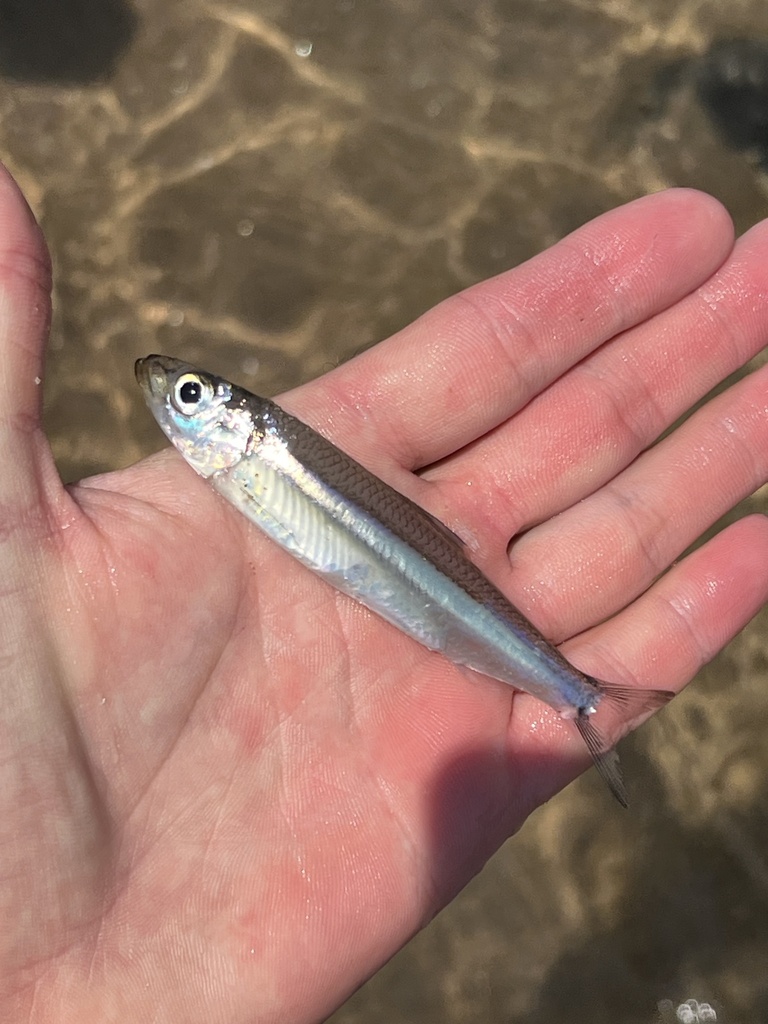
The Lake Tanganyika sardine (Limnothrissa miodon) is a freshwater fish of the family Clupeidae that grows up to 17 cm.
Description
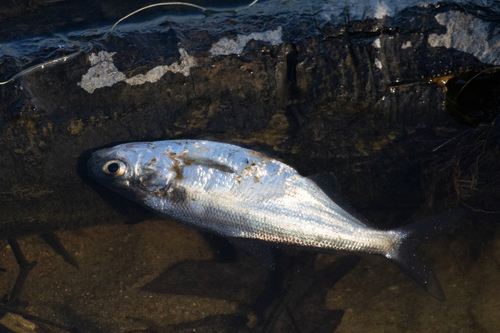
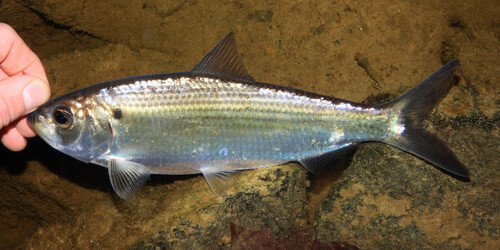
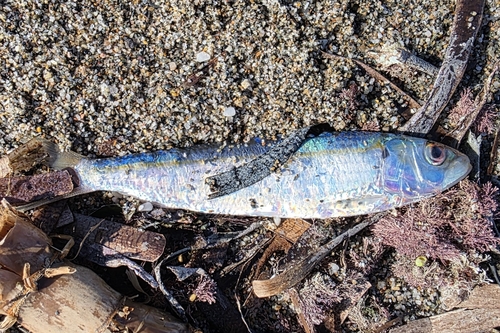
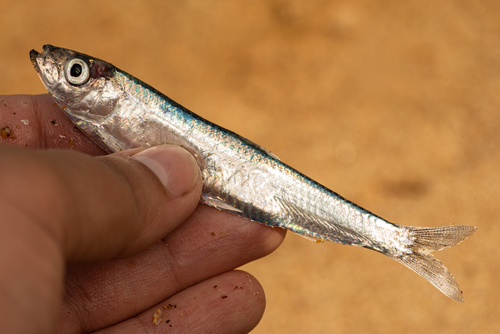
The Lake Tanganyika sardine is a small, silvery herring-like freshwater fish of the family Dorosomatidae (formerly Clupeidae) reaching about 17 cm. The slender, streamlined body shines silvery-blue. Unlike most herrings it lives its whole life in fresh water: originally pelagic in the open water of Lake Tanganyika in East Africa. With fine gill rakers it filters zooplankton from the water. It forms enormous schools that rise to the surface at night, where it is caught with lamps and nets. Through its great numbers the Lake Tanganyika sardine is one of the most important food and livelihood fish around the lake and has been stocked in reservoirs such as Lake Kariba and Lake Kivu.
Frequently asked questions
How do you recognise the Lake Tanganyika sardine?
The Lake Tanganyika sardine has a torpedo-shaped body, is mainly silver-grey and shows a plain pattern.
Where does the Lake Tanganyika sardine live?
The Lake Tanganyika sardine lives in fresh water and is mostly found around open water.
How big does the Lake Tanganyika sardine get?
The Lake Tanganyika sardine grows to a maximum of about 17 cm. On average the species is around 10 cm.
Is the Lake Tanganyika sardine dangerous to humans?
No, the Lake Tanganyika sardine is harmless to humans.
Is the Lake Tanganyika sardine edible?
Yes, the Lake Tanganyika sardine is a highly prized food fish.
Download Fin's Fish Guide
Identify fish in seconds, log your catches and dives. Join the TestFlight beta.
All data
Identification
Appearance
Habitat & distribution
Behaviour & biology
For anglers
Safety
Status & sources
More from the family Clupeidae

Download Fin's Fish Guide
Identify fish in seconds, log your catches and dives. Join the TestFlight beta.