 Fin's Fish Guide
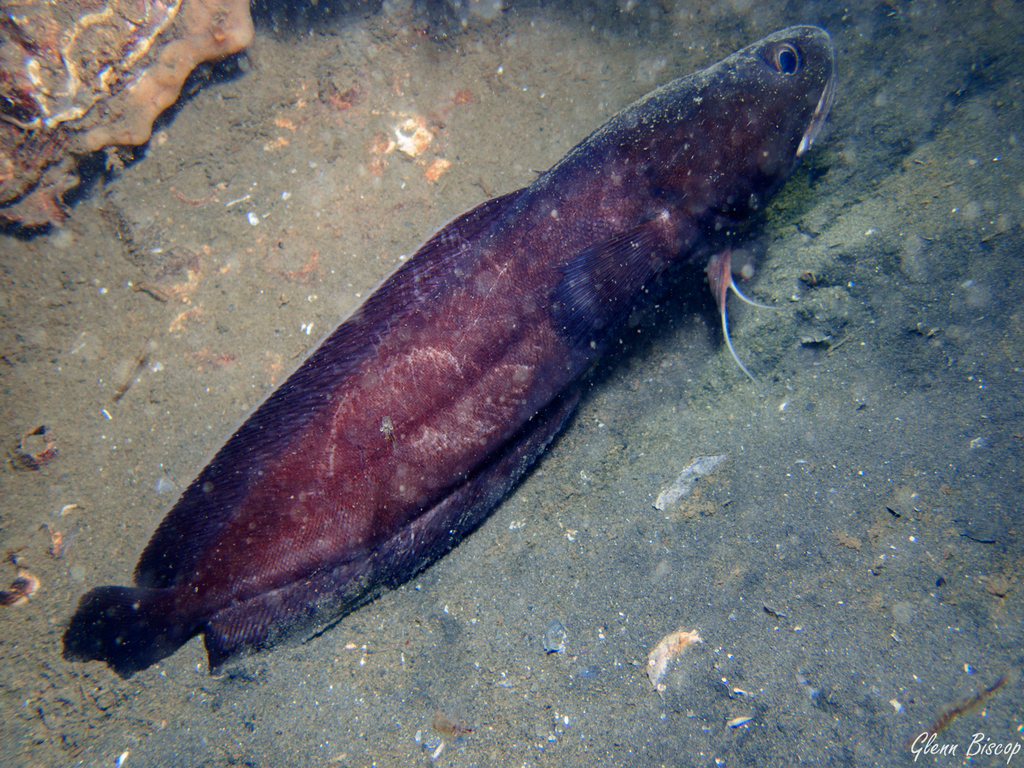
The Lesser forkbeard (Raniceps raninus) is a saltwater fish of the family Gadidae that grows up to 30 cm.
Northeast Atlantic, including the North Sea and the western Baltic Sea, on rocky and seaweed-covered bottoms of shallow coastal water.
Description
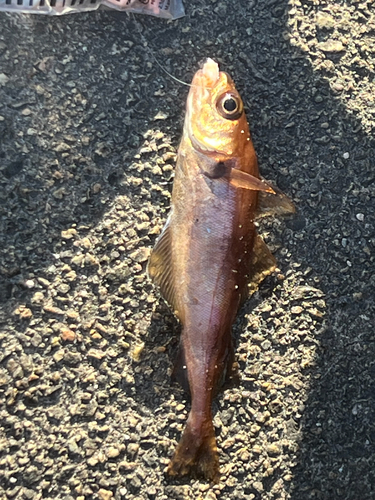
The lesser forkbeard or tadpole-fish is a cod relative of the family Gadidae reaching about 30 cm. It stands out for a disproportionately large, broad and flattened head that recalls a frog, and a small chin barbel. The body is dark brown to almost black, with a velvety skin. The first dorsal fin is very small and hard to see, the second long. The species lives hidden on rocky and weed-covered bottoms of the north-eastern Atlantic, the North Sea and the western Baltic, in shallow coastal water. At night it hunts small crustaceans, worms and bottom fish. Because of its hidden lifestyle and small size it has no fishery importance.
Frequently asked questions
How do you recognise the Lesser forkbeard?
The Lesser forkbeard has a torpedo-shaped body, is mainly black and shows a plain pattern. Dark cod relative with a strikingly large, broad, frog-like head and a small chin barbel; the first dorsal fin is very small.
Where does the Lesser forkbeard live?
The Lesser forkbeard lives in the sea (marine waters) and is mostly found around sand or mud bottom. Northeast Atlantic, including the North Sea and the western Baltic Sea, on rocky and seaweed-covered bottoms of shallow coastal water.
How big does the Lesser forkbeard get?
The Lesser forkbeard grows to a maximum of about 30 cm. On average the species is around 20 cm.
Is the Lesser forkbeard dangerous to humans?
No, the Lesser forkbeard is harmless to humans. None required: this species is harmless to humans.
Is the Lesser forkbeard edible?
The Lesser forkbeard is not usually eaten.
More photos
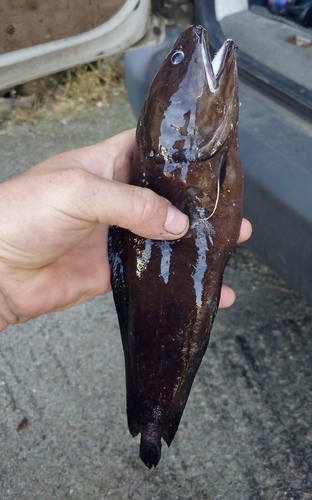
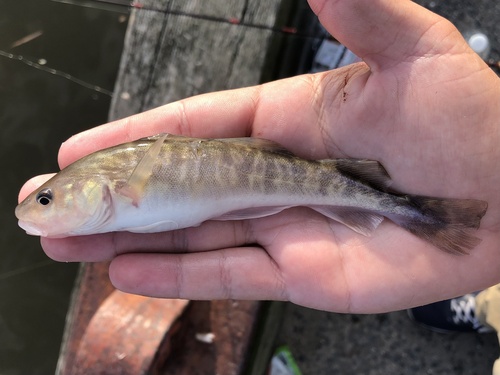
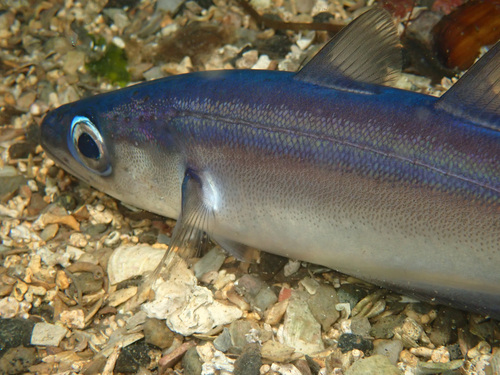
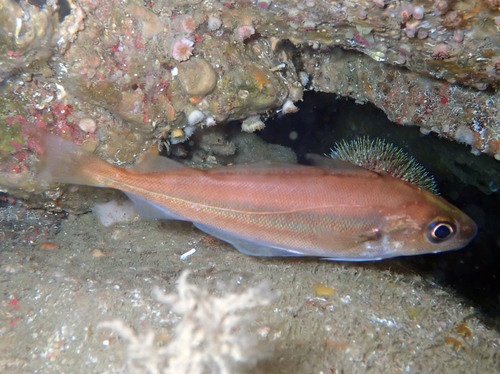
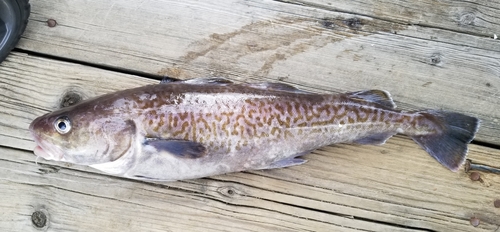
Easily confused with
These species look like the Lesser forkbeard and live in the same waters.
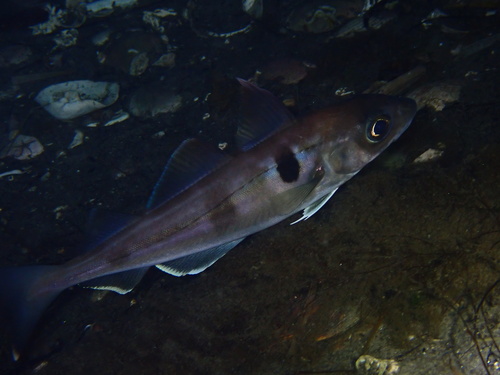



Want the complete picture on the Lesser forkbeard?
Point your camera at the fish and Fin names the species in seconds. Free, and the Lesser forkbeard is one of 12,519 species in the app.
All data
Identification
Appearance
Habitat & distribution
Behaviour & biology
For anglers
Safety
Status & sources
More from the family Gadidae
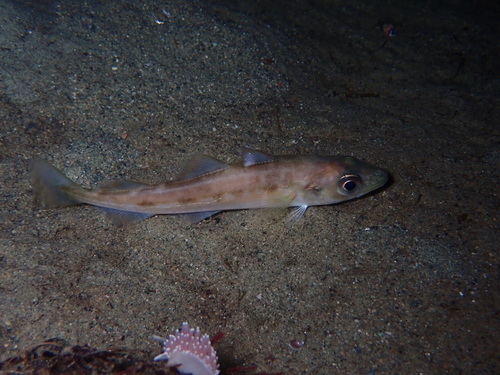


Want the complete picture on the Lesser forkbeard?
Point your camera at the fish and Fin names the species in seconds. Free, and the Lesser forkbeard is one of 12,519 species in the app.