 Fin's Fish Guide

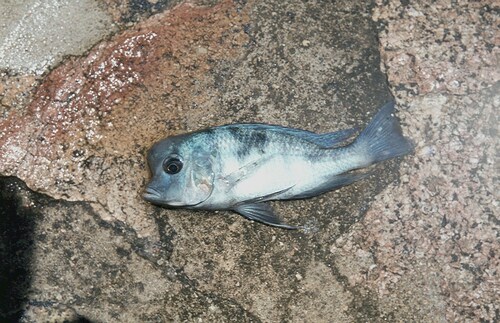
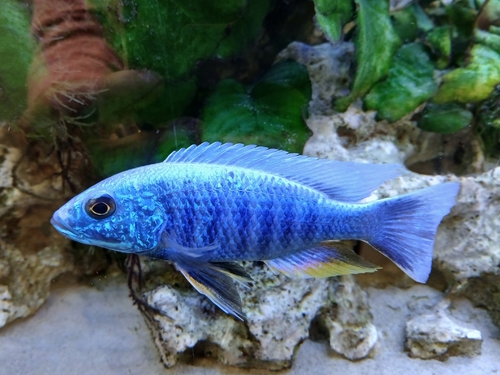
The Hump-head (Cyrtocara moorii) is a freshwater fish of the family Cichlidae that grows up to 20 cm.
Description
The blue dolphin cichlid is a striking cichlid endemic to Lake Malawi in East Africa. The species reaches about 20 cm, is uniformly sky-blue and develops a large hump on the forehead with age, to which the name 'dolphin' refers. It occurs over sandy bottoms in fairly shallow water. Characteristic is its foraging behaviour: it follows digging, sand-sifting cichlids and gobies and snatches the small invertebrates stirred up by their activity. Like most Lake Malawi cichlids the species is a maternal mouthbrooder. It is popular in the aquarium trade but vulnerable (VU) in the wild.
Frequently asked questions
How do you recognise the Hump-head?
The Hump-head has a torpedo-shaped body, is mainly blue and shows a plain pattern. Striking forehead hump; follows digging fishes to seize prey they stir up; vulnerable (VU).
Where does the Hump-head live?
The Hump-head lives in fresh water and is mostly found around mixed bottom. Endemic to Lake Malawi in East Africa.
How big does the Hump-head get?
The Hump-head grows to a maximum of about 20 cm. On average the species is around 14 cm.
Is the Hump-head dangerous to humans?
No, the Hump-head is harmless to humans. None required: this species is harmless to humans.
Is the Hump-head edible?
Yes, the Hump-head is commonly eaten.
More photos



Want the complete picture on the Hump-head?
Point your camera at the fish and Fin names the species in seconds. Free, and the Hump-head is one of 12,519 species in the app.
All data
Identification
Appearance
Habitat & distribution
Behaviour & biology
For anglers
Safety
Status & sources
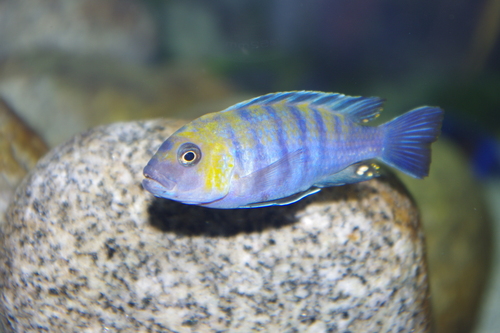
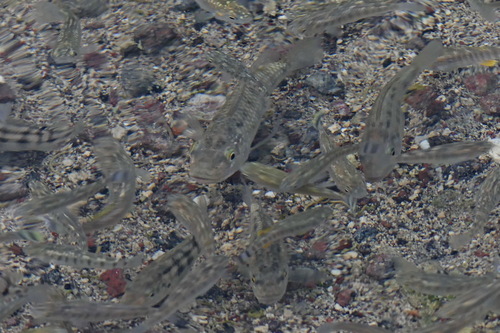
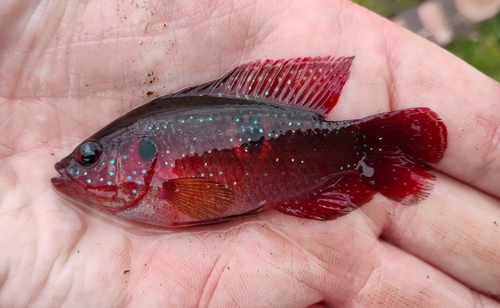
More from the family Cichlidae




Want the complete picture on the Hump-head?
Point your camera at the fish and Fin names the species in seconds. Free, and the Hump-head is one of 12,519 species in the app.