 Fin's Fish Guide
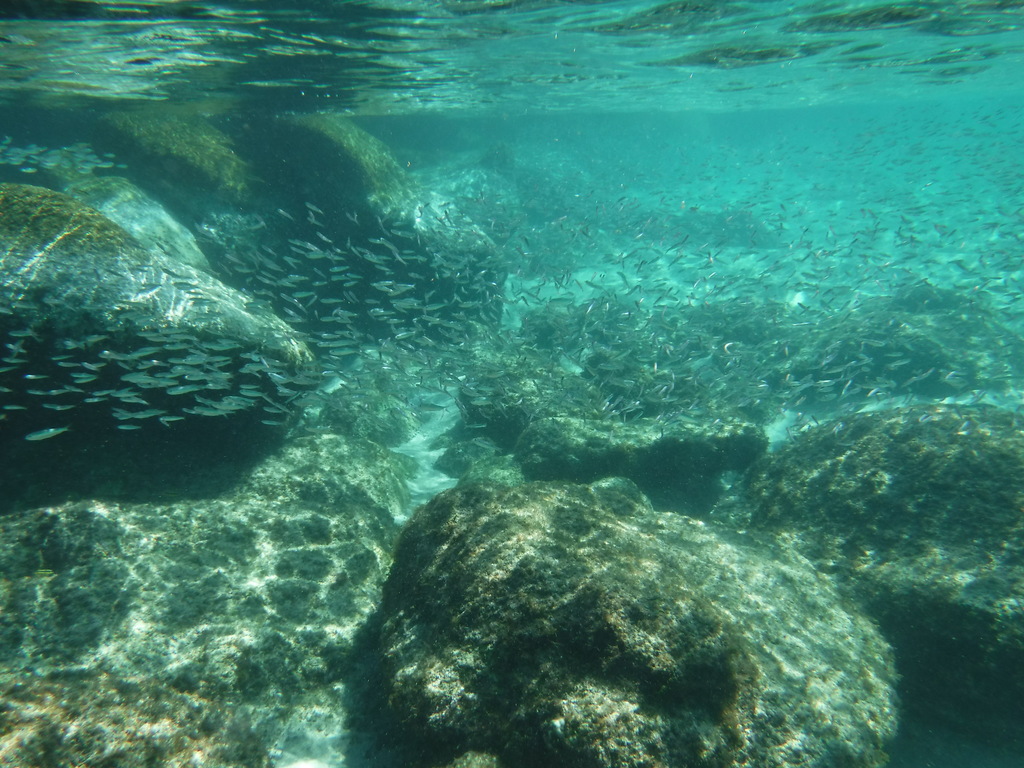
The Herring (Lile stolifera) is a saltwater fish of the family Clupeidae that grows up to 16 cm.
Eastern Pacific, in coastal waters, lagoons and estuaries; tolerates brackish and fresh water.
Description
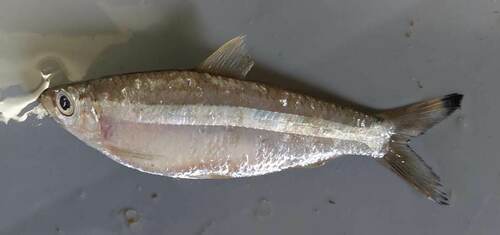
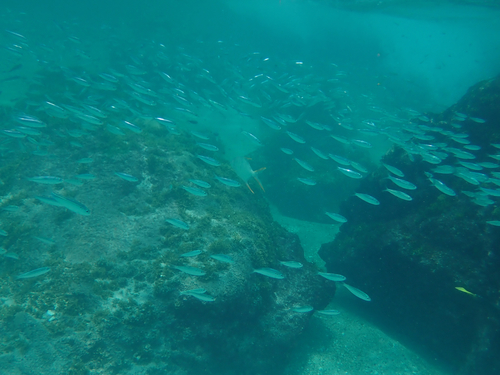
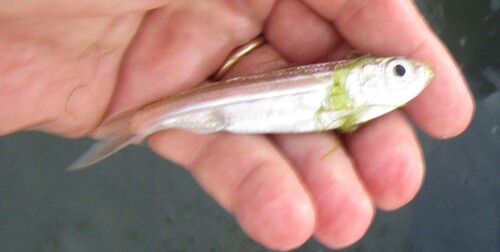
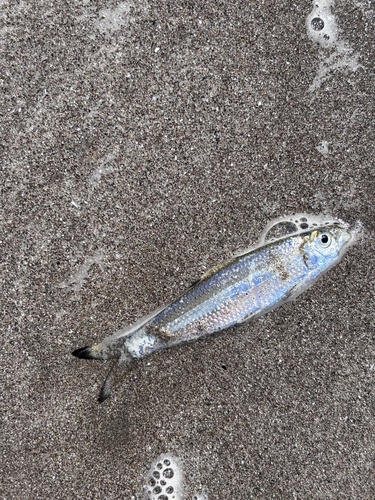
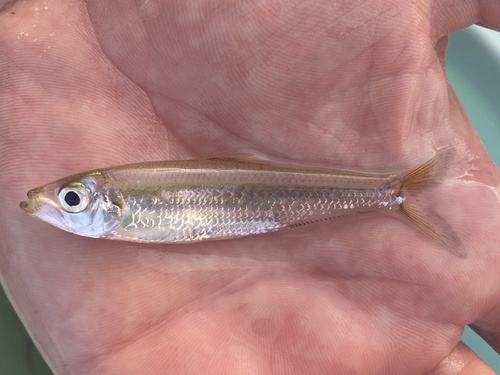
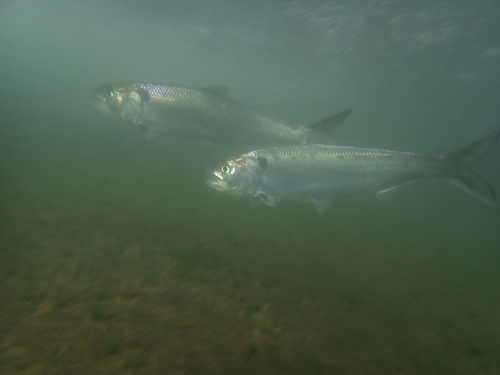
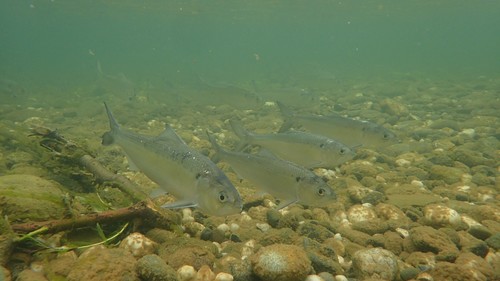
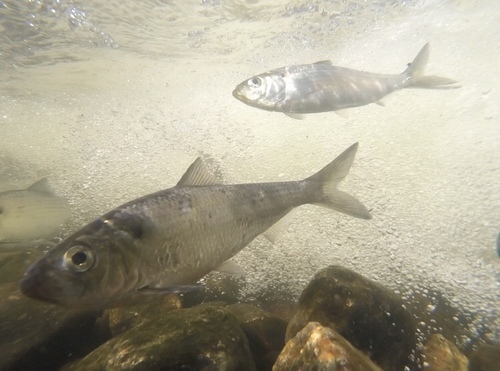
The striped herring is a small herring (family Clupeidae) of the eastern Pacific. The species reaches about 16 cm and has a laterally compressed, silvery body with a shining lateral stripe. It is a coastal-pelagic species that forms dense schools on beaches, in lagoons and estuaries and tolerates salt, brackish and fresh water. As a filter feeder it lives on plankton, especially small crustaceans. The species is of modest commercial value and is an important food source for predatory fishes and seabirds. It is harmless to humans.
Frequently asked questions
How do you recognise the Herring?
The Herring has a torpedo-shaped body, is mainly silver-grey and shows a horizontal stripes pattern. Forms dense shoals on beaches and in estuaries; tolerates salt, brackish and fresh water.
Where does the Herring live?
The Herring lives in the sea (marine waters) and is mostly found around open water. Eastern Pacific, in coastal waters, lagoons and estuaries; tolerates brackish and fresh water.
How big does the Herring get?
The Herring grows to a maximum of about 16 cm. On average the species is around 10 cm.
Is the Herring dangerous to humans?
No, the Herring is harmless to humans. None required: this species is harmless to humans.
Is the Herring edible?
The Herring is rarely eaten.
More photos


Want the complete picture on the Herring?
Point your camera at the fish and Fin names the species in seconds. Free, and the Herring is one of 12,519 species in the app.
All data
Identification
Appearance
Habitat & distribution
Behaviour & biology
For anglers
Safety
Status & sources
Same genus Lile
More from the family Clupeidae




Want the complete picture on the Herring?
Point your camera at the fish and Fin names the species in seconds. Free, and the Herring is one of 12,519 species in the app.