 Fin's Fish Guide
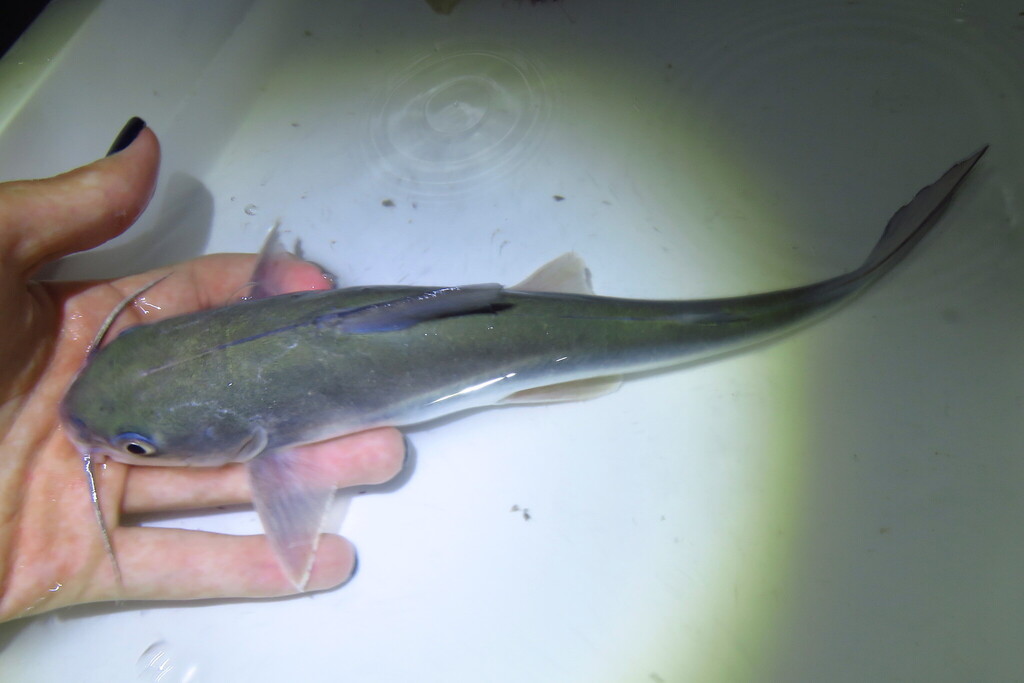
The Hardhead sea catfish (Ariopsis felis) is a fish that lives in both fresh and salt water of the family Ariidae that grows up to 70 cm.
Western Atlantic along the east coast of the USA and the Gulf of Mexico, over soft bottoms of coastal water and estuaries; tolerates widely varying salinities.
Description
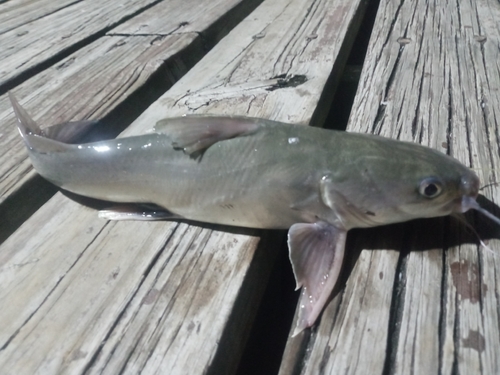
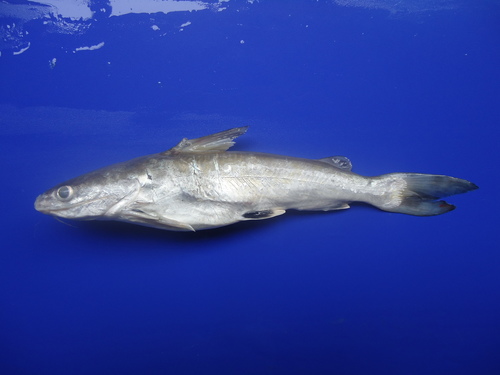
The hardhead sea catfish is a marine catfish of the family Ariidae reaching about 70 cm. The silvery-grey, scaleless body has two pairs of barbels around the inferior mouth and strong, serrated spines in the dorsal and pectoral fins, with venom at the base; a prick is very painful. The species lives over soft bottoms of coastal water and estuaries along the east coast of the USA and the Gulf of Mexico and tolerates strongly varying salinities. On the bottom it searches, mainly at night, for crabs, shrimps, crustaceans, worms and small fish. Like other sea catfishes it is a mouthbrooder: the male carries the large, marble-sized eggs and young in its mouth. It is often caught as unwanted bycatch; handle with care because of the venomous spines.
Frequently asked questions
How do you recognise the Hardhead sea catfish?
The Hardhead sea catfish has an elongate, eel-like body, is mainly silver-grey and shows a plain pattern. Marine catfish with two pairs of barbels and strong, venomous spines in the dorsal and pectoral fins; the male broods the large eggs in his mouth.
Where does the Hardhead sea catfish live?
The Hardhead sea catfish lives in both fresh and salt water and is mostly found around sand or mud bottom. Western Atlantic along the east coast of the USA and the Gulf of Mexico, over soft bottoms of coastal water and estuaries; tolerates widely varying salinities.
How big does the Hardhead sea catfish get?
The Hardhead sea catfish grows to a maximum of about 70 cm. On average the species is around 25 cm.
Is the Hardhead sea catfish dangerous to humans?
The Hardhead sea catfish is venomous — handle spines with care and seek medical help after a sting if needed. The pectoral and dorsal fin spines are venomous; a prick causes severe, burning pain. Immerse the wound for 30-90 minutes in water as hot as can be tolerated (about 45 C) and seek medical help for a severe reaction.
Is the Hardhead sea catfish edible?
The Hardhead sea catfish is rarely eaten.
More photos
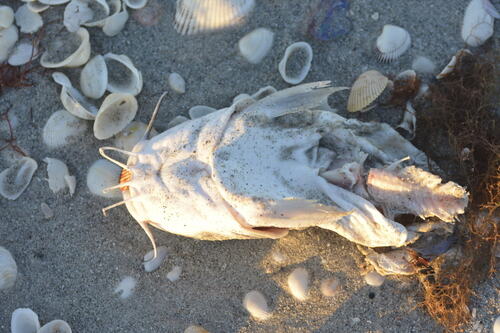

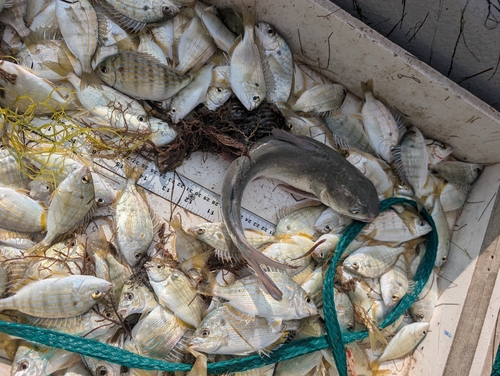
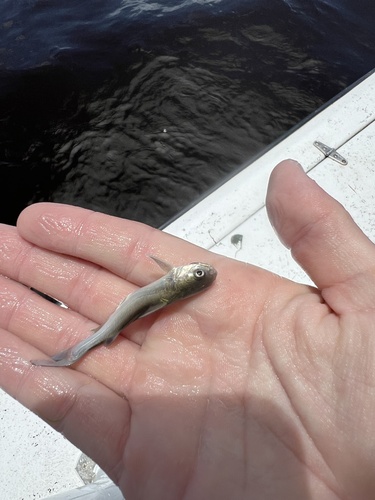

Want the complete picture on the Hardhead sea catfish?
Point your camera at the fish and Fin names the species in seconds. Free, and the Hardhead sea catfish is one of 12,519 species in the app.
All data
Identification
Appearance
Habitat & distribution
Behaviour & biology
For anglers
Safety
Status & sources
Same genus Ariopsis

More from the family Ariidae


Want the complete picture on the Hardhead sea catfish?
Point your camera at the fish and Fin names the species in seconds. Free, and the Hardhead sea catfish is one of 12,519 species in the app.