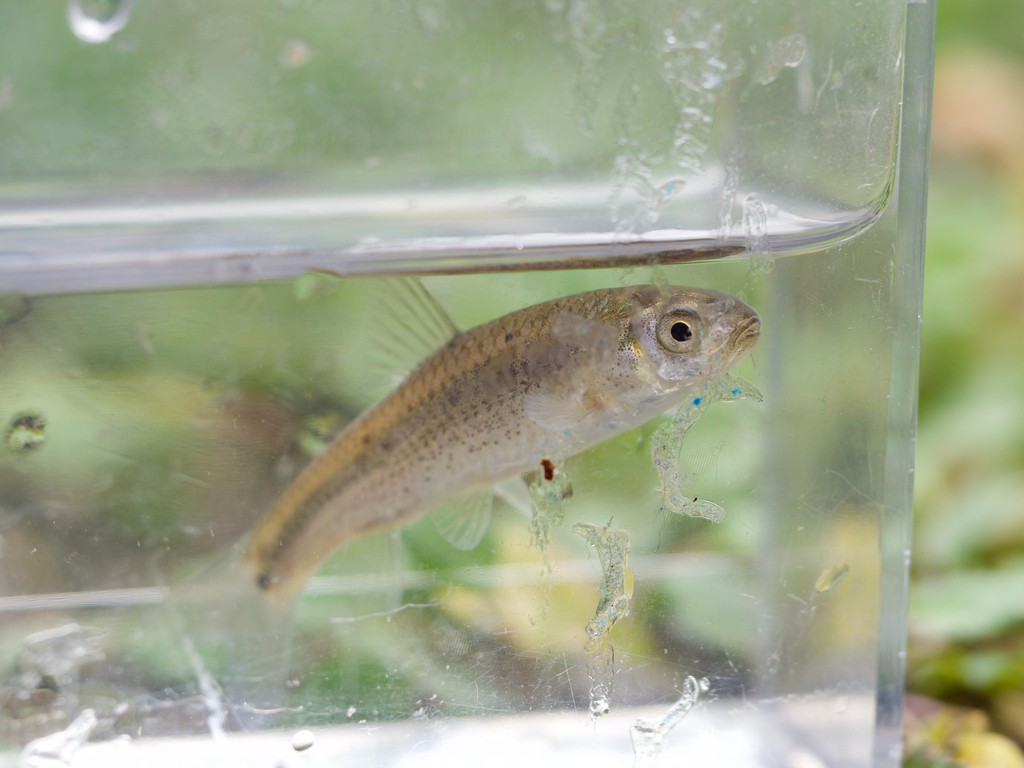
The Tamoroko (Gnathopogon elongatus) is a freshwater fish of the family Cyprinidae that grows up to 13 cm.
Description
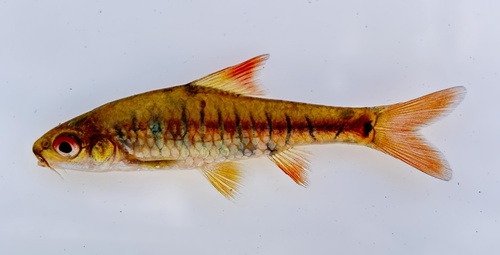
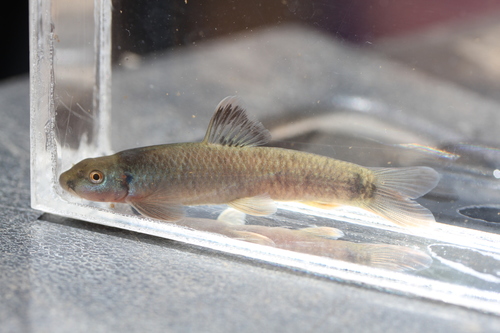
The tamoroko is a small, slender cyprinid of the family Gobionidae reaching about 13 cm. The elongate, brown-silver body has a short barbel at the corner of the mouth and a dark lengthwise stripe along the flank. The species comes from Japan and lives in schools in lakes, ponds, ditches and slow-flowing rivers with abundant water plants. As an omnivore it eats zooplankton, insect larvae, algae and detritus. In spring it lays sticky eggs among the water plants. It is a common freshwater fish caught locally as a small food fish and occasionally seen in the aquarium hobby.
Frequently asked questions
How do you recognise the Tamoroko?
The Tamoroko has a torpedo-shaped body, is mainly brown and shows a horizontal stripes pattern.
Where does the Tamoroko live?
The Tamoroko lives in fresh water and is mostly found around algae or seagrass beds.
How big does the Tamoroko get?
The Tamoroko grows to a maximum of about 13 cm.
Is the Tamoroko dangerous to humans?
No, the Tamoroko is harmless to humans.
Is the Tamoroko edible?
Yes, the Tamoroko is commonly eaten.
Download Fin's Fish Guide
Identify fish in seconds, log your catches and dives. Join the TestFlight beta.
All data
Identification
Appearance
Habitat & distribution
Behaviour & biology
For anglers
Safety
Status & sources
Same genus Gnathopogon

More from the family Cyprinidae


Download Fin's Fish Guide
Identify fish in seconds, log your catches and dives. Join the TestFlight beta.