Home · Polynemidae · Giant African threadfin
Giant African threadfin (Polydactylus quadrifilis) — Polynemidae

Giant African threadfin

Polydactylus quadrifilis
Family: Polynemidae
LC · Least Concern

The Giant African threadfin (Polydactylus quadrifilis) is a fish that lives in both fresh and salt water of the family Polynemidae that grows up to 200 cm.

Length
200 cm
Water
Euryhaline
Depth
15.0–55.0 m
Diet
Carnivore
Behaviour
Solitary
Activity
Nocturnal
Body shape
Torpedo-shaped
Substrate
Sand / mud bottom
Danger
Harmless
Range
Eastern Atlantic along the coast of West Africa, in coastal water, brackish estuaries and the lower reaches of rivers over soft bottoms.
Edibility
Highly prized

Want the complete picture on the Giant African threadfin?

Get the app

Description

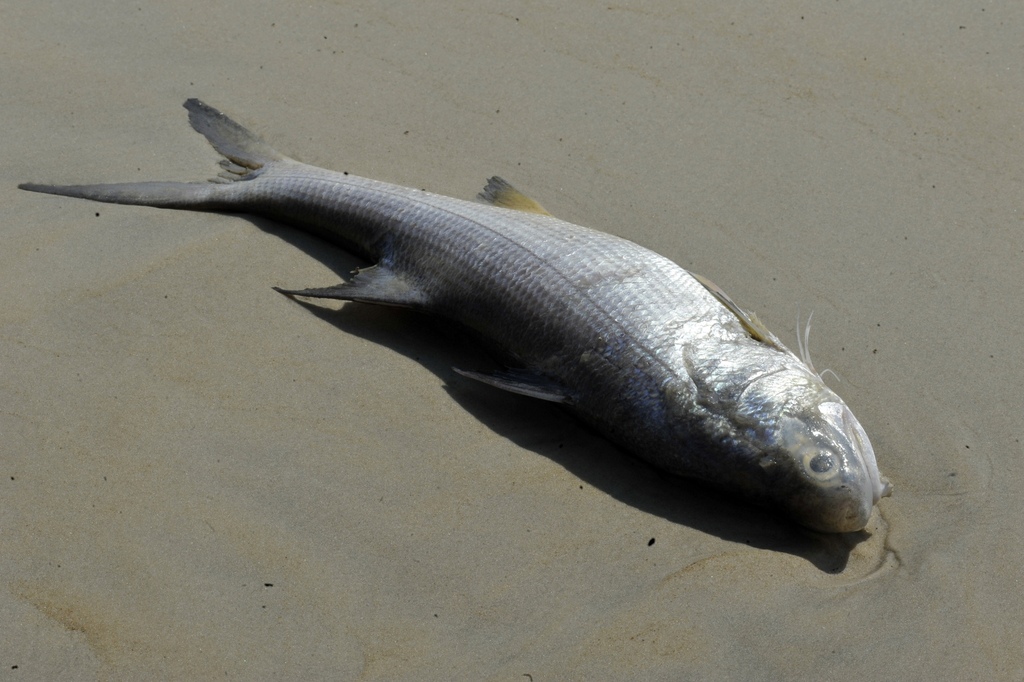
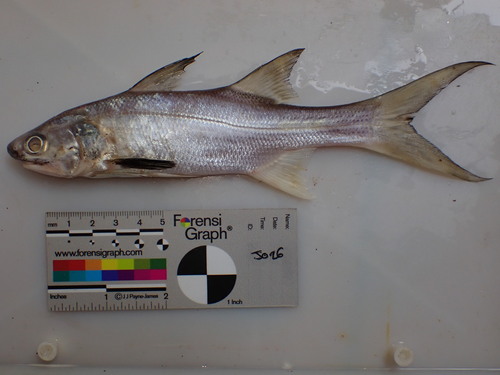
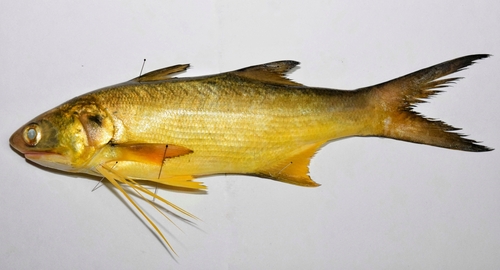
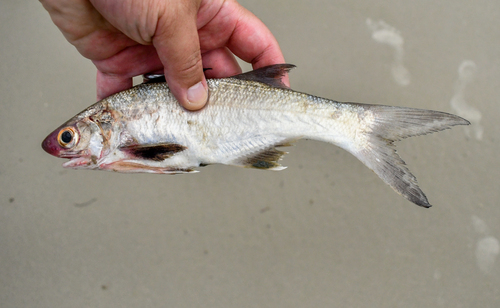
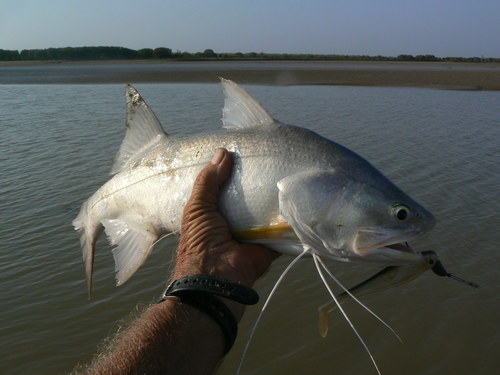
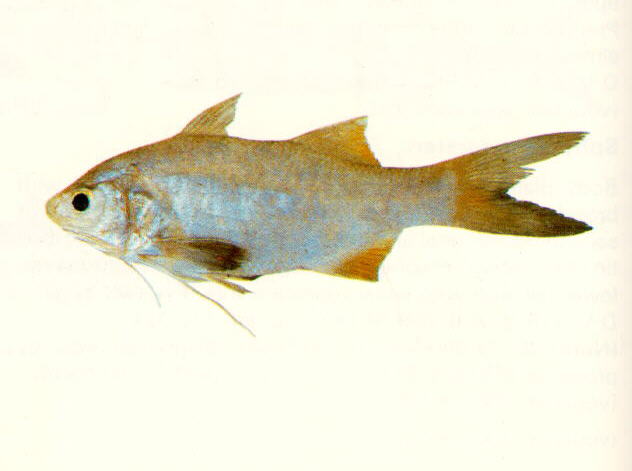
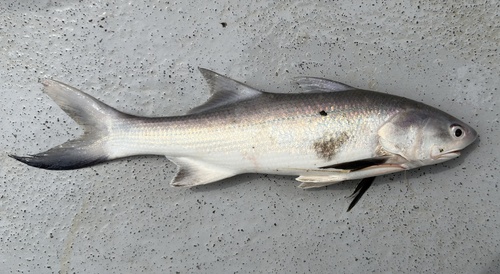
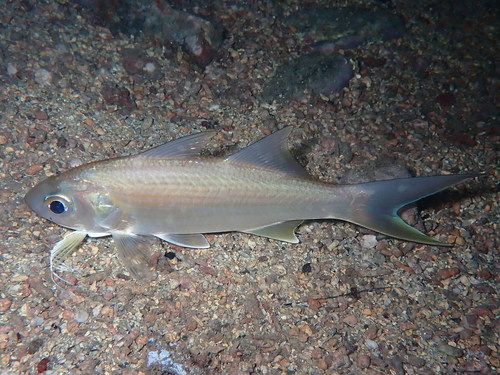
The giant African threadfin is a large, powerful threadfin of the family Polynemidae reaching about 2 metres. The silvery body has a blunt, projecting snout with an inferior mouth, and the row of separate, thread-like lower pectoral-fin rays typical of the family, which feel over the bottom like feelers. The species lives in coastal water and runs far into brackish estuaries and the lower reaches of rivers along the West African coast. As a predator it hunts shrimps, crabs, crustaceans and fish. It is a protandrous hermaphrodite: individuals begin as males and later become females. Among anglers it is known, as the 'captain', as one of the hardest-fighting fish of West Africa.

Frequently asked questions

How do you recognise the Giant African threadfin?

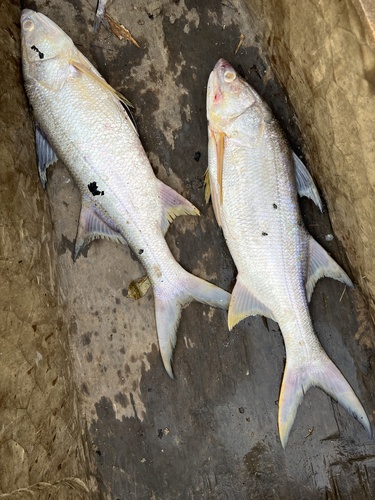
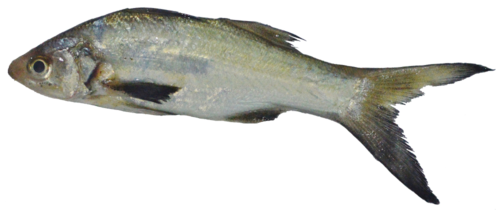
The Giant African threadfin has a torpedo-shaped body, is mainly silver-grey and shows a plain pattern. Large, powerful threadfin with a blunt snout and free, thread-like lower pectoral fin rays; moves far into brackish estuaries and rivers.

Where does the Giant African threadfin live?

The Giant African threadfin lives in both fresh and salt water and is mostly found around sand or mud bottom. Eastern Atlantic along the coast of West Africa, in coastal water, brackish estuaries and the lower reaches of rivers over soft bottoms.

How big does the Giant African threadfin get?

The Giant African threadfin grows to a maximum of about 200 cm. On average the species is around 150 cm.

Is the Giant African threadfin dangerous to humans?

No, the Giant African threadfin is harmless to humans. None required: this species is harmless to humans.

Is the Giant African threadfin edible?

Yes, the Giant African threadfin is a highly prized food fish.

More photos
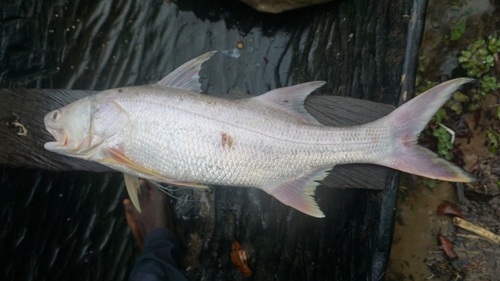
Giant African threadfin (Polydactylus quadrifilis) — Polynemidae — 2
iNaturalist ((c) Wongibe, some rights reserved (CC BY-NC))
Giant African threadfin (Polydactylus quadrifilis) — Polynemidae — 3
Wikimedia Commons — Buffon, Georges Louis Leclerc; Cuvier, Georges; Valenciennes (Public domain)
Giant African threadfin (Polydactylus quadrifilis) — Polynemidae — 4
iNaturalist ((c) H.Grenier, some rights reserved (CC BY-NC))
Giant African threadfin (Polydactylus quadrifilis) — Polynemidae — 5
iNaturalist ((c) Stefaneakame, some rights reserved (CC BY-NC))
Fin

Want the complete picture on the Giant African threadfin?

Point your camera at the fish and Fin names the species in seconds. Free, and the Giant African threadfin is one of 12,519 species in the app.

Get the app →

All data

Identification

English name
Giant African threadfin inferred
Scientific name
Polydactylus quadrifilis
Family
Polynemidae
Other names
Giant African threadfin; Spanish; Threadfin; Big Captain; Thread fin verified

Appearance

Size class
Extra large verified
Max length (cm)
200.0 verified
Average length (cm)
150.0 verified
Body shape
Torpedo-shaped sourced
Dominant colour
Silver / grey sourced
Pattern
Plain sourced
Tail shape
Forked inferred
Mouth position
Inferior (downward) inferred
Lips
Thick / fleshy inferred
Barbels
No verified
Dorsal fins
Two separate sourced
Dorsal spines
Yes verified

Habitat & distribution

Water type
Euryhaline verified
Substrate
Sand / mud bottom verified
Min depth (m)
15.0 verified
Max depth (m)
55.0 verified
Natural range
Eastern Atlantic along the coast of West Africa, in coastal water, brackish estuaries and the lower reaches of rivers over soft bottoms. verified
Origin
Native verified

Behaviour & biology

Diet
Carnivore verified
Diet (detail)
Shrimps, crabs, crustaceans and fishes from the bottom sourced
Social behaviour
Solitary verified
Territorial
No verified
Activity
Nocturnal inferred
Reproduction
Protandrous (male first) verified
Sexual dimorphism
No verified
Seasonality
Migrates between the sea and brackish estuaries; is a protandrous hermaphrodite (first male, later female). sourced
Special features
Large, powerful threadfin with a blunt snout and free, thread-like lower pectoral fin rays; moves far into brackish estuaries and rivers. sourced

For anglers

Edibility
Highly prized verified
Fishing method
Casting or bottom fishing with a baitfish or shrimp in brackish estuarine water; a powerful, highly sought-after sport fish (the 'captain') sourced
Regulations source
FishBase ↗ inferred

Safety

Danger to humans
Harmless verified
First aid
None required: this species is harmless to humans. sourced

Status & sources

Sources
FishBase via GBIF (DwC-A), CC-BY-NC 4.0

Same genus Polydactylus

More from the family Polynemidae
Fin

Want the complete picture on the Giant African threadfin?

Point your camera at the fish and Fin names the species in seconds. Free, and the Giant African threadfin is one of 12,519 species in the app.

Get the app →
Is this the Giant African threadfin? Get the app