Home · Acipenseridae · European sturgeon
European sturgeon (Acipenser sturio) — Acipenseridae

European sturgeon

Acipenser sturio
Family: Acipenseridae
CR · Critically Endangered

The European sturgeon (Acipenser sturio) is a fish that lives in both fresh and salt water of the family Acipenseridae that grows up to 600 cm.

Length
600 cm
Water
Euryhaline
Depth
4.0–93.0 m
Diet
Carnivore
Behaviour
Solitary
Activity
Nocturnal
Body shape
Elongated (eel-like)
Substrate
Sand / mud bottom
Danger
Harmless
Range
Northeast Atlantic coast and adjacent seas; anadromous, formerly spawned in large Western European rivers, now almost exclusively in the Gironde.
Edibility
Not eaten

Want the complete picture on the European sturgeon?

Get the app

Description

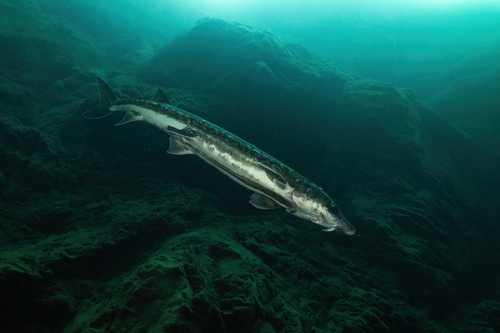
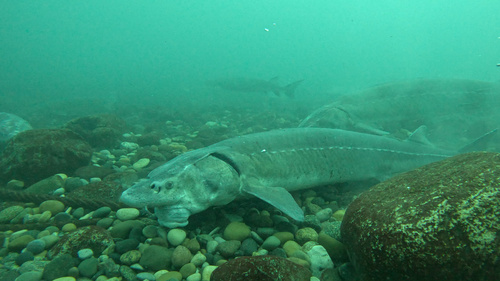
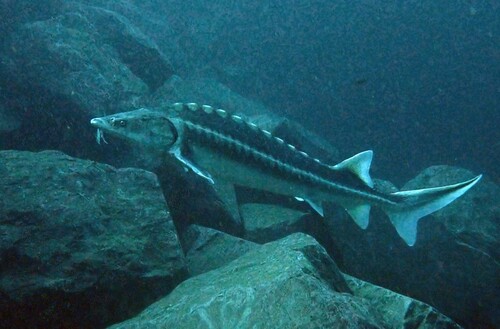
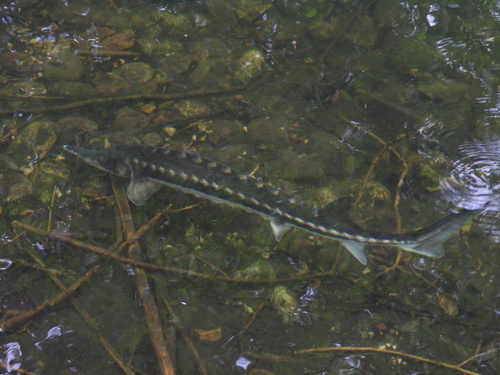
The European sturgeon is an ancient, cartilage-rich fish of the family Acipenseridae that can reach about 5 to 6 metres and a hundred years of age. Instead of scales the elongate body bears five rows of large bony plates. The pointed snout has four barbels in front of a protrusible, inferior mouth, with which the fish probes the bottom for worms, shellfish, crustaceans and small fish. The sturgeon is anadromous: it lives along the Atlantic coast and once ran up large western European rivers such as the Rhine, Meuse and Gironde to spawn. Through dams, pollution and overfishing for its eggs (caviar) the species is almost extinct and assessed as Critically Endangered (CR); it now reproduces in only one French river. Reintroduction programmes are trying to bring it back.

Frequently asked questions

How do you recognise the European sturgeon?

The European sturgeon has an elongate, eel-like body, is mainly brown and shows a plain pattern. Ancient cartilaginous sturgeon with five rows of bony scutes, a protrusible inferior mouth and four barbels in front of the mouth; migrates up the rivers to spawn.

Where does the European sturgeon live?

The European sturgeon lives in both fresh and salt water and is mostly found around sand or mud bottom. Northeast Atlantic coast and adjacent seas; anadromous, formerly spawned in large Western European rivers, now almost exclusively in the Gironde.

How big does the European sturgeon get?

The European sturgeon grows to a maximum of about 600 cm. On average the species is around 125 cm.

Is the European sturgeon dangerous to humans?

No, the European sturgeon is harmless to humans. None required: this species is harmless to humans.

Is the European sturgeon edible?

The European sturgeon is not usually eaten.

More photos
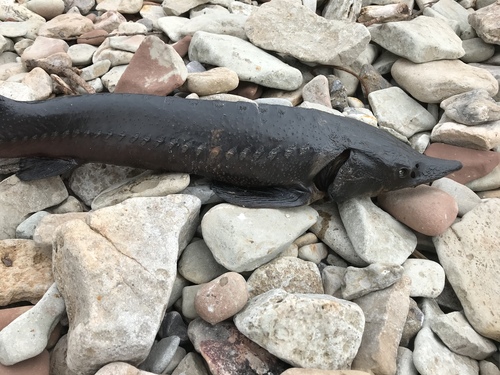
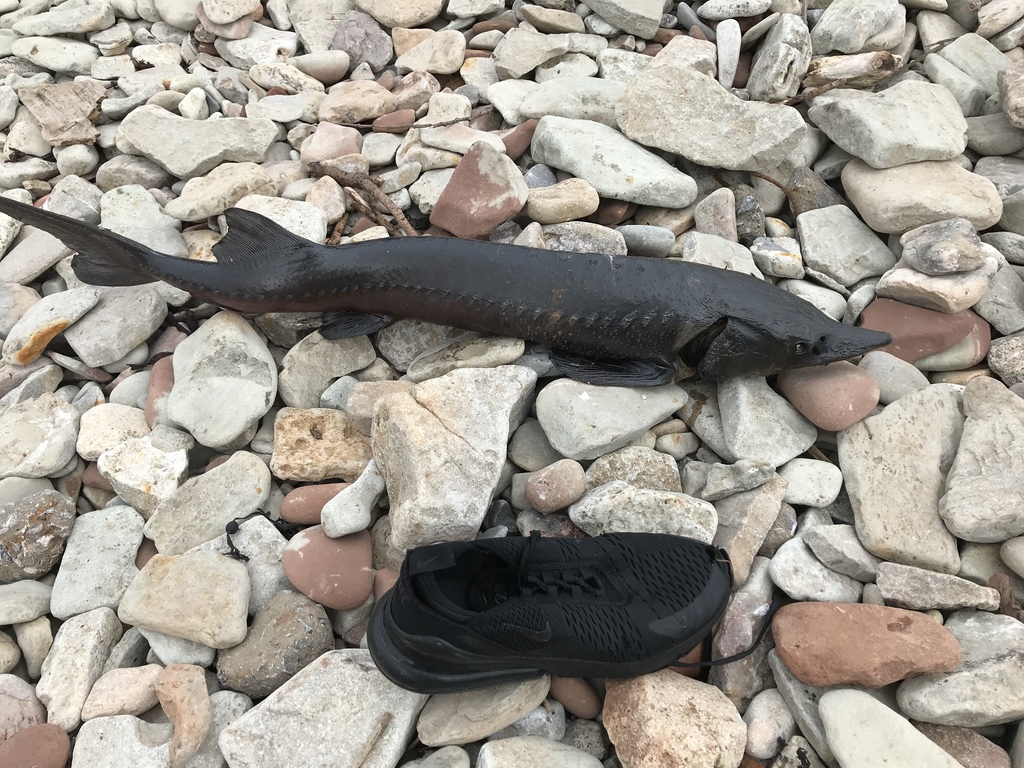
European sturgeon (Acipenser sturio) — Acipenseridae — 2
iNaturalist ((c) The Road Lab, some rights reserved (CC BY-NC))
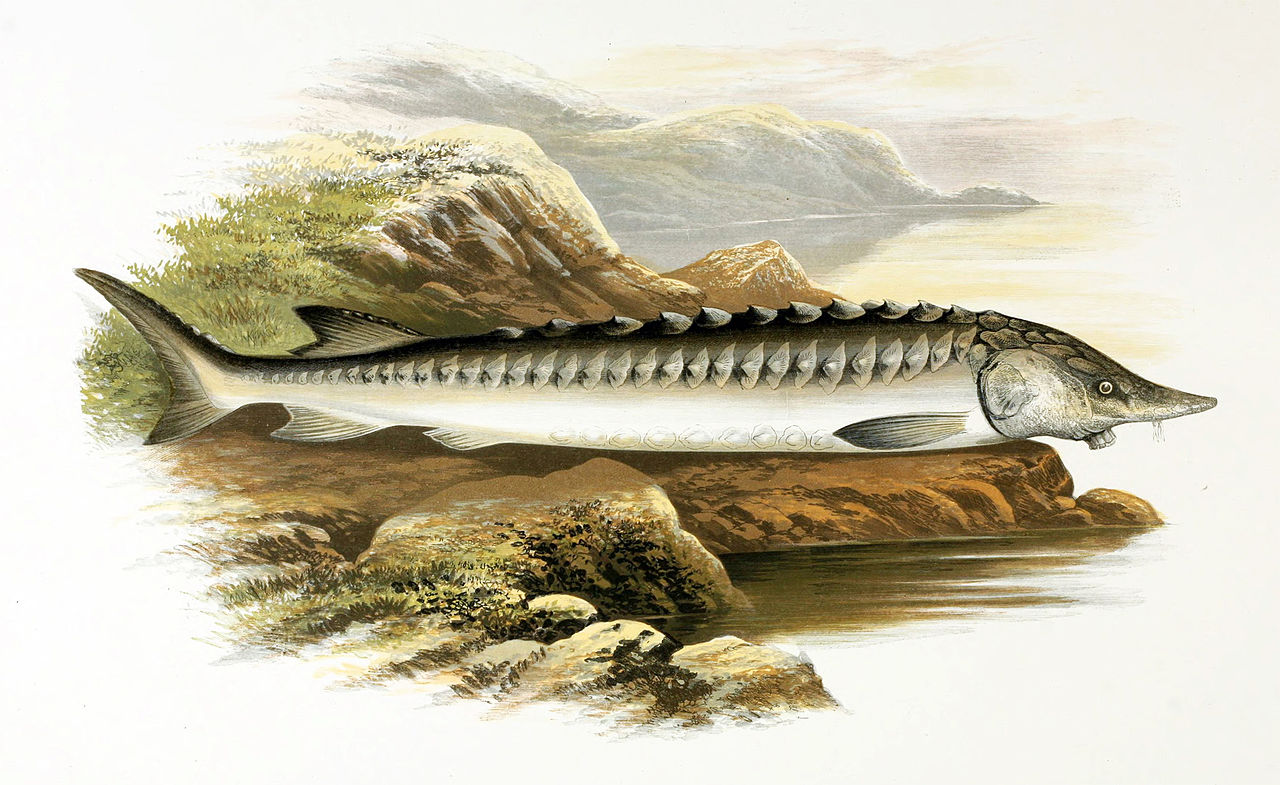
European sturgeon (Acipenser sturio) — Acipenseridae — 3
Wikimedia Commons — Alexander Francis Lydon (Public domain)
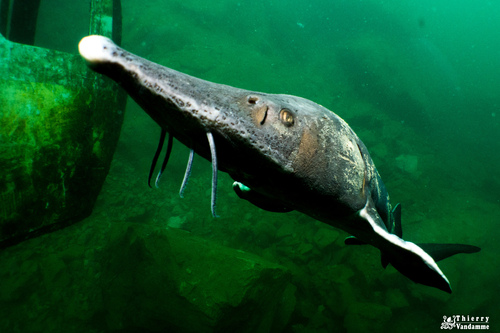
European sturgeon (Acipenser sturio) — Acipenseridae — 4
Wikimedia Commons — Unknown authorUnknown author (Public domain)

Easily confused with

These species look like the European sturgeon and live in the same waters.
Fin

Want the complete picture on the European sturgeon?

Point your camera at the fish and Fin names the species in seconds. Free, and the European sturgeon is one of 12,519 species in the app.

Get the app →

All data

Identification

English name
European sturgeon verified
Scientific name
Acipenser sturio
Family
Acipenseridae
Other names
Baltic sturgeon; Common sturgeon; European sturgeon; Sea sturgeon; Sturgeon; Atlantic sturgeon verified

Appearance

Size class
Extra large verified
Max length (cm)
600.0 verified
Average length (cm)
125.0 verified
Body shape
Elongated (eel-like) sourced
Dominant colour
Brown sourced
Pattern
Plain sourced
Tail shape
Crescent (lunate) inferred
Mouth position
Inferior (downward) inferred
Lips
Thick / fleshy inferred
Barbels
Yes verified
Dorsal fins
One continuous sourced
Dorsal spines
No verified

Habitat & distribution

Water type
Euryhaline verified
Substrate
Sand / mud bottom sourced
Min depth (m)
4.0 verified
Max depth (m)
93.0 verified
Natural range
Northeast Atlantic coast and adjacent seas; anadromous, formerly spawned in large Western European rivers, now almost exclusively in the Gironde. verified
Origin
Native verified

Behaviour & biology

Diet
Carnivore verified
Diet (detail)
Small benthic animals: worms, shellfish, crustaceans and small fishes sourced
Social behaviour
Solitary verified
Territorial
No verified
Activity
Nocturnal inferred
Reproduction
Separate sexes verified
Sexual dimorphism
No verified
levensduur_max_jaar
100.0 verified
Seasonality
Anadromous and very long-lived (up to 100 years); migrates up the rivers in spring to spawn on gravel, but only reproduces at a later age. sourced
Special features
Ancient cartilaginous sturgeon with five rows of bony scutes, a protrusible inferior mouth and four barbels in front of the mouth; migrates up the rivers to spawn. sourced

For anglers

Edibility
Not eaten verified
Fishing method
Strictly protected: targeted fishing is prohibited; a sturgeon caught accidentally must be released immediately and carefully, and reported sourced
Regulations source
FishBase ↗ inferred

Safety

Danger to humans
Harmless verified
First aid
None required: this species is harmless to humans. sourced

Status & sources

Sources
FishBase via GBIF (DwC-A), CC-BY-NC 4.0

Same genus Acipenser

More from the family Acipenseridae
Fin

Want the complete picture on the European sturgeon?

Point your camera at the fish and Fin names the species in seconds. Free, and the European sturgeon is one of 12,519 species in the app.

Get the app →
Is this the European sturgeon? Get the app