Home · Cyprinidae · Deepbody bitterling
Deepbody bitterling (Acheilognathus longipinnis) — Cyprinidae

Deepbody bitterling

Acheilognathus longipinnis
Family: Cyprinidae
EN · Endangered

The Deepbody bitterling (Acheilognathus longipinnis) is a freshwater fish of the family Cyprinidae that grows up to 8 cm.

Length
8 cm
Water
Freshwater
Depth
0–? m
Diet
Omnivore
Behaviour
Small groups
Activity
Diurnal
Body shape
Elongated (eel-like)
Substrate
Mixed bottom
Danger
Harmless
Range
Japan
Edibility
Not eaten

Want the complete picture on the Deepbody bitterling?

Get the app

Description

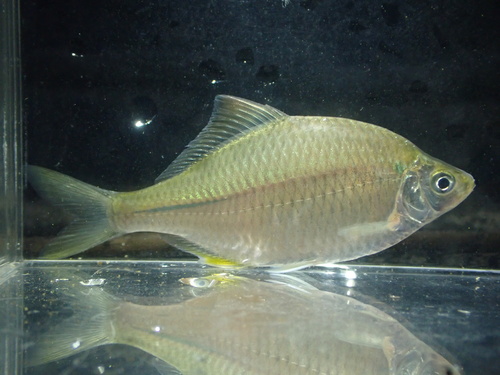
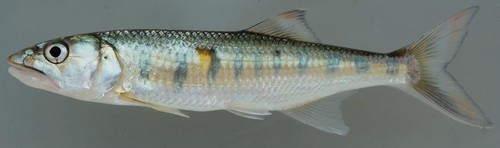
The deepbody bitterling is a cyprinid bitterling endemic to central and southern Japan. It grows to about 8 cm and has a deep, laterally compressed body characteristic of the group. Like all bitterlings it reproduces with the help of freshwater mussels: using an ovipositor the female lays her eggs inside a living mussel, where the larvae grow up protected. The fish lives in slow-flowing and still fresh water in lowland habitats. Owing to habitat loss and the decline of mussel populations, the species is listed as Endangered (EN) on the IUCN Red List.

Frequently asked questions

How do you recognise the Deepbody bitterling?

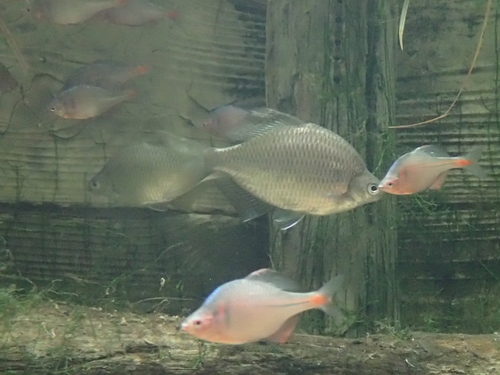
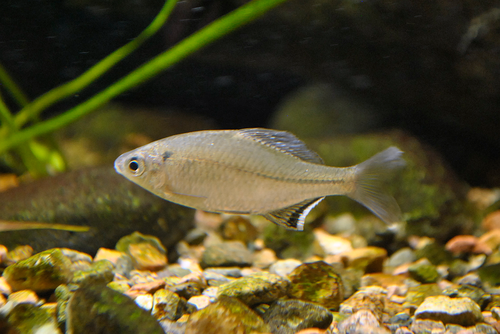
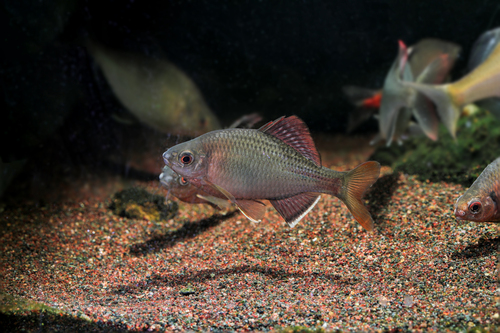
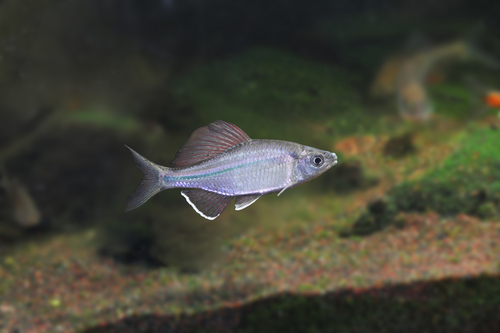
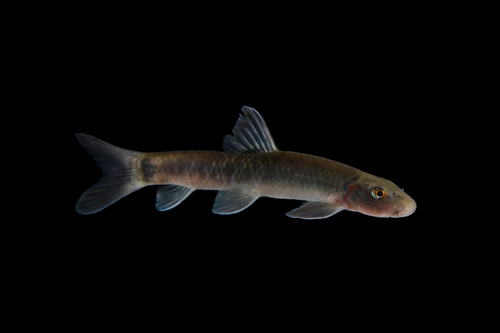
The Deepbody bitterling has an elongate, eel-like body, is mainly silver-grey and shows a plain pattern. Reproduces in living freshwater mussels; deep, laterally compressed body

Where does the Deepbody bitterling live?

The Deepbody bitterling lives in fresh water and is mostly found around mixed bottom. Japan

How big does the Deepbody bitterling get?

The Deepbody bitterling grows to a maximum of about 8 cm.

Is the Deepbody bitterling dangerous to humans?

No, the Deepbody bitterling is harmless to humans. This species is harmless to humans. No specific first aid is needed. Still handle the fish with care: mind the fin rays and the sharp edges of the gill cover, and rinse any scratch with clean water and cover it. For a dirty or deep wound check tetanus status.

Is the Deepbody bitterling edible?

The Deepbody bitterling is not usually eaten.

More photos

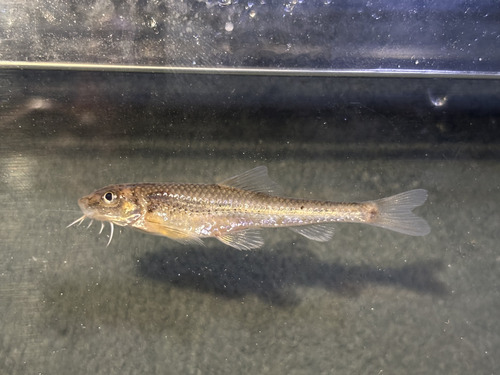
Deepbody bitterling (Acheilognathus longipinnis) — Cyprinidae — 2
Wikimedia Commons — KENPEI (CC BY-SA 3.0)
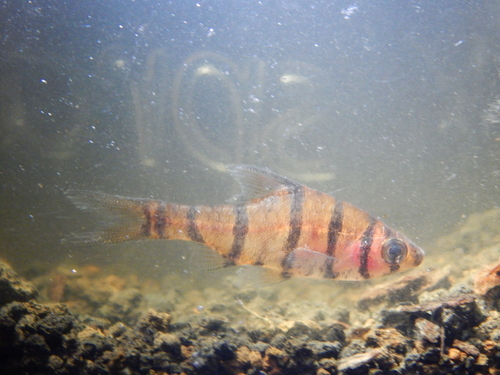
Deepbody bitterling (Acheilognathus longipinnis) — Cyprinidae — 3
Wikimedia Commons — 更井 順則 (CC BY-SA 4.0)
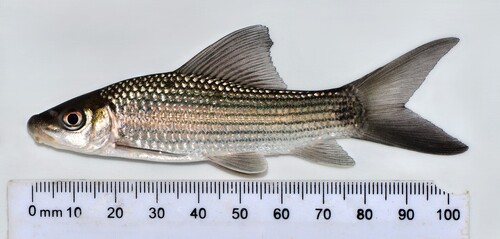
Deepbody bitterling (Acheilognathus longipinnis) — Cyprinidae — 4
iNaturalist ((c) hakkahamushi, some rights reserved (CC BY-NC))
Deepbody bitterling (Acheilognathus longipinnis) — Cyprinidae — 5
Wikimedia Commons — KENPEI (CC BY-SA 3.0)
Fin

Want the complete picture on the Deepbody bitterling?

Point your camera at the fish and Fin names the species in seconds. Free, and the Deepbody bitterling is one of 12,519 species in the app.

Get the app →

All data

Identification

English name
Deepbody bitterling verified
Scientific name
Acheilognathus longipinnis
Family
Cyprinidae
Other names
Itasenpara bitterling verified

Appearance

Size class
Small verified
Max length (cm)
8.0 verified
Body shape
Elongated (eel-like) sourced
Dominant colour
Silver / grey inferred
Pattern
Plain inferred
Tail shape
Forked inferred
Mouth position
Terminal sourced
Lips
Thin sourced
Barbels
No sourced
Dorsal fins
One continuous sourced
Dorsal spines
Yes sourced

Habitat & distribution

Water type
Freshwater sourced
Substrate
Mixed bottom sourced
Min depth (m)
0 sourced
Natural range
Japan verified
Origin
Native verified

Behaviour & biology

Diet
Omnivore inferred
Diet (detail)
Algae, plant material and small invertebrates inferred
Social behaviour
Small groups inferred
Territorial
No sourced
Activity
Diurnal inferred
Reproduction
Separate sexes sourced
Sexual dimorphism
Yes sourced
Seasonality
Spawns in spring via freshwater mussels. sourced
Special features
Reproduces in living freshwater mussels; deep, laterally compressed body sourced

For anglers

Edibility
Not eaten sourced
Fishing method
Not a target species for angling; at most an incidental catch or usable as baitfish. inferred
Regulations source
FishBase ↗ inferred

Safety

Danger to humans
Harmless sourced
First aid
This species is harmless to humans. No specific first aid is needed. Still handle the fish with care: mind the fin rays and the sharp edges of the gill cover, and rinse any scratch with clean water and cover it. For a dirty or deep wound check tetanus status. verified

Status & sources

Sources
FishBase via GBIF (DwC-A), CC-BY-NC 4.0

Same genus Acheilognathus

More from the family Cyprinidae

Fin

Want the complete picture on the Deepbody bitterling?

Point your camera at the fish and Fin names the species in seconds. Free, and the Deepbody bitterling is one of 12,519 species in the app.

Get the app →
Is this the Deepbody bitterling? Get the app