Home · Cyprinidae · Common carp
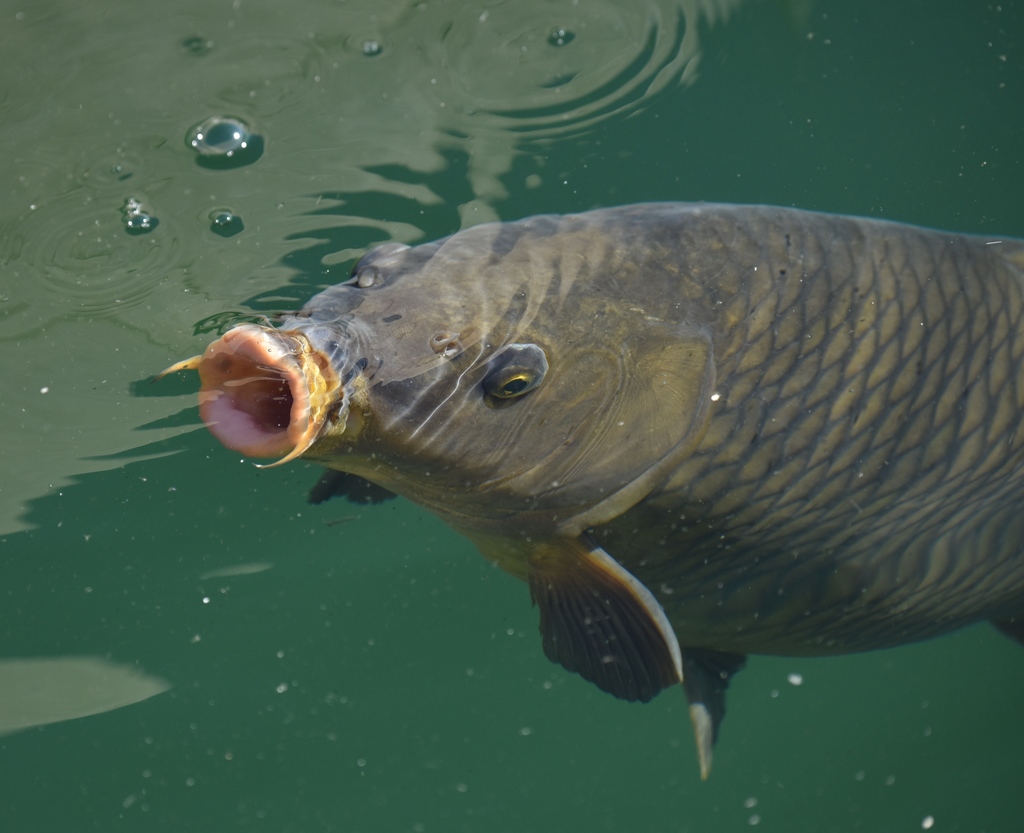
Common carp (Cyprinus carpio) — Cyprinidae

Common carp

Cyprinus carpio
Family: Cyprinidae
LC · Least Concern
NativeIntroduced

The Common carp (Cyprinus carpio) is a brackish-water fish of the family Cyprinidae that grows up to 120 cm.

Length
120 cm
Water
Brackish
Depth
0.0–29.0 m
Diet
Omnivore
Behaviour
Small groups
Activity
Crepuscular
Body shape
Torpedo-shaped
Substrate
Mixed bottom
Danger
Harmless
Range
Originally from the basins of the Black, Caspian and Aral Seas; wild populations mainly in the Danube basin.
Edibility
Commonly eaten

Want the complete picture on the Common carp?

Get the app

Description

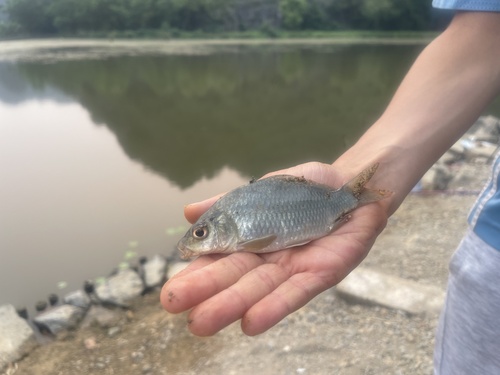
The common carp is a large freshwater fish of the family Cyprinidae reaching about 120 cm. The robust, grey-brown to bronze body has four barbels, a protrusible inferior mouth and a long dorsal fin with spines at the front. Cultivated forms range from fully scaled to almost scaleless, such as the mirror and leather carp. Native to the Black, Caspian and Aral Sea basins, the carp has been introduced worldwide and is locally invasive, because while foraging it stirs up the bottom and clouds the water. It is a crepuscular omnivore eating bottom animals and plant material, and is widely farmed and angled for.

Frequently asked questions

How do you recognise the Common carp?

The Common carp has a torpedo-shaped body, is mainly brown and shows a plain pattern. Large cyprinid with four barbels, a protrusible inferior mouth and a long dorsal fin; cultivated forms range from fully scaled to almost scaleless (mirror and leather carp).

Where does the Common carp live?

The Common carp lives in brackish water and is mostly found around mixed bottom. Originally from the basins of the Black, Caspian and Aral Seas; wild populations mainly in the Danube basin.

How big does the Common carp get?

The Common carp grows to a maximum of about 120 cm. On average the species is around 31 cm.

Is the Common carp dangerous to humans?

No, the Common carp is harmless to humans. None required: this species is harmless to humans.

Is the Common carp edible?

Yes, the Common carp is commonly eaten.

More photos
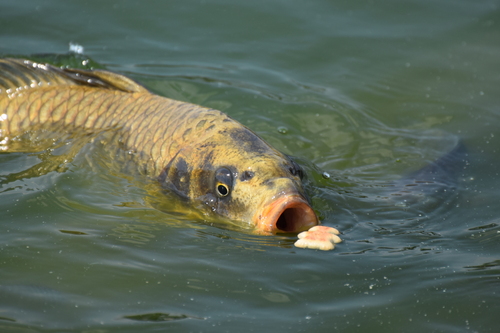
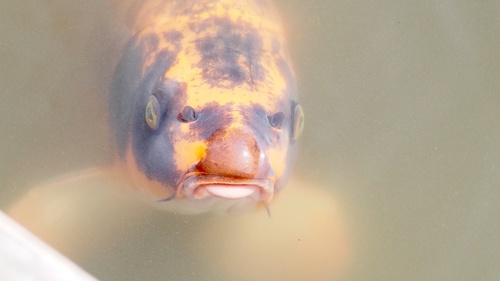
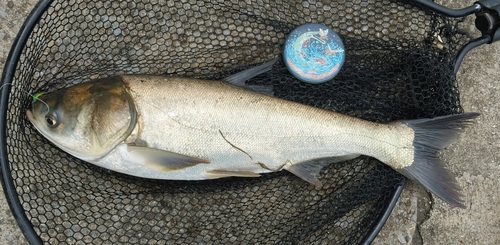
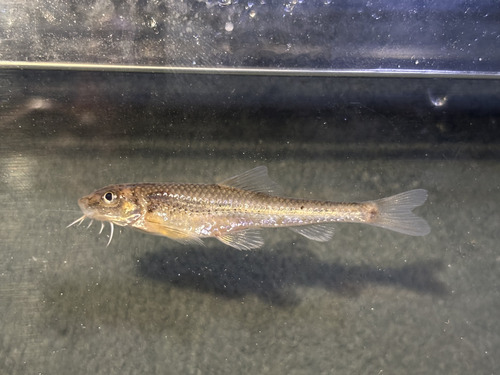
Common carp (Cyprinus carpio) — Cyprinidae — 2
iNaturalist ((c) R.E.Llanos, some rights reserved (CC BY-NC-SA))
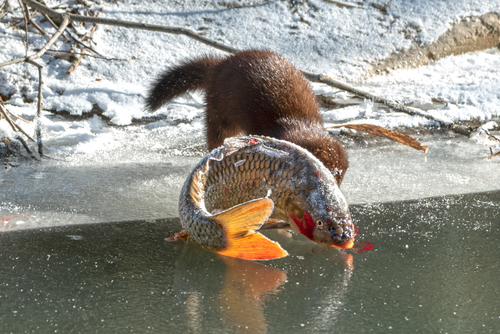
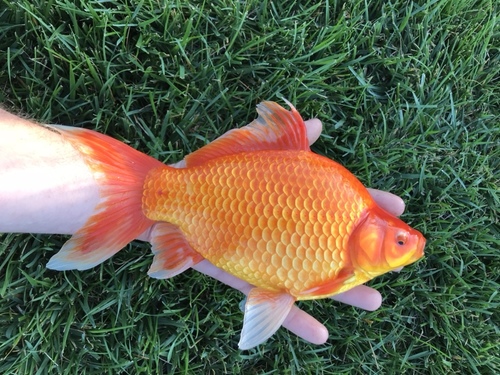
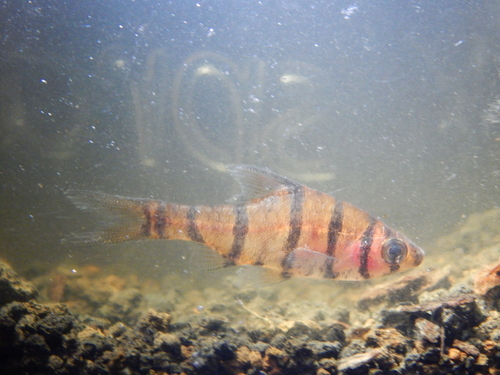
Common carp (Cyprinus carpio) — Cyprinidae — 3
iNaturalist ((c) りなべる, some rights reserved (CC BY))
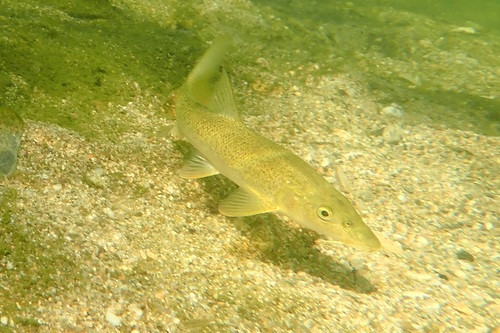
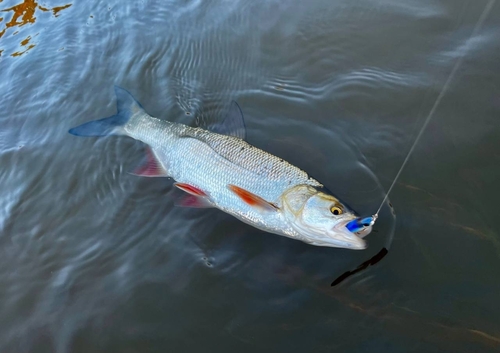
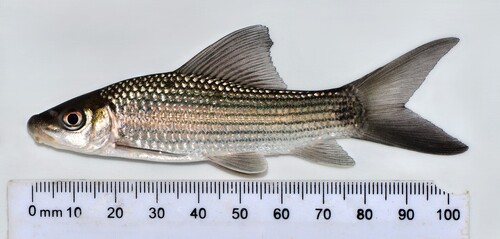
Common carp (Cyprinus carpio) — Cyprinidae — 4
iNaturalist ((c) Tatiana Svidskaia, some rights reserved (CC BY-NC))

Easily confused with

These species look like the Common carp and live in the same waters.

Fin

Want the complete picture on the Common carp?

Point your camera at the fish and Fin names the species in seconds. Free, and the Common carp is one of 12,519 species in the app.

Get the app →

All data

Identification

English name
Common carp verified
Scientific name
Cyprinus carpio
Family
Cyprinidae
Other names
Amur carp; Amur wild carp; Asian carp; Blubber lips; Calico carp; Carp; Mirror carp; European carp; German carp; Koi; Leather carp; Scale carp verified

Appearance

Size class
Extra large verified
Max length (cm)
120.0 verified
Average length (cm)
31.0 verified
Body shape
Torpedo-shaped sourced
Dominant colour
Brown sourced
Pattern
Plain sourced
Tail shape
Forked sourced
Mouth position
Inferior (downward) inferred
Lips
Thick / fleshy inferred
Barbels
Yes verified
Dorsal fins
One continuous sourced
Dorsal spines
Yes verified

Habitat & distribution

Water type
Brackish sourced
Substrate
Mixed bottom sourced
Min depth (m)
0.0 verified
Max depth (m)
29.0 verified
Natural range
Originally from the basins of the Black, Caspian and Aral Seas; wild populations mainly in the Danube basin. verified
Origin
Non-native (invasive) verified

Behaviour & biology

Diet
Omnivore verified
Diet (detail)
Omnivorous: small invertebrates, algae, detritus and plant material inferred
Social behaviour
Small groups verified
Territorial
No verified
Activity
Crepuscular sourced
Reproduction
Separate sexes verified
Sexual dimorphism
No verified
levensduur_max_jaar
38 verified
Seasonality
Spawns at 15-20 °C in shallow, plant-rich water; females lay more than a million eggs. Mainly active at dusk. sourced
Special features
Large cyprinid with four barbels, a protrusible inferior mouth and a long dorsal fin; cultivated forms range from fully scaled to almost scaleless (mirror and leather carp). sourced

For anglers

Edibility
Commonly eaten verified
Fishing method
Bottom fishing with natural bait (worm, shrimp or fish) on or just above the seabed. inferred
Regulations source
FishBase ↗ inferred

Safety

Danger to humans
Harmless verified
First aid
None required: this species is harmless to humans. sourced

Status & sources

Sources
FishBase via GBIF (DwC-A), CC-BY-NC 4.0

Same genus Cyprinus

More from the family Cyprinidae

Fin

Want the complete picture on the Common carp?

Point your camera at the fish and Fin names the species in seconds. Free, and the Common carp is one of 12,519 species in the app.

Get the app →
Is this the Common carp? Get the app