Home · Carangidae · Coastal trevally
Coastal trevally (Carangoides coeruleopinnatus) — Carangidae

Coastal trevally

Carangoides coeruleopinnatus
Family: Carangidae
LC · Least Concern

The Coastal trevally (Carangoides coeruleopinnatus) is a saltwater fish of the family Carangidae that grows up to 41 cm.

Length
41 cm
Water
Saltwater
Diet
Carnivore
Behaviour
Schooling
Activity
Diurnal
Substrate
Open water
Danger
Harmless
Range
Indian and western Pacific Ocean, in coastal water over reefs and the continental shelf.
Edibility
Commonly eaten

Want the complete picture on the Coastal trevally?

Get the app

Description

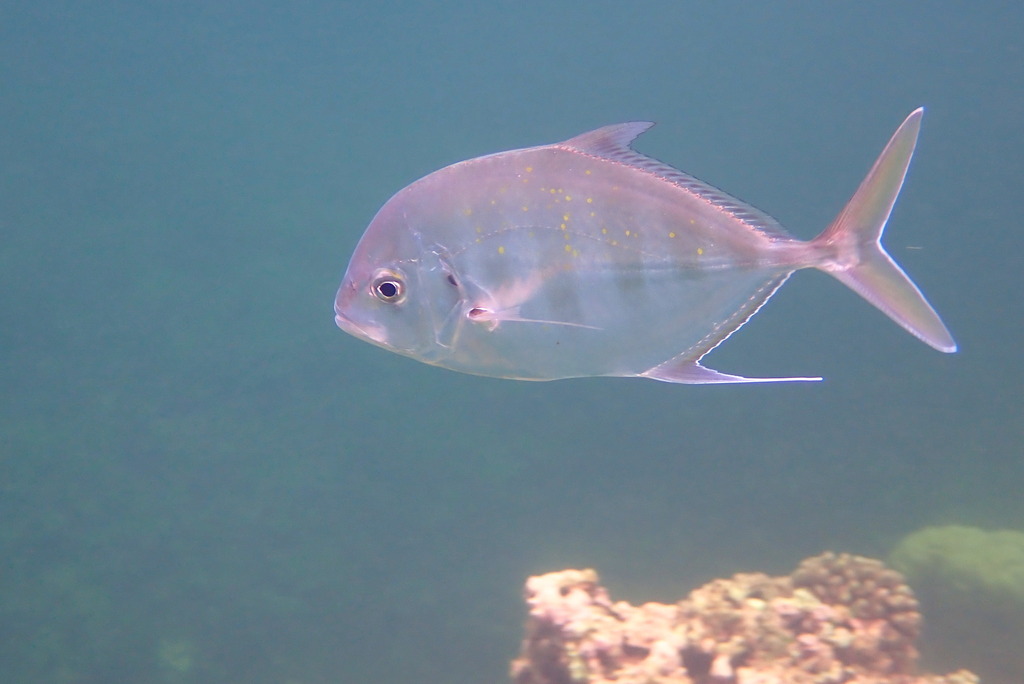
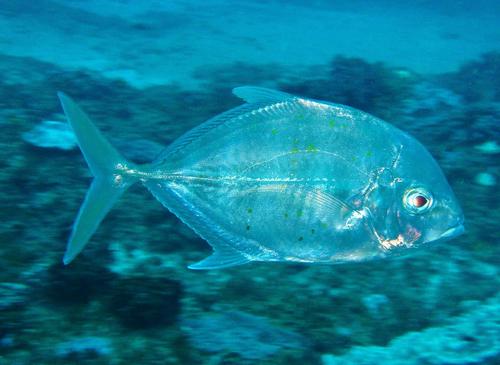
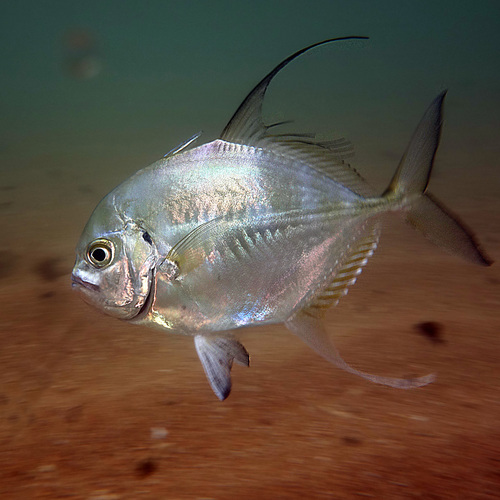
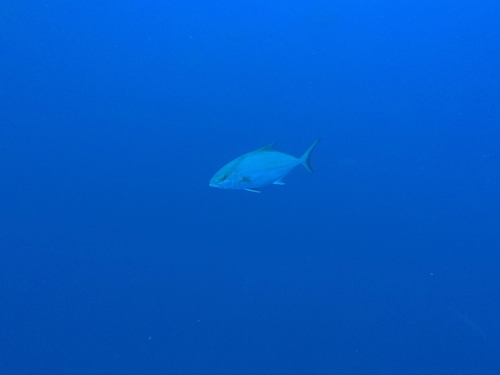
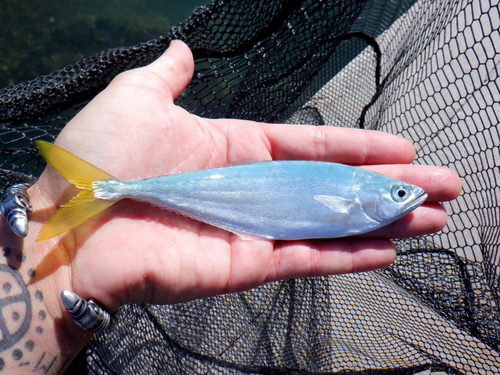
The coastal trevally is a deep, laterally compressed jack of the family Carangidae reaching about 41 cm. The silvery body often has scattered yellow spots on the flank, a deeply forked tail and a row of bony scutes along the tail base that give firmness for fast swimming. The species forms schools in coastal water over reefs and the continental shelf in the Indian and western Pacific Oceans. As a fast hunter it preys on small fish, shrimp and other crustaceans. Because of its power and size it is a sporting catch, and with its tasty flesh it is a valued market and coastal fish across much of its range.

Frequently asked questions

How do you recognise the Coastal trevally?

The Coastal trevally is mainly silver-grey and shows a plain pattern. Deep-bodied, silvery jack with small yellow blotches on the flank, a deeply forked tail and bony scutes along the caudal peduncle.

Where does the Coastal trevally live?

The Coastal trevally lives in the sea (marine waters) and is mostly found around open water. Indian and western Pacific Ocean, in coastal water over reefs and the continental shelf.

How big does the Coastal trevally get?

The Coastal trevally grows to a maximum of about 41 cm.

Is the Coastal trevally dangerous to humans?

No, the Coastal trevally is harmless to humans. None required: this species is harmless to humans.

Is the Coastal trevally edible?

Yes, the Coastal trevally is commonly eaten.

More photos

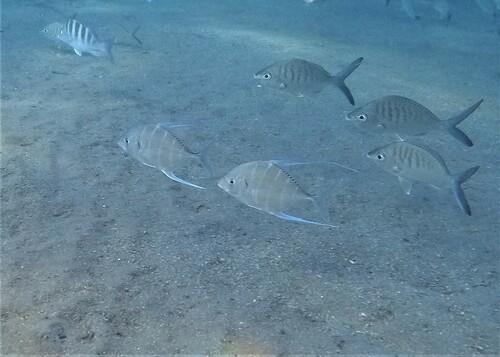
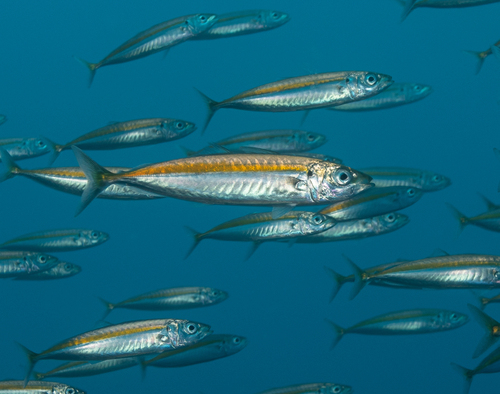
Coastal trevally (Carangoides coeruleopinnatus) — Carangidae — 2
Williams, Jeffrey T. (CC0 1.0) via GBIF — USNM
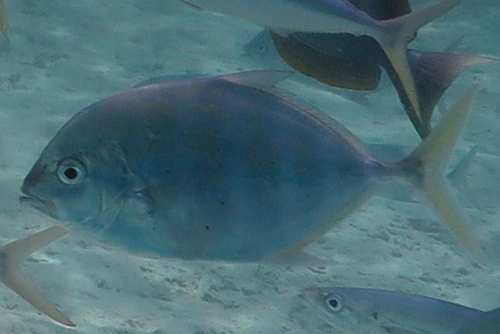
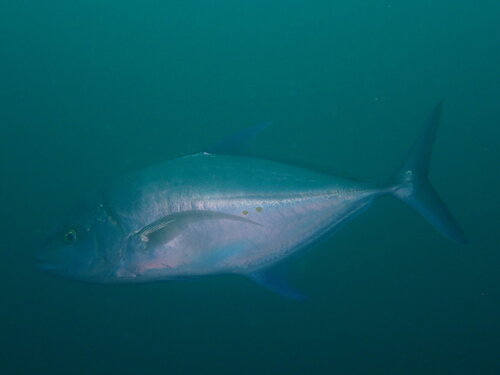
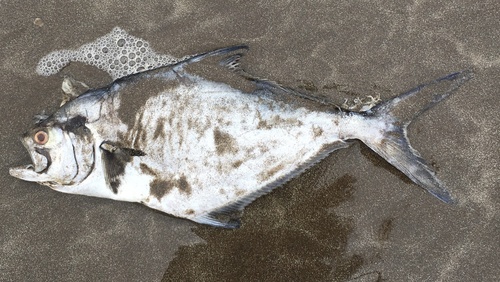
Coastal trevally (Carangoides coeruleopinnatus) — Carangidae — 3
Williams, Jeffrey T. (CC0 1.0) via GBIF — USNM
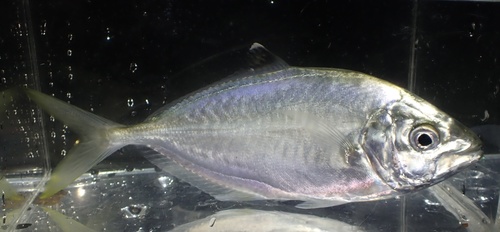
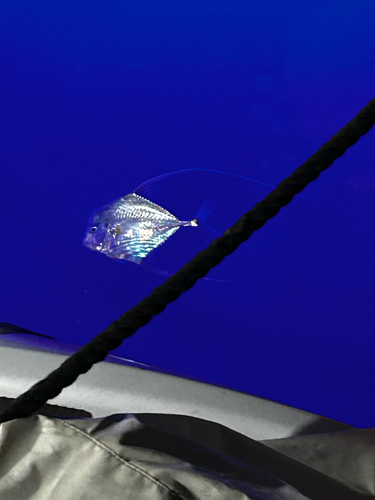
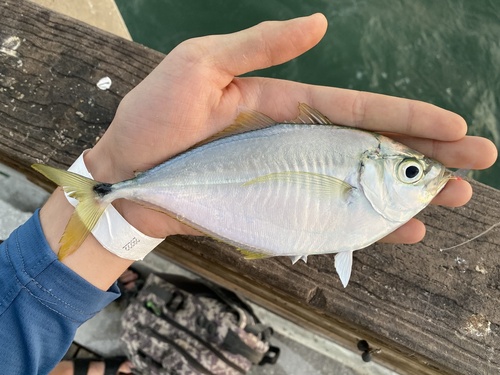
Coastal trevally (Carangoides coeruleopinnatus) — Carangidae — 4
iNaturalist ((c) tony rebelo, some rights reserved (CC BY-NC))
Coastal trevally (Carangoides coeruleopinnatus) — Carangidae — 5
iNaturalist ((c) Ewout Knoester, some rights reserved (CC BY-SA))
Fin

Want the complete picture on the Coastal trevally?

Point your camera at the fish and Fin names the species in seconds. Free, and the Coastal trevally is one of 12,519 species in the app.

Get the app →

All data

Identification

English name
Coastal trevally verified
Scientific name
Carangoides coeruleopinnatus
Family
Carangidae
Other names
Onion trevally; Japanese trevally; Bluefin kingfish; Blue-spined trevally; Diverse trevally; Trevally; Malabar trevally; Onion-ring trevally; Shortfin trevally

Appearance

Size class
Large
Max length (cm)
41 verified
Dominant colour
Silver / grey sourced
Pattern
Plain sourced
Tail shape
Forked inferred
Mouth position
Terminal inferred
Lips
Thin inferred
Barbels
No verified
Dorsal fins
Two separate sourced
Dorsal spines
Yes verified

Habitat & distribution

Water type
Saltwater verified
Substrate
Open water verified
Natural range
Indian and western Pacific Ocean, in coastal water over reefs and the continental shelf. verified
Origin
Native verified

Behaviour & biology

Diet
Carnivore verified
Diet (detail)
Small fishes, shrimps and other crustaceans sourced
Social behaviour
Schooling verified
Territorial
No verified
Activity
Diurnal inferred
Reproduction
Separate sexes verified
Sexual dimorphism
No verified
Seasonality
Forms shoals over reefs and coastal banks; eggs and larvae drift in open water. sourced
Special features
Deep-bodied, silvery jack with small yellow blotches on the flank, a deeply forked tail and bony scutes along the caudal peduncle. sourced

For anglers

Edibility
Commonly eaten verified
Fishing method
Fishing with lures or baitfish over reefs and coastal banks; a sporting, tasty market fish sourced
Regulations source
FishBase ↗ inferred

Safety

Danger to humans
Harmless verified
First aid
None required: this species is harmless to humans. sourced

Status & sources

Sources
FishBase via GBIF (DwC-A), CC-BY-NC 4.0

Same genus Carangoides

More from the family Carangidae
Fin

Want the complete picture on the Coastal trevally?

Point your camera at the fish and Fin names the species in seconds. Free, and the Coastal trevally is one of 12,519 species in the app.

Get the app →
Is this the Coastal trevally? Get the app