 Fin's Fish Guide
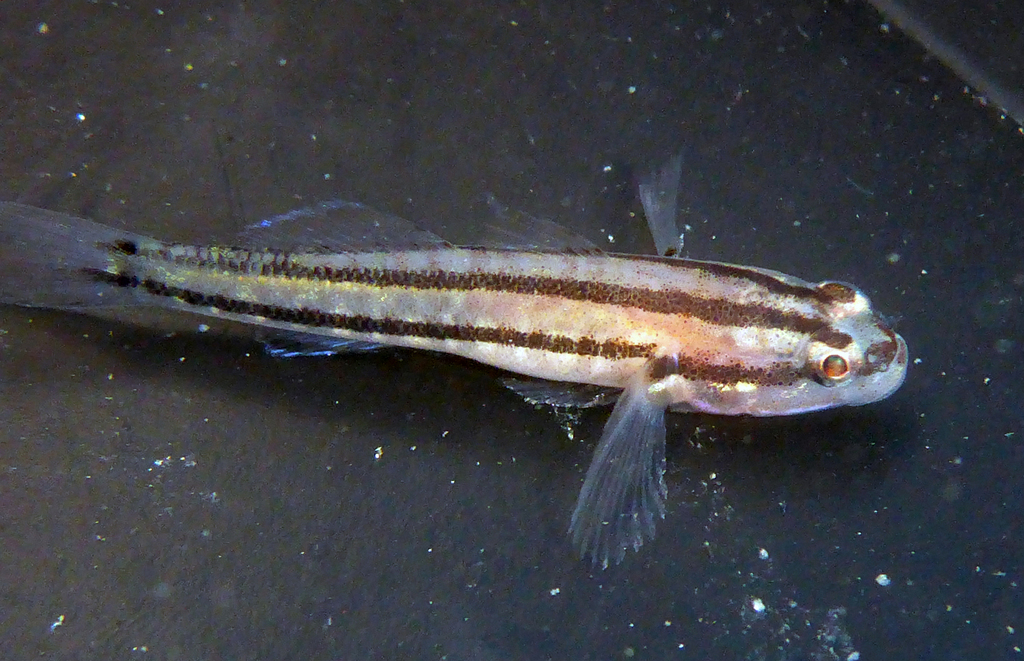
The Chameleon goby (Tridentiger trigonocephalus) is a brackish-water fish of the family Gobiidae that grows up to 11 cm.
Originally East Asia, in brackish and salt coastal and estuarine water around Japan, Korea and China, on stony and rocky bottoms and among biofilm.
Description
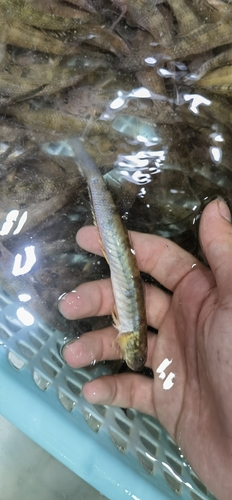
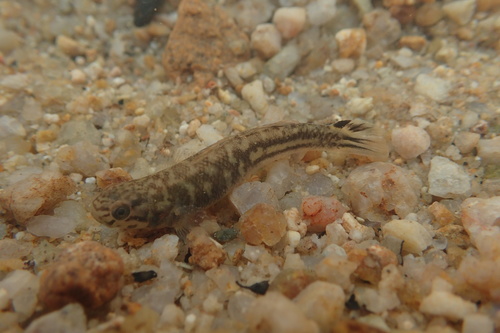
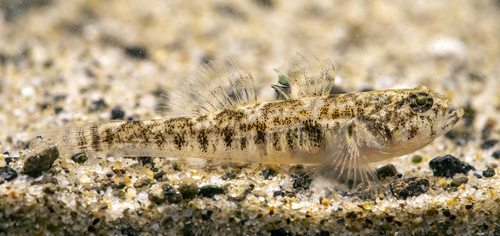
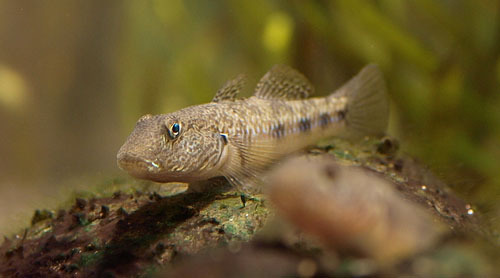
The chameleon goby is a stocky estuarine goby of the family Gobiidae reaching about 11 cm. It owes its name to its ability to switch colour pattern quickly: depending on mood and surroundings it shows two dark lengthwise stripes or instead dark cross-bars. Like other gobies the pelvic fins are fused into a sucking disc. The species is native to East Asia and lives in brackish and salt coastal and estuarine water on stone and rock bottoms and among fouling growth. Through ballast water and shipping it has spread to harbours in North America, Australia and the Mediterranean and Black Sea, where it becomes locally established. On the bottom it hunts small crustaceans, worms and molluscs.
Frequently asked questions
How do you recognise the Chameleon goby?
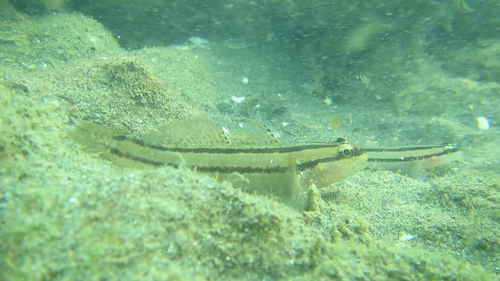
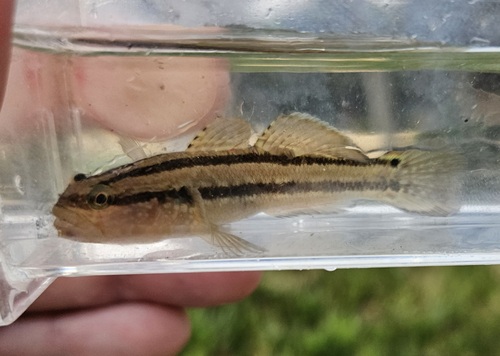
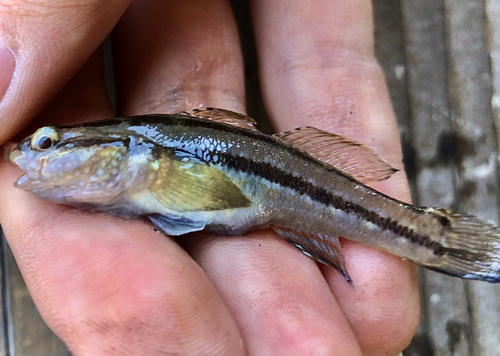
The Chameleon goby has a torpedo-shaped body, is mainly brown and shows a horizontal stripes pattern. Stocky estuarine goby that quickly changes colour pattern - from two dark longitudinal stripes to vertical bars - hence 'chameleon'.
Where does the Chameleon goby live?
The Chameleon goby lives in brackish water and is mostly found around stony or rocky ground. Originally East Asia, in brackish and salt coastal and estuarine water around Japan, Korea and China, on stony and rocky bottoms and among biofilm.
How big does the Chameleon goby get?
The Chameleon goby grows to a maximum of about 11 cm.
Is the Chameleon goby dangerous to humans?
No, the Chameleon goby is harmless to humans. None required: this species is harmless to humans.
Is the Chameleon goby edible?
The Chameleon goby is not usually eaten.
More photos
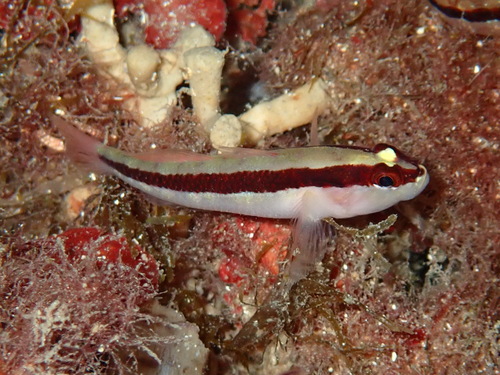
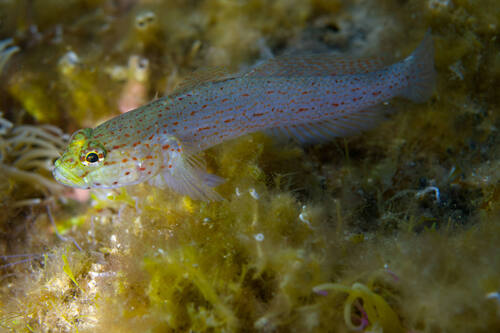
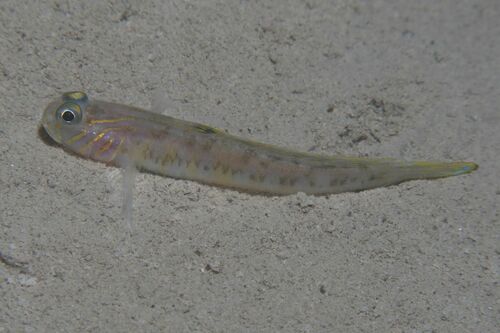
Easily confused with
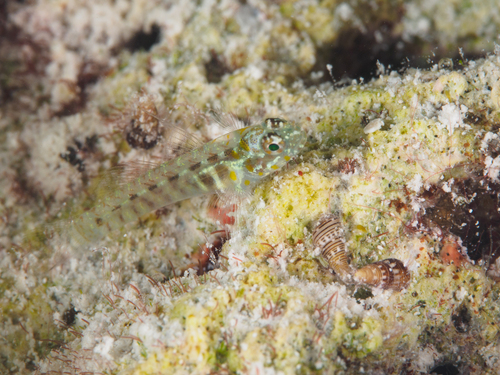
These species look like the Chameleon goby and live in the same waters.


Want the complete picture on the Chameleon goby?
Point your camera at the fish and Fin names the species in seconds. Free, and the Chameleon goby is one of 12,519 species in the app.
All data
Identification
Appearance
Habitat & distribution
Behaviour & biology
For anglers
Safety
Status & sources
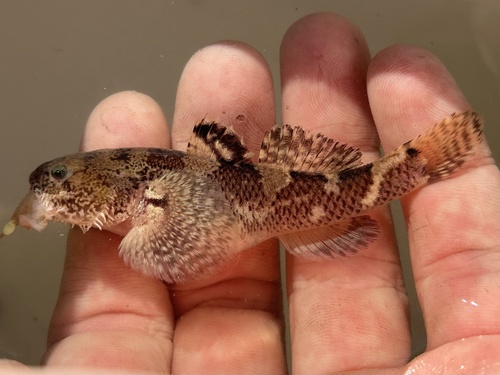
Same genus Tridentiger
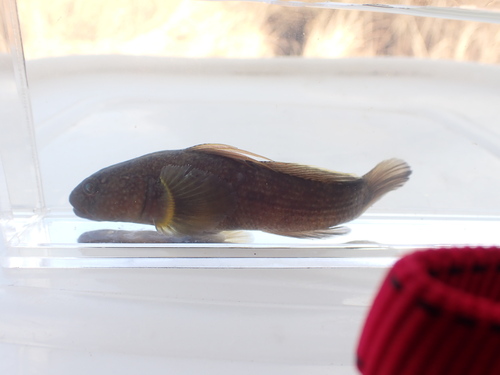
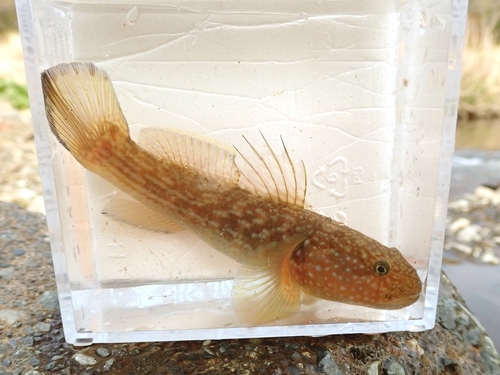
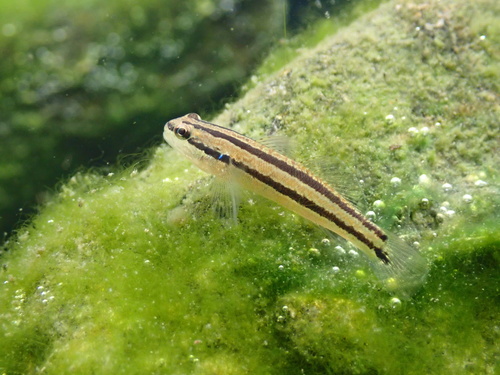
More from the family Gobiidae
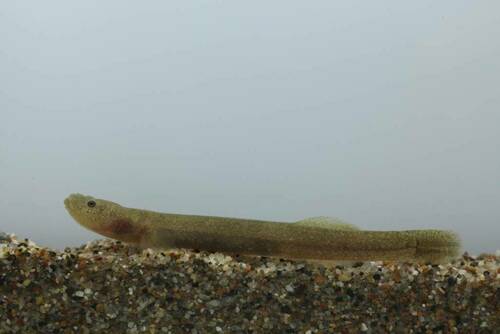

Want the complete picture on the Chameleon goby?
Point your camera at the fish and Fin names the species in seconds. Free, and the Chameleon goby is one of 12,519 species in the app.