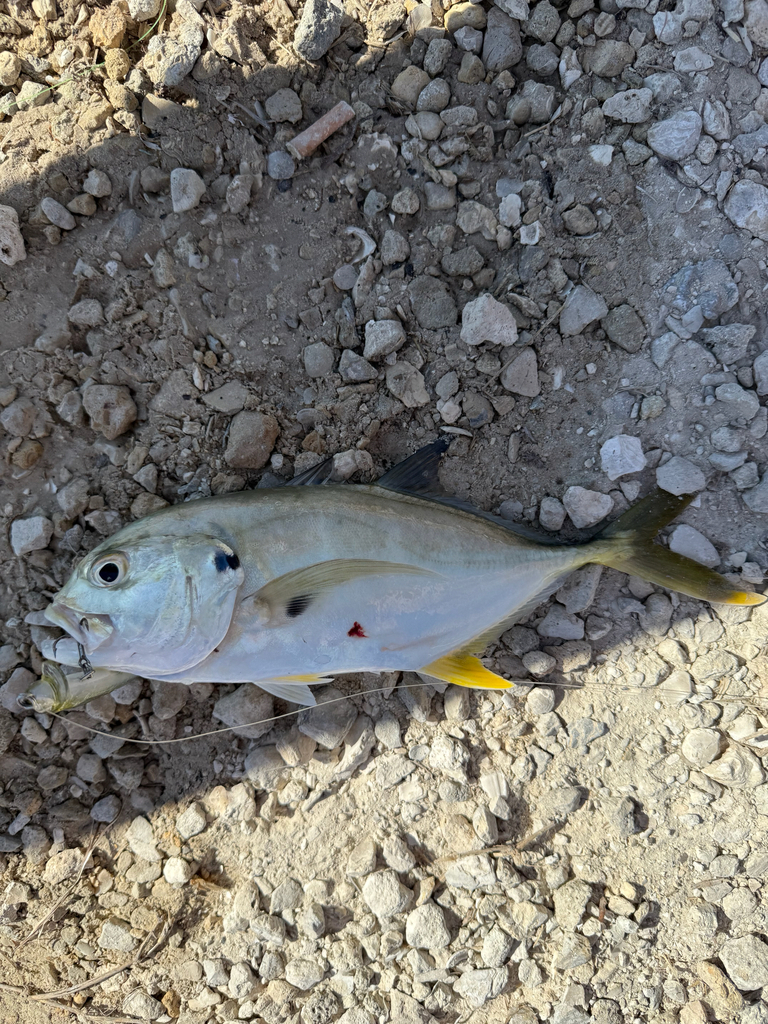
The Crevalle jack (Caranx hippos) is a saltwater fish of the family Carangidae that grows up to 124 cm.
Description
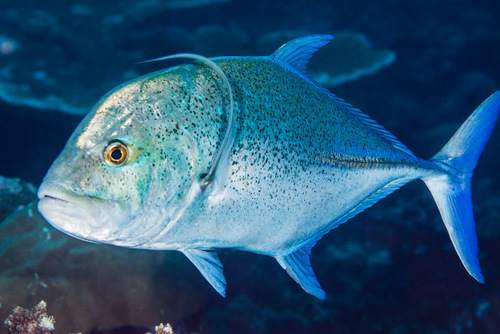
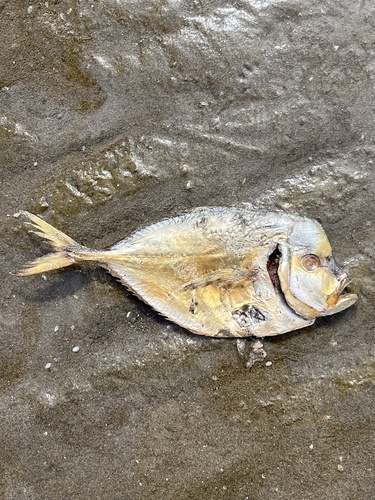
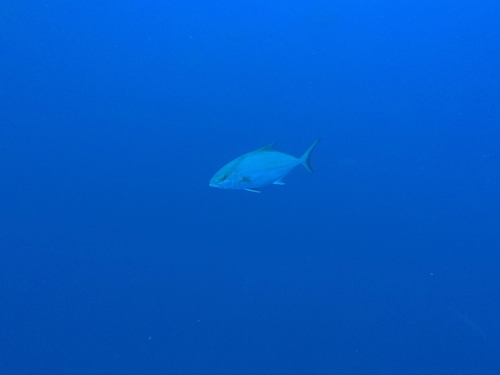
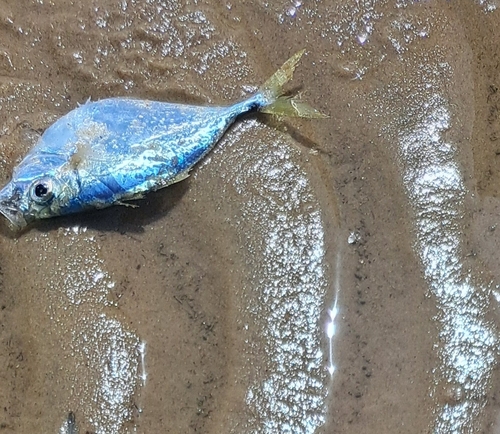
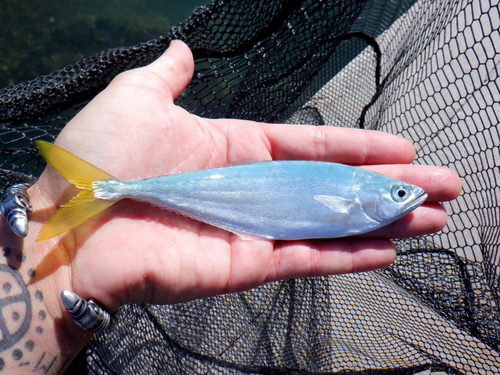
The crevalle jack is a robust, deep-bodied jack of the family Carangidae reaching about 1.2 metres. The silvery, laterally compressed body has a steep head profile, a black spot on the gill cover and on the pectoral fin, and the hard scutes along the caudal peduncle typical of jacks; the tail is deeply crescent-shaped. The species lives pelagically in coastal and surface water of the Atlantic on both sides, in the east from West Africa into the Mediterranean. In fast, hunting schools it drives schooling fish, shrimps and squid. The crevalle jack is a powerful, valued sport and food fish that fights hard on the line.
Frequently asked questions
How do you recognise the Crevalle jack?
The Crevalle jack has a torpedo-shaped body, is mainly silver-grey and shows a plain pattern.
Where does the Crevalle jack live?
The Crevalle jack lives in the sea (marine waters) and is mostly found around open water.
How big does the Crevalle jack get?
The Crevalle jack grows to a maximum of about 124 cm. On average the species is around 75 cm.
Is the Crevalle jack dangerous to humans?
No, the Crevalle jack is harmless to humans.
Is the Crevalle jack edible?
Yes, the Crevalle jack is commonly eaten.
Download Fin's Fish Guide
Identify fish in seconds, log your catches and dives. Join the TestFlight beta.
All data
Identification
Appearance
Habitat & distribution
Behaviour & biology
For anglers
Safety
Status & sources
Same genus Caranx
More from the family Carangidae

Download Fin's Fish Guide
Identify fish in seconds, log your catches and dives. Join the TestFlight beta.