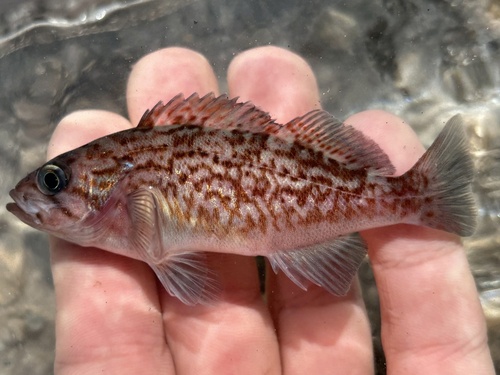
Home · Sebastidae · Brown bomber
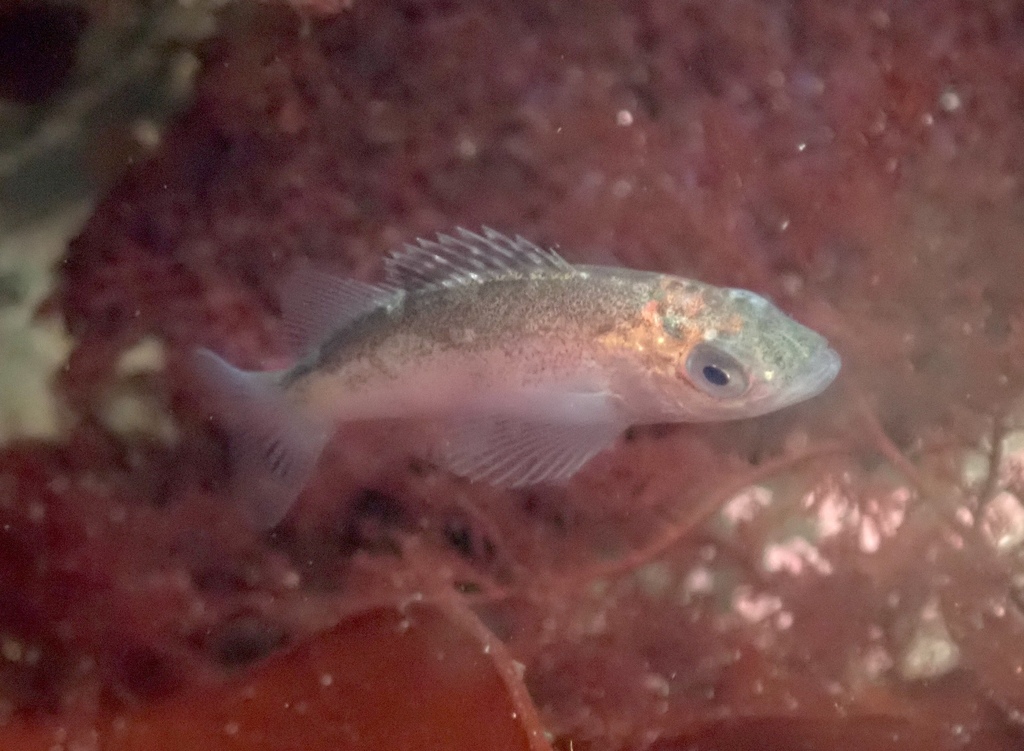
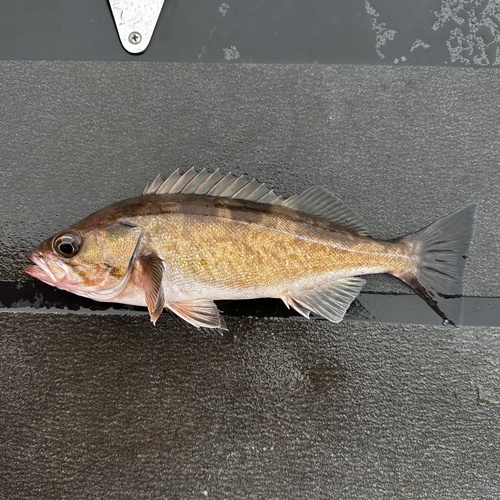
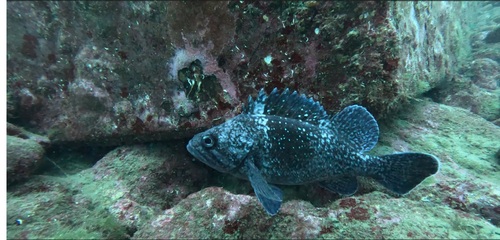
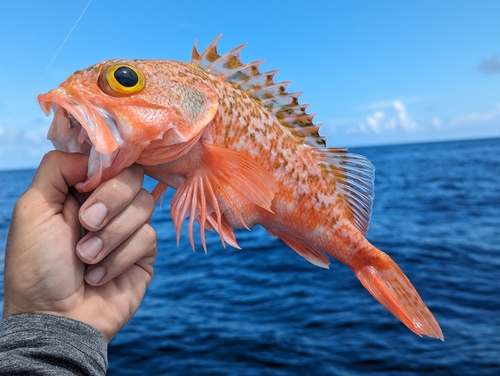
Brown bomber (Sebastes entomelas) — Sebastidae

Brown bomber

Sebastes entomelas
Family: Sebastidae

The Brown bomber (Sebastes entomelas) is a saltwater fish of the family Sebastidae that grows up to 60 cm.

Length
60 cm
Water
Saltwater
Depth
0.0–549.0 m
Diet
Carnivore
Behaviour
Schooling
Body shape
Torpedo-shaped
Substrate
Open water
Danger
Venomous / poisonous
Range
Northeast Pacific, from Alaska to California.
Edibility
Commonly eaten

Want the complete picture on the Brown bomber?

Get the app

Description

The widow rockfish is a rockfish (Sebastidae) from the northeastern Pacific, from Alaska to California. The species reaches about 60 cm and has a stocky, brown to dusky body. Unlike many rockfishes it is an active, free-swimming fish that hunts in schools above rocky reefs or steep shorelines in midwater; sometimes it shelters motionless in caves and crevices. The diet consists of fishes, crustaceans and gelatinous plankton. It is livebearing and gives birth to live young. The fin spines are mildly venomous and can deliver a painful sting when handled.

Frequently asked questions

How do you recognise the Brown bomber?

The Brown bomber has a torpedo-shaped body, is mainly brown and shows a plain pattern. Active, shoal-forming redfish in open water; ovoviviparous; mildly venomous fin spines.

Where does the Brown bomber live?

The Brown bomber lives in the sea (marine waters) and is mostly found around open water. Northeast Pacific, from Alaska to California.

How big does the Brown bomber get?

The Brown bomber grows to a maximum of about 60 cm. On average the species is around 35 cm.

Is the Brown bomber dangerous to humans?

The Brown bomber is venomous — handle spines with care and seek medical help after a sting if needed. The fin spines are venomous and a sting causes acute, burning pain and swelling. Immerse the wound for 30-90 minutes in water as hot as bearable (about 45 C), remove spine fragments and seek medical help for severe reactions.

Is the Brown bomber edible?

Yes, the Brown bomber is commonly eaten.

More photos
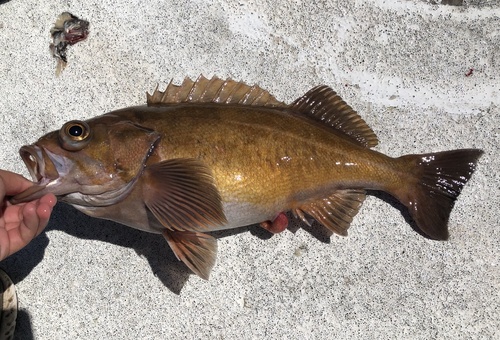
Brown bomber (Sebastes entomelas) — Sebastidae — 2
iNaturalist ((c) Jacob, some rights reserved (CC BY-NC))
Brown bomber (Sebastes entomelas) — Sebastidae — 3
iNaturalist ((c) coltonfishing, some rights reserved (CC BY-NC))
Brown bomber (Sebastes entomelas) — Sebastidae — 4
Wikimedia Commons — Southwest Fisheries Science Center, NOAA Fisheries Service (Public domain)
Brown bomber (Sebastes entomelas) — Sebastidae — 5
Wikimedia Commons — Rick Starr (SIMoN / MBNMS) (Public domain)
Fin

Want the complete picture on the Brown bomber?

Point your camera at the fish and Fin names the species in seconds. Free, and the Brown bomber is one of 12,519 species in the app.

Get the app →

All data

Identification

English name
Brown bomber verified
Scientific name
Sebastes entomelas
Family
Sebastidae
Other names
Brownie; Rockfish; Rock cod; Widow rockfish verified

Appearance

Size class
Large verified
Max length (cm)
60.0 verified
Average length (cm)
35.0 verified
Body shape
Torpedo-shaped sourced
Dominant colour
Brown inferred
Pattern
Plain inferred
Tail shape
Straight inferred
Mouth position
Terminal inferred
Lips
Thick / fleshy inferred
Barbels
No sourced
Dorsal fins
One continuous inferred
Dorsal spines
Yes sourced

Habitat & distribution

Water type
Saltwater sourced
Substrate
Open water sourced
Min depth (m)
0.0 verified
Max depth (m)
549.0 verified
Natural range
Northeast Pacific, from Alaska to California. inferred
Origin
Native sourced

Behaviour & biology

Diet
Carnivore sourced
Diet (detail)
Fishes, crustaceans and gelatinous plankton sourced
Social behaviour
Schooling inferred
Territorial
No inferred
Reproduction
Separate sexes sourced
Sexual dimorphism
No inferred
levensduur_max_jaar
60.0 verified
Seasonality
Present year-round in its habitat; no pronounced seasonality known. inferred
Special features
Active, shoal-forming redfish in open water; ovoviviparous; mildly venomous fin spines. sourced

For anglers

Edibility
Commonly eaten sourced
Fishing method
Angling with lures or (dead/live) baitfish by trolling, casting or drift fishing in open water. inferred
Regulations source
FishBase ↗ inferred

Safety

Danger to humans
Venomous / poisonous sourced
First aid
The fin spines are venomous and a sting causes acute, burning pain and swelling. Immerse the wound for 30-90 minutes in water as hot as bearable (about 45 C), remove spine fragments and seek medical help for severe reactions. sourced

Status & sources

Sources
FishBase via GBIF (DwC-A), CC-BY-NC 4.0

Same genus Sebastes

More from the family Sebastidae
Fin

Want the complete picture on the Brown bomber?

Point your camera at the fish and Fin names the species in seconds. Free, and the Brown bomber is one of 12,519 species in the app.

Get the app →
Is this the Brown bomber? Get the app