Home · Mugilidae · Black mullet
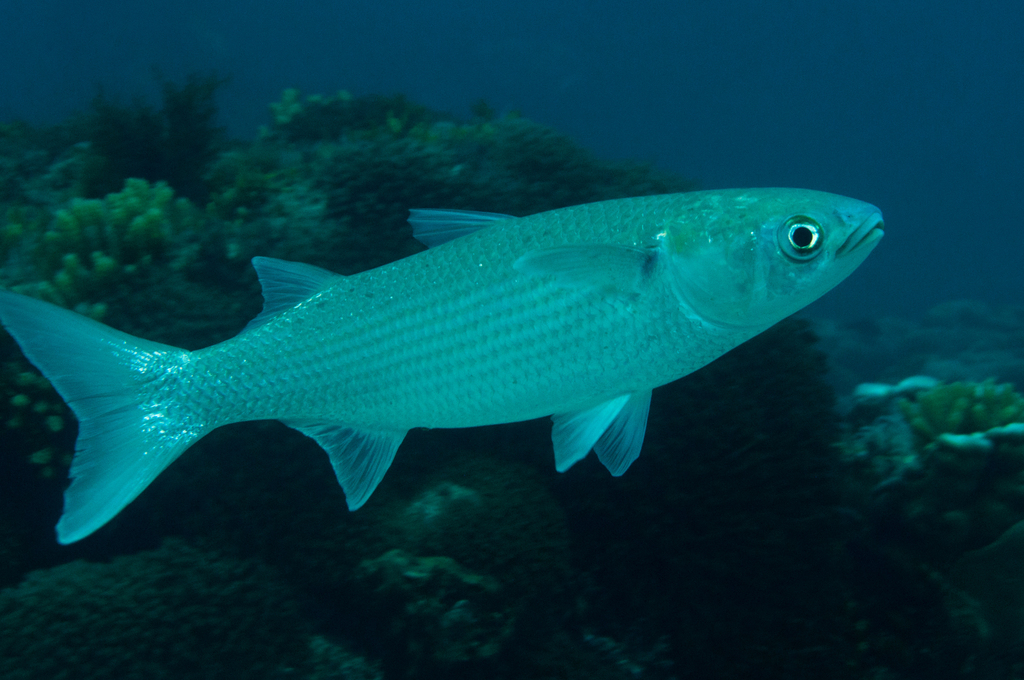
Black mullet (Mugil cephalus) — Mugilidae

Black mullet

Mugil cephalus
Family: Mugilidae
LC · Least Concern
NativeIntroduced

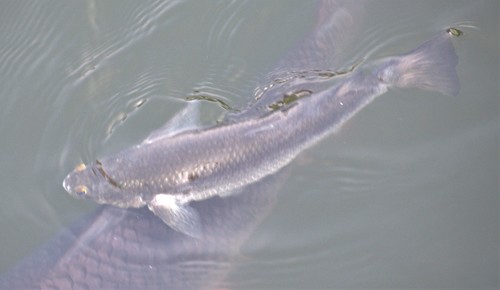
The Black mullet (Mugil cephalus) is a fish that lives in both fresh and salt water of the family Mugilidae that grows up to 100 cm.

Length
100 cm
Water
Euryhaline
Depth
0.0–120.0 m
Diet
Omnivore
Behaviour
Schooling
Activity
Diurnal
Body shape
Torpedo-shaped
Substrate
Mixed bottom
Danger
Harmless
Range
Cosmopolitan in coastal waters of tropical, subtropical and temperate seas worldwide.
Edibility
Commonly eaten

Want the complete picture on the Black mullet?

Get the app

Description

The flathead grey mullet is a stout, cylindrical marine fish of the family Mugilidae that can reach about 100 cm. It has a flattened head, a well-developed adipose eyelid and silvery-grey flanks marked with faint longitudinal stripes. There are two separate dorsal fins, the first bearing spines. The species occurs cosmopolitanly in coastal, brackish and fresh waters of tropical to temperate seas and is catadromous, spawning at sea. Adults feed on detritus, micro-algae and bottom organisms, which they grind in a specialised gizzard-like stomach. Flathead grey mullet form schools over sand and mud bottoms and are an important commercial and aquaculture fish.

Frequently asked questions

How do you recognise the Black mullet?

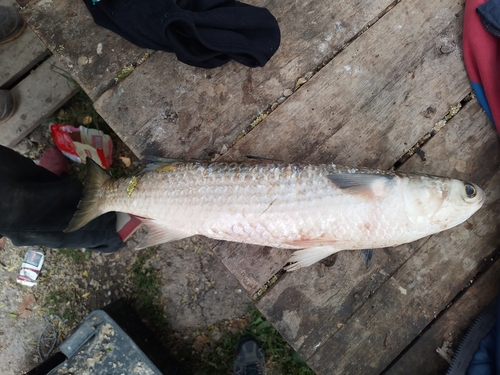
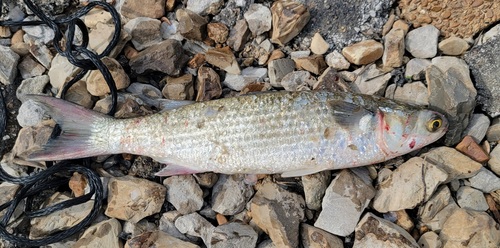
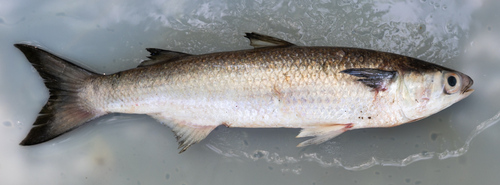
The Black mullet has a torpedo-shaped body, is mainly silver-grey and shows a horizontal stripes pattern. Sturdy, cylindrical body with a flattened head, a well-developed adipose eyelid and a thin upper lip; flanks with pale longitudinal stripes.

Where does the Black mullet live?

The Black mullet lives in both fresh and salt water and is mostly found around mixed bottom. Cosmopolitan in coastal waters of tropical, subtropical and temperate seas worldwide.

How big does the Black mullet get?

The Black mullet grows to a maximum of about 100 cm. On average the species is around 50 cm.

Is the Black mullet dangerous to humans?

No, the Black mullet is harmless to humans. None required: this species is harmless to humans.

Is the Black mullet edible?

Yes, the Black mullet is commonly eaten.

More photos
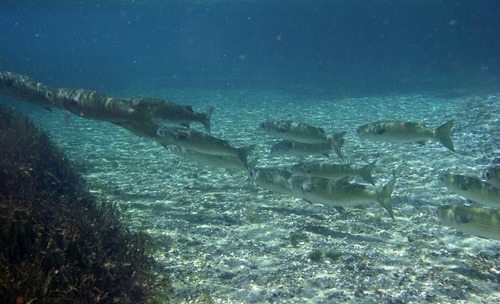
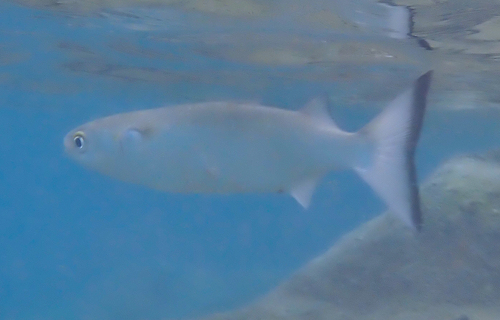
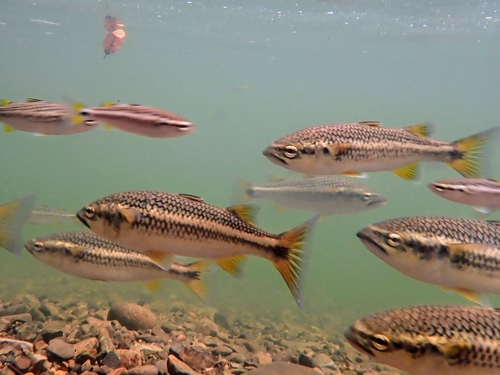
Black mullet (Mugil cephalus) — Mugilidae — 2
iNaturalist ((c) jasonrl, some rights reserved (CC BY-NC))
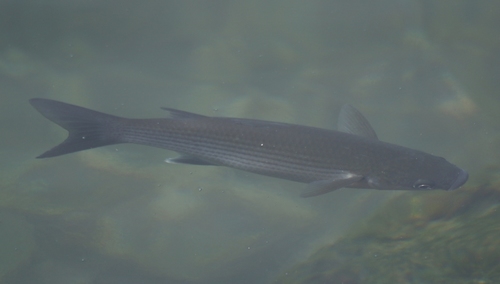
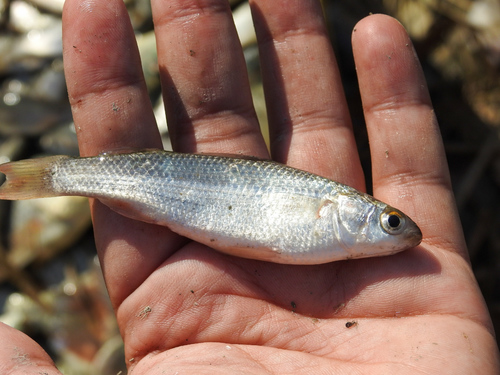
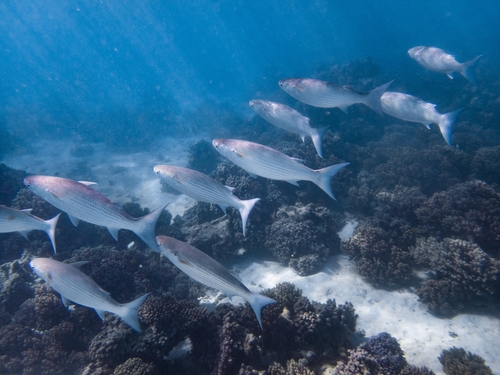
Black mullet (Mugil cephalus) — Mugilidae — 3
Wikimedia Commons — Mark Robinson (CC BY 2.0)
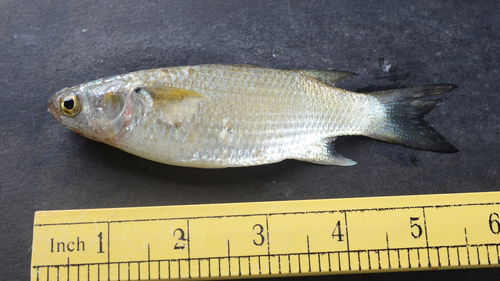
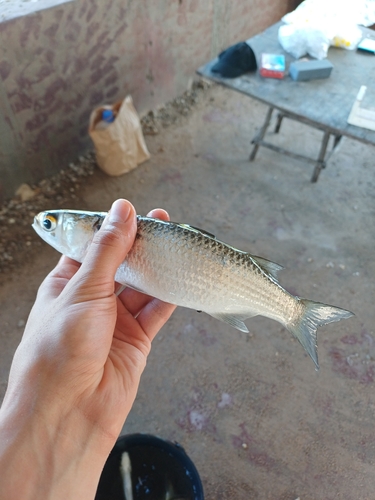
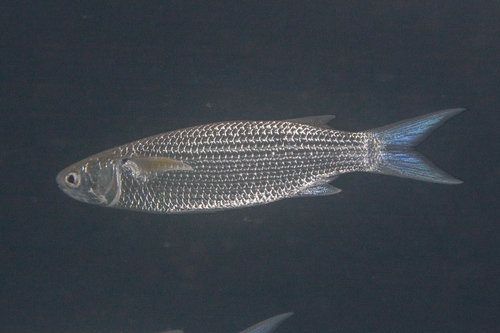
Black mullet (Mugil cephalus) — Mugilidae — 4
iNaturalist ((c) Leo G. Nico, some rights reserved (CC BY-NC))
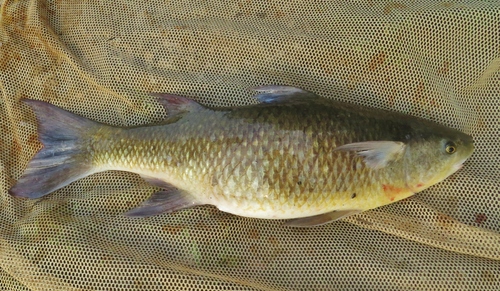
Black mullet (Mugil cephalus) — Mugilidae — 5
Wikimedia Commons — Utagawa Hiroshige (Public domain)

Easily confused with

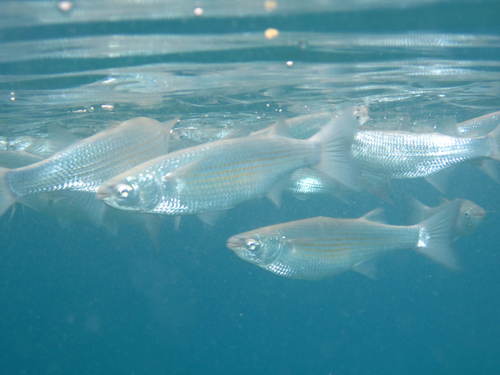
These species look like the Black mullet and live in the same waters.
Fin

Want the complete picture on the Black mullet?

Point your camera at the fish and Fin names the species in seconds. Free, and the Black mullet is one of 12,519 species in the app.

Get the app →

All data

Identification

English name
Black mullet verified
Scientific name
Mugil cephalus
Family
Mugilidae
Other names
Black mullet; Black true mullet; Bright mullet; Bully; Bully mullet; Flathead grey mullet; Grey mullet; Flathead mullet; Striped mullet; Sea mullet; Mullet; Callifaver mullet verified

Appearance

Size class
Extra large verified
Max length (cm)
100.0 verified
Average length (cm)
50.0 verified
Body shape
Torpedo-shaped sourced
Dominant colour
Silver / grey sourced
Pattern
Horizontal stripes sourced
Tail shape
Forked sourced
Mouth position
Terminal inferred
Lips
Thick / fleshy inferred
Barbels
No verified
Dorsal fins
Two separate sourced
Dorsal spines
Yes verified

Habitat & distribution

Water type
Euryhaline sourced
Substrate
Mixed bottom sourced
Min depth (m)
0.0 verified
Max depth (m)
120.0 verified
Natural range
Cosmopolitan in coastal waters of tropical, subtropical and temperate seas worldwide. verified
Origin
Native verified

Behaviour & biology

Diet
Omnivore verified
Diet (detail)
Omnivorous: small invertebrates, algae, detritus and plant material inferred
Social behaviour
Schooling verified
Territorial
No verified
Activity
Diurnal sourced
Reproduction
Separate sexes verified
Sexual dimorphism
No verified
levensduur_max_jaar
16.0 verified
Seasonality
Catadromous: spawns seasonally at sea, with females laying hundreds of thousands to millions of eggs. sourced
Special features
Sturdy, cylindrical body with a flattened head, a well-developed adipose eyelid and a thin upper lip; flanks with pale longitudinal stripes. sourced

For anglers

Edibility
Commonly eaten verified
Fishing method
Bottom fishing with natural bait (worm, shrimp or fish) on or just above the seabed. inferred
Regulations source
FishBase ↗ inferred

Safety

Danger to humans
Harmless sourced
First aid
None required: this species is harmless to humans. sourced

Status & sources

Sources
FishBase via GBIF (DwC-A), CC-BY-NC 4.0

Same genus Mugil

More from the family Mugilidae
Fin

Want the complete picture on the Black mullet?

Point your camera at the fish and Fin names the species in seconds. Free, and the Black mullet is one of 12,519 species in the app.

Get the app →
Is this the Black mullet? Get the app