 Fin's Fish Guide

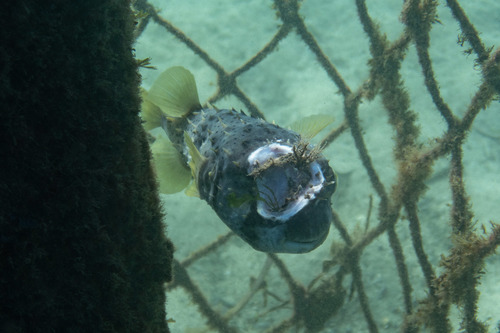
The Black-blotched porcupinefish (Diodon liturosus) is a saltwater fish of the family Diodontidae that grows up to 65 cm.
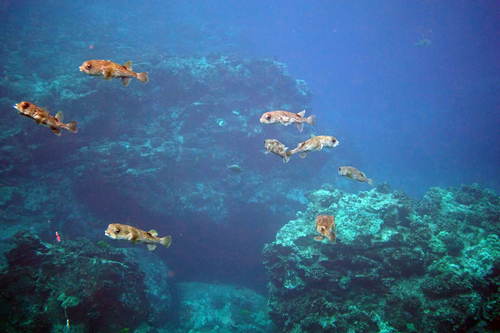
Widespread in tropical and subtropical seas (Indian and Pacific Ocean and the eastern Atlantic), near reefs and rocky bottoms of shallow coastal water.
Description
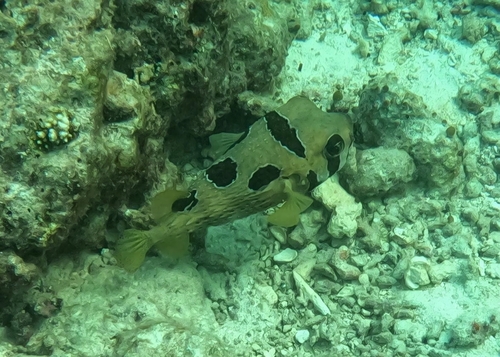
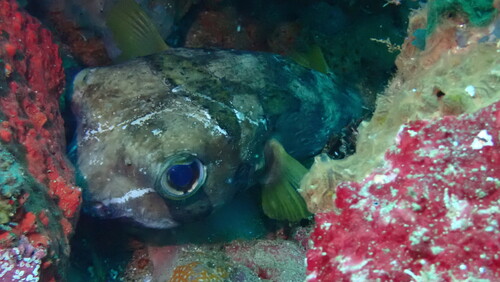
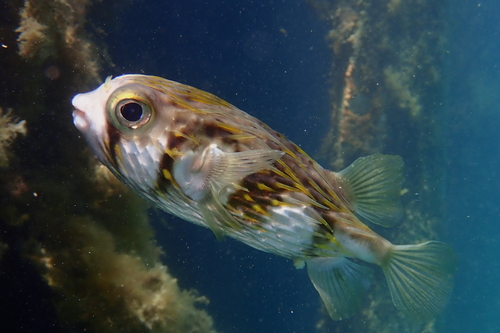
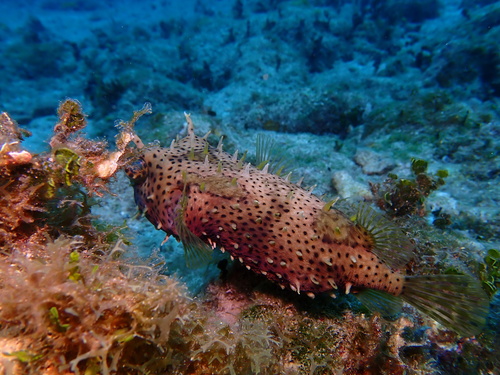
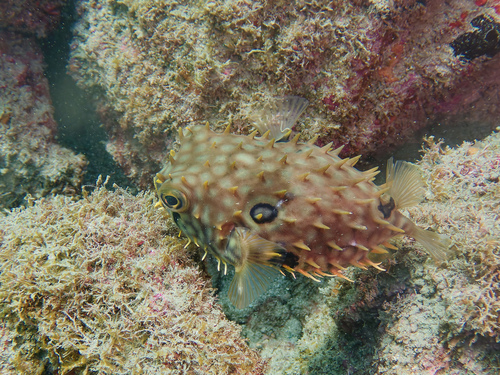
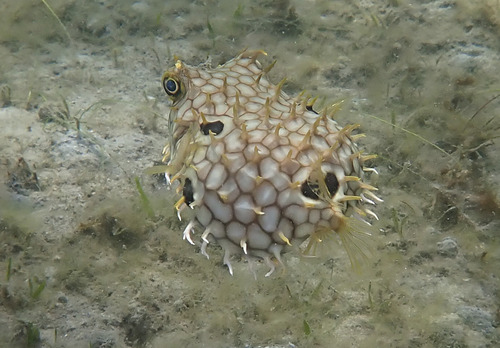
The black-blotched porcupinefish is a porcupinefish of the family Diodontidae reaching about 65 cm. The brown body is covered with long, normally flat-lying spines and bears large, dark-edged blotches, plus a black band across the eyes. When threatened the fish pumps itself up with water into a ball, raising the spines erect and becoming too large and prickly for most predators. With its jaws fused into a strong beak it crushes shellfish, sea urchins, snails and crabs. The species lives near reefs and rocky bottoms of shallow coastal water in tropical seas worldwide. Like many puffers and porcupinefishes its skin and organs may contain the poison tetrodotoxin; it should not be eaten.
Frequently asked questions
How do you recognise the Black-blotched porcupinefish?
The Black-blotched porcupinefish has a flattened, disc-shaped body, is mainly brown and shows a spots pattern. Porcupinefish that can inflate itself with water into a spiny ball; the body is covered with long spines and bears large, dark-edged blotches. Note: in tropical areas this species can cause ciguatera poisoning when eaten; large specimens of coral reef predators can accumulate the toxin. Eat with care or avoid in risk areas.
Where does the Black-blotched porcupinefish live?
The Black-blotched porcupinefish lives in the sea (marine waters) and is mostly found around stony or rocky ground. Widespread in tropical and subtropical seas (Indian and Pacific Ocean and the eastern Atlantic), near reefs and rocky bottoms of shallow coastal water.
How big does the Black-blotched porcupinefish get?
The Black-blotched porcupinefish grows to a maximum of about 65 cm.
Is the Black-blotched porcupinefish dangerous to humans?
The Black-blotched porcupinefish is venomous — handle spines with care and seek medical help after a sting if needed. The skin and organs may contain the nerve poison tetrodotoxin: this fish should not be eaten. The spines can cause puncture wounds; clean them and seek medical help if infection develops.
Is the Black-blotched porcupinefish edible?
The Black-blotched porcupinefish is not usually eaten.
More photos



Want the complete picture on the Black-blotched porcupinefish?
Point your camera at the fish and Fin names the species in seconds. Free, and the Black-blotched porcupinefish is one of 12,519 species in the app.
All data
Identification
Appearance
Habitat & distribution
Behaviour & biology
For anglers
Safety
Status & sources
Same genus Diodon
More from the family Diodontidae



Want the complete picture on the Black-blotched porcupinefish?
Point your camera at the fish and Fin names the species in seconds. Free, and the Black-blotched porcupinefish is one of 12,519 species in the app.