Home · Blenniidae · Bicolor blenny
Bicolor blenny (Ecsenius bicolor) — Blenniidae

Bicolor blenny

Ecsenius bicolor
Family: Blenniidae
LC · Least Concern

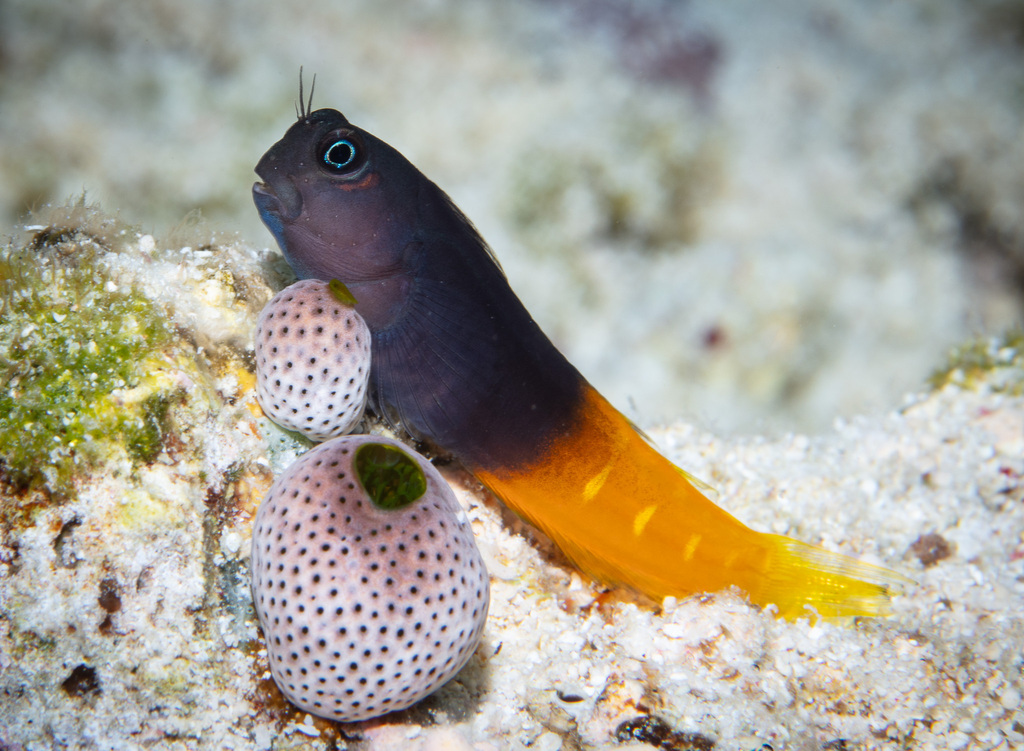
The Bicolor blenny (Ecsenius bicolor) is a saltwater fish of the family Blenniidae that grows up to 11 cm.

Length
11 cm
Water
Saltwater
Depth
1.0–25.0 m
Diet
Herbivore
Behaviour
Solitary
Body shape
Elongated (eel-like)
Substrate
Stone or rock
Danger
Harmless
Range
Indo-West Pacific, on lagoon and seaward reefs.
Edibility
Not eaten

Want the complete picture on the Bicolor blenny?

Get the app

Description

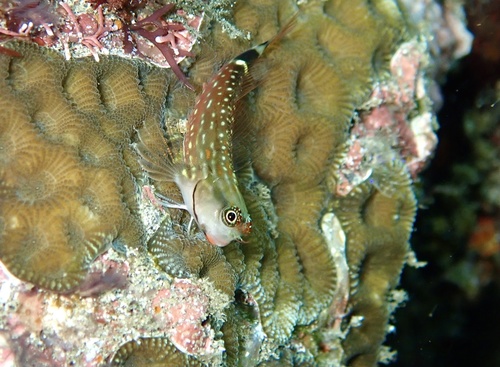
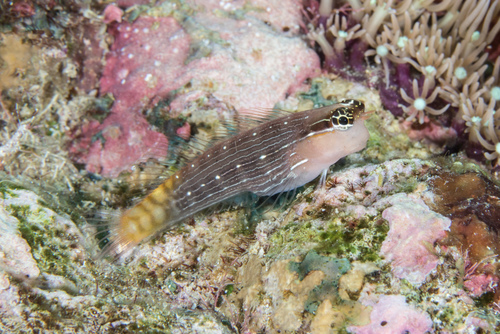
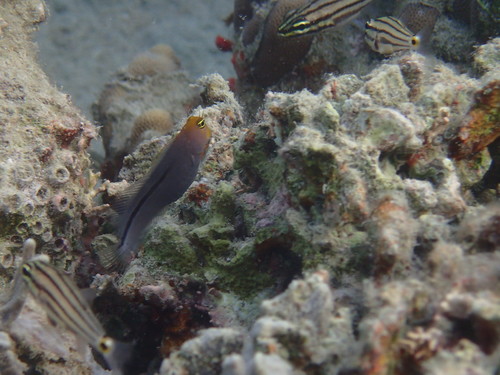
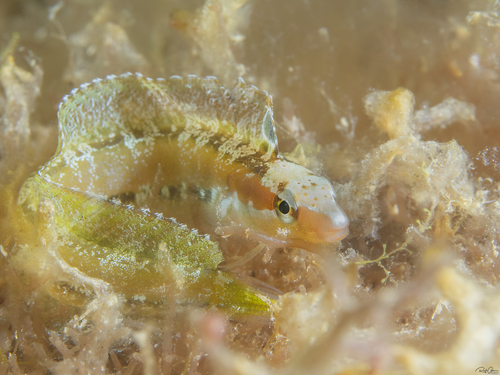
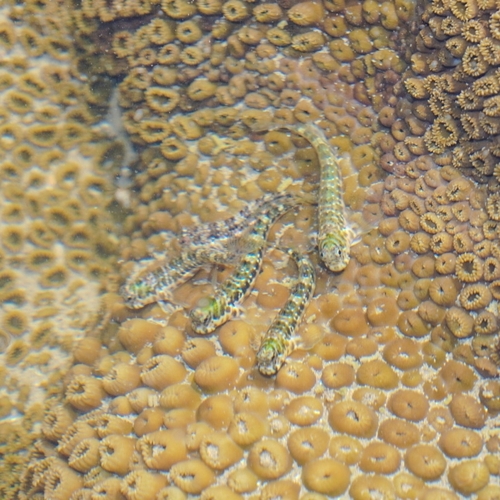
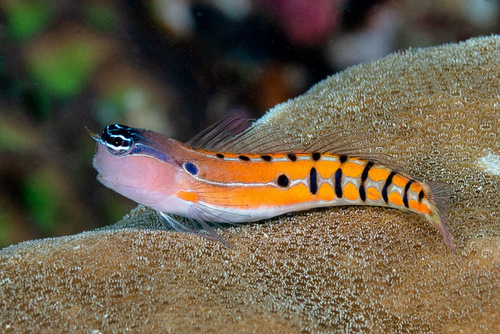
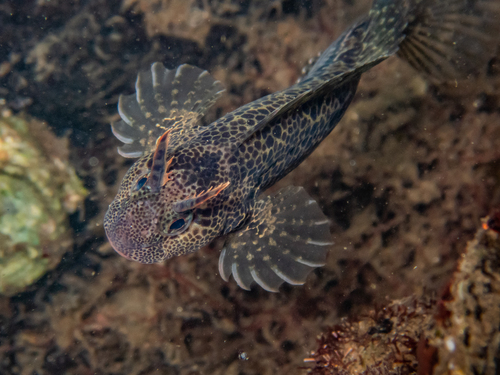
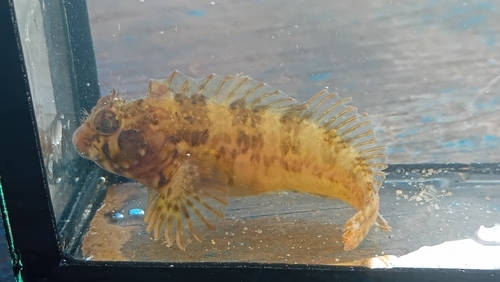
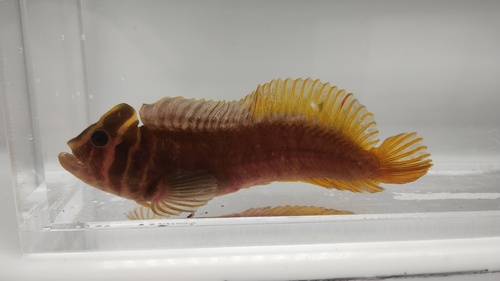
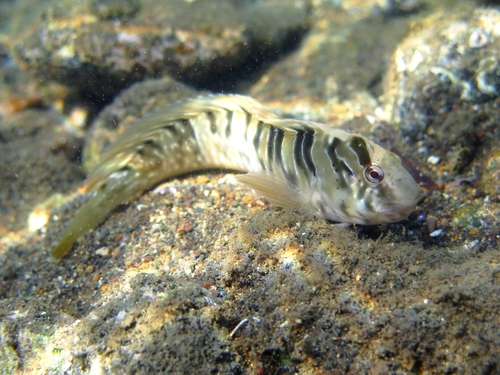
The bicolor blenny is a blenny (Blenniidae) from the Indo-West Pacific. The species reaches about 11 cm and is strikingly bicoloured: the front half of the body is dark blue, the rear orange, to which the name refers. It inhabits clear lagoon and seaward reefs with mixed corals and algae-covered rocks, where it lives solitarily and often retreats into abandoned worm tubes. With its comb-like teeth it grazes algae and detritus from the surface. The adhesive eggs are laid on the bottom. The species is popular in the marine aquarium trade.

Frequently asked questions

How do you recognise the Bicolor blenny?

The Bicolor blenny has an elongate, eel-like body, is mainly multicoloured and shows a plain pattern. Front half dark blue, rear half orange; shelters in abandoned worm tubes; popular in the marine aquarium trade.

Where does the Bicolor blenny live?

The Bicolor blenny lives in the sea (marine waters) and is mostly found around stony or rocky ground. Indo-West Pacific, on lagoon and seaward reefs.

How big does the Bicolor blenny get?

The Bicolor blenny grows to a maximum of about 11 cm. On average the species is around 8 cm.

Is the Bicolor blenny dangerous to humans?

No, the Bicolor blenny is harmless to humans. None required: this species is harmless to humans.

Is the Bicolor blenny edible?

The Bicolor blenny is not usually eaten.

More photos

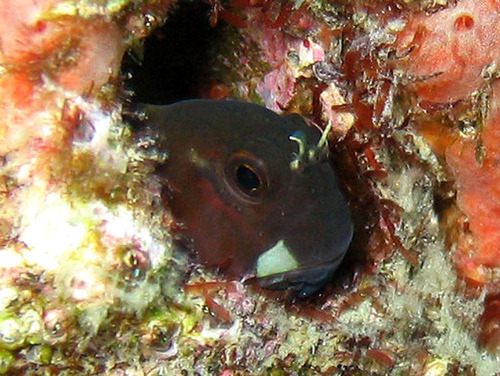
Bicolor blenny (Ecsenius bicolor) — Blenniidae — 2
Wikimedia Commons — Brian Gratwicke (CC BY 2.0)
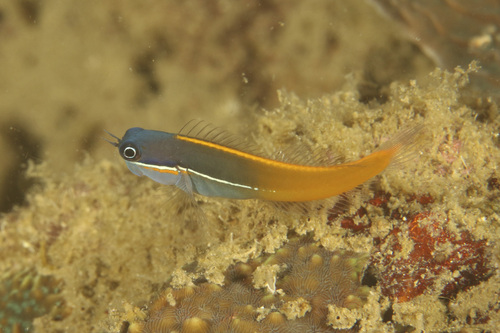
Bicolor blenny (Ecsenius bicolor) — Blenniidae — 3
Wikimedia Commons — No machine-readable author provided. Haplochromis assumed (based on copyright claims). (Public domain)
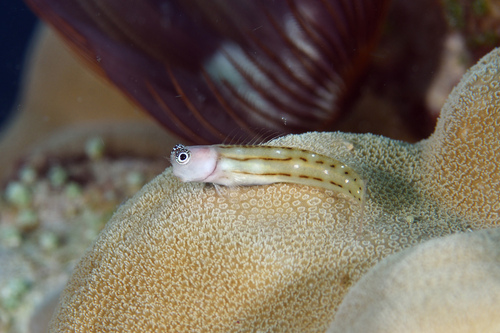
Bicolor blenny (Ecsenius bicolor) — Blenniidae — 4
Wikimedia Commons — Sébastien Stradal for MDC Seamarc Maldives (CC BY-SA 4.0)
Bicolor blenny (Ecsenius bicolor) — Blenniidae — 5
iNaturalist ((c) Sylvain Le Bris, some rights reserved (CC BY-NC))
Fin

Want the complete picture on the Bicolor blenny?

Point your camera at the fish and Fin names the species in seconds. Free, and the Bicolor blenny is one of 12,519 species in the app.

Get the app →

All data

Identification

English name
Bicolor blenny verified
Scientific name
Ecsenius bicolor
Family
Blenniidae
Other names
Bicolor blenny; Bicolor combtooth blenny; Bicolor coralblenny; Bicolour blenny; Two-colored blenny; Two-colour comb-tooth; Two-colour combtooth blenny; Two-coloured blenny; Two-tone combtooth-blenny verified

Appearance

Size class
Small verified
Max length (cm)
11.0 verified
Average length (cm)
8.0 verified
Body shape
Elongated (eel-like) sourced
Dominant colour
Multicoloured inferred
Pattern
Plain inferred
Tail shape
Rounded inferred
Mouth position
Inferior (downward) inferred
Lips
Thick / fleshy inferred
Barbels
No sourced
Dorsal fins
One continuous inferred
Dorsal spines
No sourced

Habitat & distribution

Water type
Saltwater sourced
Substrate
Stone or rock sourced
Min depth (m)
1.0 verified
Max depth (m)
25.0 verified
Natural range
Indo-West Pacific, on lagoon and seaward reefs. inferred
Origin
Native sourced

Behaviour & biology

Diet
Herbivore sourced
Diet (detail)
Algae and detritus scraped from rocks sourced
Social behaviour
Solitary inferred
Territorial
Yes inferred
Reproduction
Separate sexes sourced
Sexual dimorphism
No inferred
Seasonality
Present year-round in its habitat; no pronounced seasonality known. inferred
Special features
Front half dark blue, rear half orange; shelters in abandoned worm tubes; popular in the marine aquarium trade. sourced

For anglers

Edibility
Not eaten sourced
Fishing method
Not a target species for angling; at most an incidental catch or usable as baitfish. inferred
Regulations source
FishBase ↗ inferred

Safety

Danger to humans
Harmless sourced
First aid
None required: this species is harmless to humans. sourced

Status & sources

Sources
FishBase via GBIF (DwC-A), CC-BY-NC 4.0

Same genus Ecsenius

More from the family Blenniidae
Fin

Want the complete picture on the Bicolor blenny?

Point your camera at the fish and Fin names the species in seconds. Free, and the Bicolor blenny is one of 12,519 species in the app.

Get the app →
Is this the Bicolor blenny? Get the app