Home · Polynemidae · Bamin
Bamin (Polydactylus plebeius) — Polynemidae

Bamin

Polydactylus plebeius
Family: Polynemidae

The Bamin (Polydactylus plebeius) is a brackish-water fish of the family Polynemidae that grows up to 45 cm.

Length
45 cm
Water
Brackish
Depth
0–122.0 m
Diet
Carnivore
Behaviour
Schooling
Body shape
Elongated (eel-like)
Substrate
Sand / mud bottom
Danger
Harmless
Range
Indo-Pacific; muddy bottoms of the continental shelf, coastal waters and estuaries.
Edibility
Commonly eaten

Want the complete picture on the Bamin?

Get the app

Description

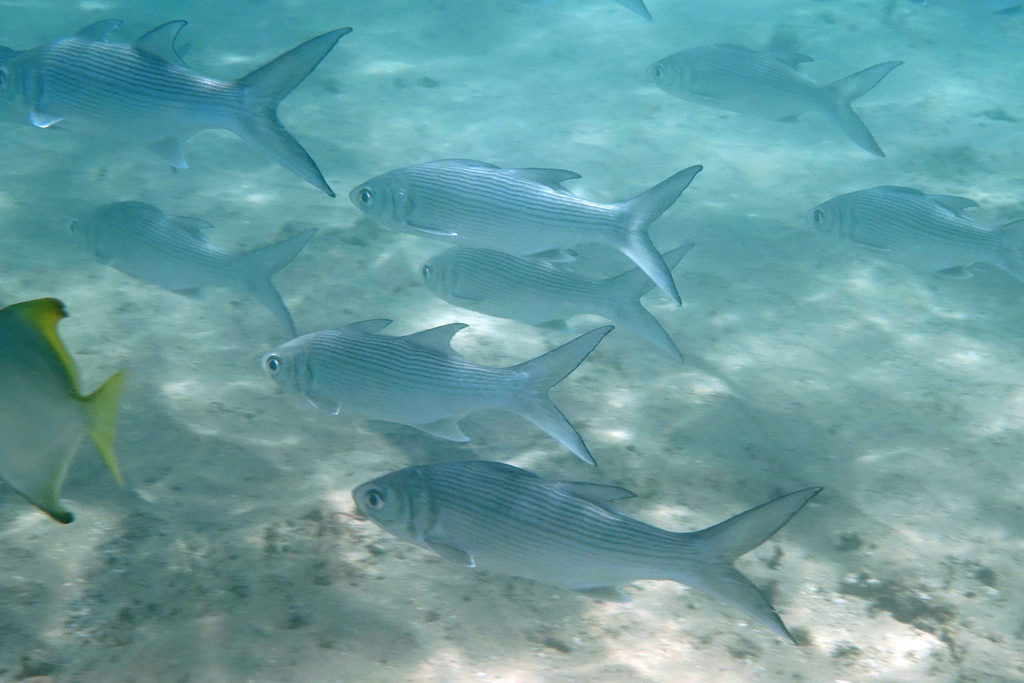
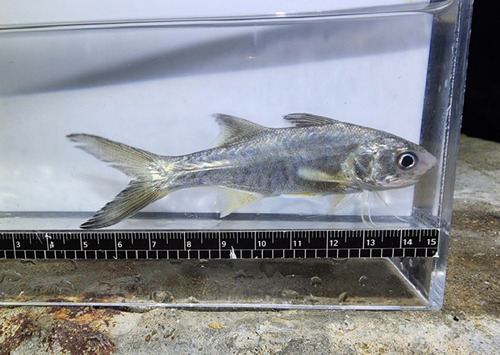
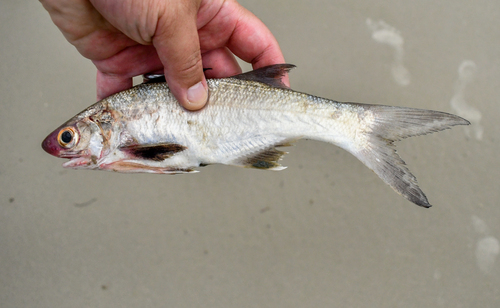
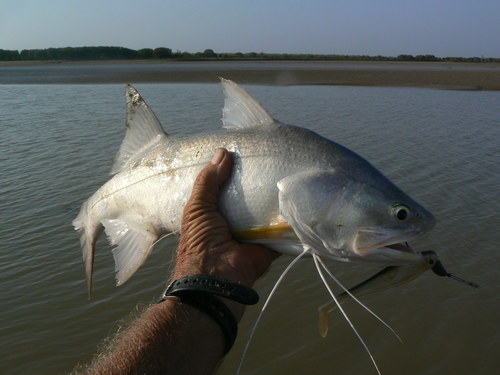
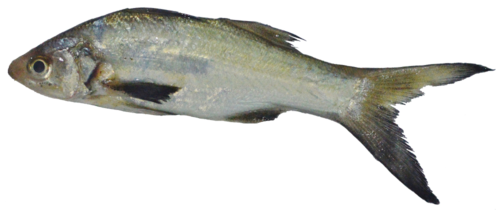
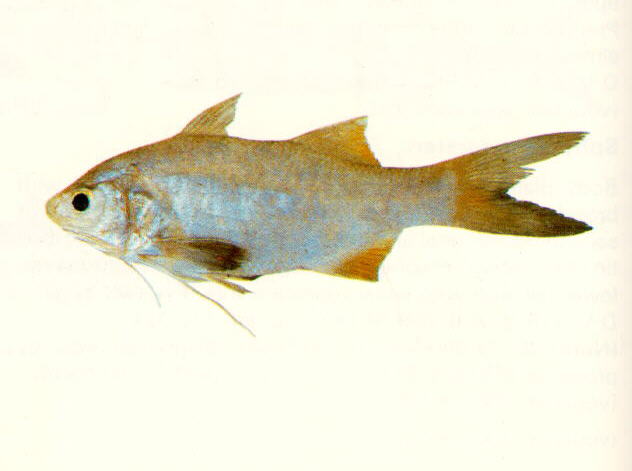
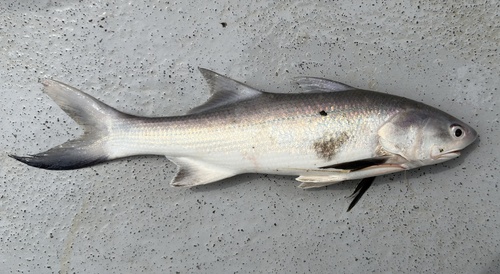
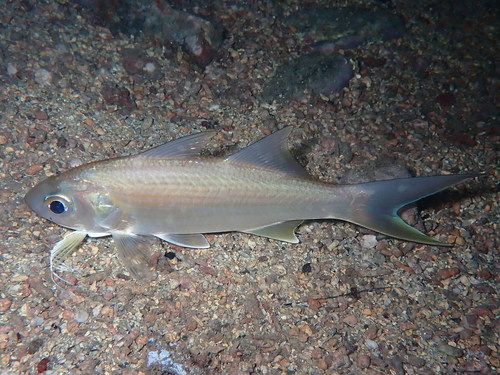
The striped threadfin is a threadfin of the family Polynemidae from the Indo-Pacific. The species grows to about 45 cm and has a streamlined, silvery body with fine dark longitudinal lines along the scale rows and free, thread-like lower pectoral rays. With these sensitive 'feelers' it probes muddy bottoms of the continental shelf, coastal waters and estuaries for hidden prey. As a bottom searcher it feeds on shrimps, small fishes, worms and crustaceans. The striped threadfin is a valued food fish and is sometimes farmed. It is harmless to humans.

Frequently asked questions

How do you recognise the Bamin?

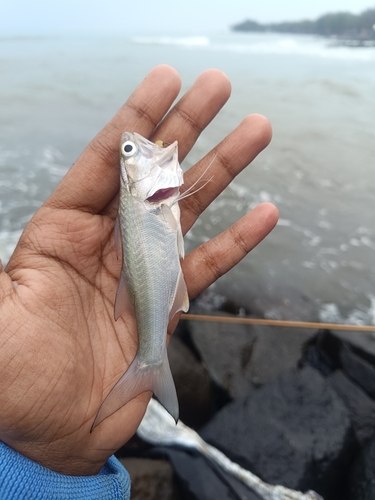
The Bamin has an elongate, eel-like body, is mainly silver-grey and shows a horizontal stripes pattern. Fine dark longitudinal lines and separate 'feeler' pectoral fin rays to feel muddy bottoms.

Where does the Bamin live?

The Bamin lives in brackish water and is mostly found around sand or mud bottom. Indo-Pacific; muddy bottoms of the continental shelf, coastal waters and estuaries.

How big does the Bamin get?

The Bamin grows to a maximum of about 45 cm. On average the species is around 30 cm.

Is the Bamin dangerous to humans?

No, the Bamin is harmless to humans. None required: this species is harmless to humans.

Is the Bamin edible?

Yes, the Bamin is commonly eaten.

More photos

Bamin (Polydactylus plebeius) — Polynemidae — 2
Williams, Jeffrey T. (CC0 1.0) via GBIF — USNM
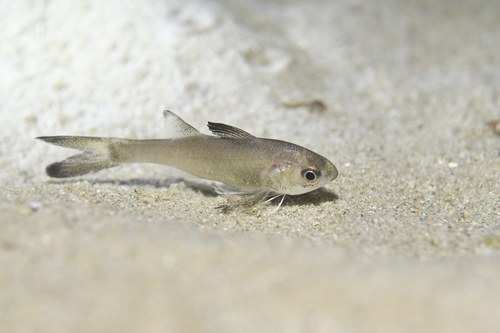
Bamin (Polydactylus plebeius) — Polynemidae — 3
Williams, Jeffrey T. (CC0 1.0) via GBIF — USNM
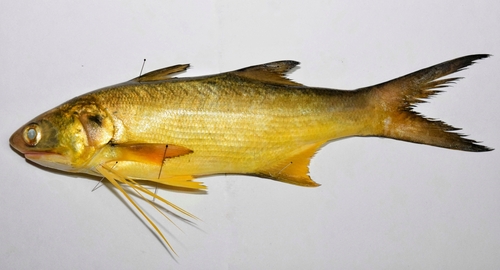
Bamin (Polydactylus plebeius) — Polynemidae — 4
iNaturalist ((c) taiwan_habu, some rights reserved (CC BY-NC))
Bamin (Polydactylus plebeius) — Polynemidae — 5
iNaturalist ((c) Gomen See, some rights reserved (CC BY-NC))
Fin

Want the complete picture on the Bamin?

Point your camera at the fish and Fin names the species in seconds. Free, and the Bamin is one of 12,519 species in the app.

Get the app →

All data

Identification

English name
Bamin verified
Scientific name
Polydactylus plebeius
Family
Polynemidae
Other names
Common tassel fish; Common threadfin; Striped threadfin; Indian salmon; Northern threadfin; Puttynose; Puttynose perch; Row ball; Tassel fish; Threadfin; Thread fin; Thread-fishes verified

Appearance

Size class
Large verified
Max length (cm)
45.0 verified
Average length (cm)
30.0 verified
Body shape
Elongated (eel-like) sourced
Dominant colour
Silver / grey inferred
Pattern
Horizontal stripes inferred
Tail shape
Forked inferred
Mouth position
Inferior (downward) inferred
Lips
Thin inferred
Barbels
No sourced
Dorsal fins
Two separate inferred
Dorsal spines
Yes sourced

Habitat & distribution

Water type
Brackish sourced
Substrate
Sand / mud bottom sourced
Max depth (m)
122.0 verified
Natural range
Indo-Pacific; muddy bottoms of the continental shelf, coastal waters and estuaries. inferred
Origin
Native sourced

Behaviour & biology

Diet
Carnivore sourced
Diet (detail)
Shrimps, small fishes, worms and crustaceans sourced
Social behaviour
Schooling inferred
Territorial
No inferred
Reproduction
Separate sexes sourced
Sexual dimorphism
No inferred
Seasonality
Present year-round in its habitat; no pronounced seasonality known. inferred
Special features
Fine dark longitudinal lines and separate 'feeler' pectoral fin rays to feel muddy bottoms. sourced

For anglers

Edibility
Commonly eaten sourced
Fishing method
Bottom fishing with natural bait (worm, shrimp or fish) on or just above the seabed. inferred
Regulations source
FishBase ↗ inferred

Safety

Danger to humans
Harmless sourced
First aid
None required: this species is harmless to humans. sourced

Status & sources

Sources
FishBase via GBIF (DwC-A), CC-BY-NC 4.0

Same genus Polydactylus

More from the family Polynemidae
Fin

Want the complete picture on the Bamin?

Point your camera at the fish and Fin names the species in seconds. Free, and the Bamin is one of 12,519 species in the app.

Get the app →
Is this the Bamin? Get the app