 Fin's Fish Guide
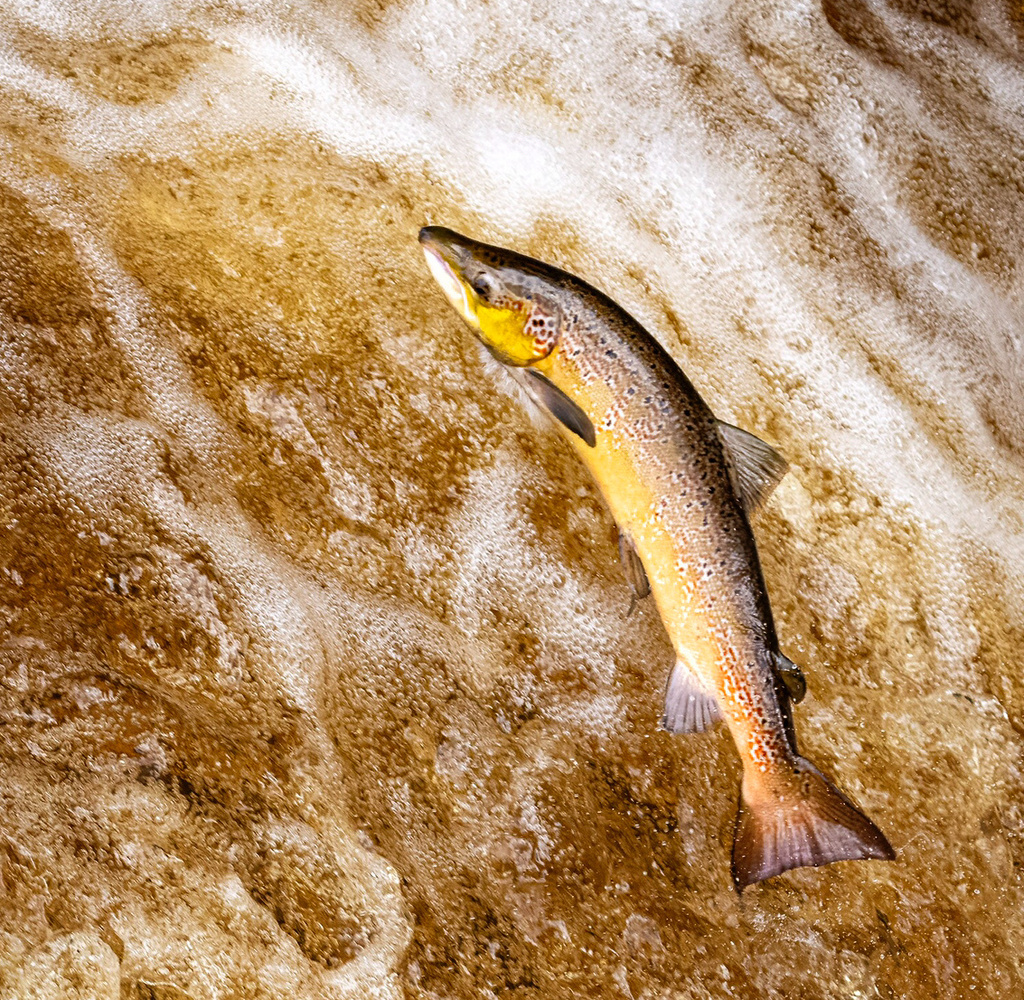
The Atlantic salmon (Salmo salar) is a fish that lives in both fresh and salt water of the family Salmonidae that grows up to 150 cm.
North Atlantic; anadromous, spawns in cool, fast-flowing rivers of Western Europe and eastern North America.
Description
The Atlantic salmon is a large, powerful salmonid of the family Salmonidae reaching about 150 cm. The streamlined body bears an adipose fin between the dorsal and tail fins and is silvery with black spots; in the spawning season river fish turn brownish to reddish and males develop a hooked lower jaw. The salmon is anadromous: it grows up in cool, fast-flowing rivers, migrates to the North Atlantic to grow and after years returns to its native river to spawn, leaping waterfalls and weirs on the way. At sea it hunts herring-like fish and squid. Through dams, pollution and climate change many populations have declined sharply; the species is now assessed as Near Threatened (NT).
Frequently asked questions
How do you recognise the Atlantic salmon?
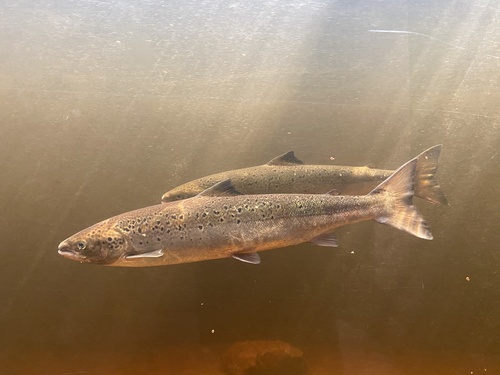
The Atlantic salmon has a torpedo-shaped body, is mainly silver-grey and shows a spots pattern. Salmonid with an adipose fin and small black spots; migrates from the sea up the rivers to spawn, leaping up waterfalls and weirs on the way.
Where does the Atlantic salmon live?
The Atlantic salmon lives in both fresh and salt water and is mostly found around mixed bottom. North Atlantic; anadromous, spawns in cool, fast-flowing rivers of Western Europe and eastern North America.
How big does the Atlantic salmon get?
The Atlantic salmon grows to a maximum of about 150 cm. On average the species is around 38 cm.
Is the Atlantic salmon dangerous to humans?
No, the Atlantic salmon is harmless to humans. None required: this species is harmless to humans.
Is the Atlantic salmon edible?
Yes, the Atlantic salmon is a highly prized food fish.
More photos
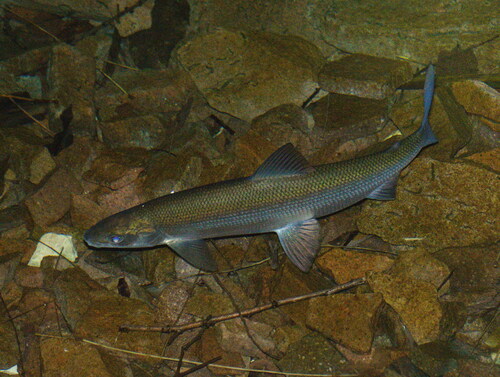
Easily confused with
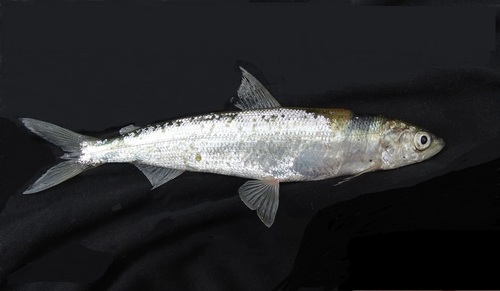
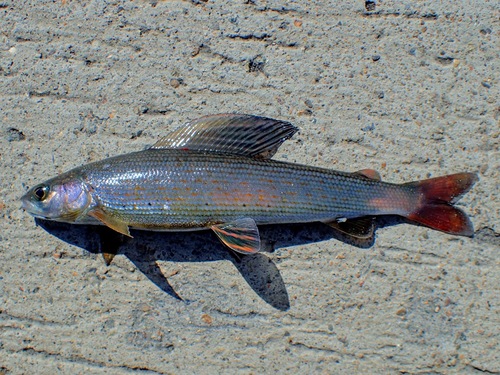
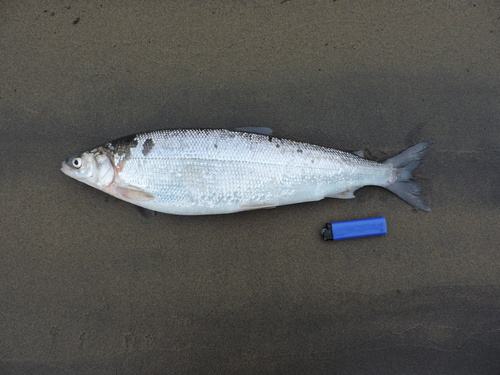
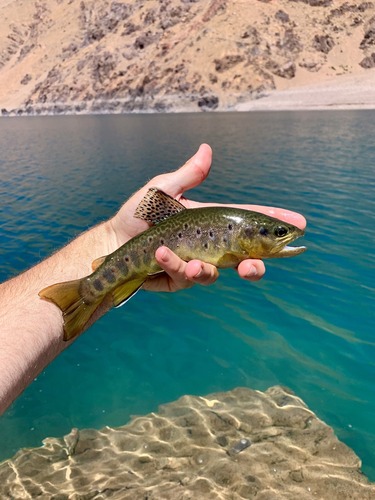
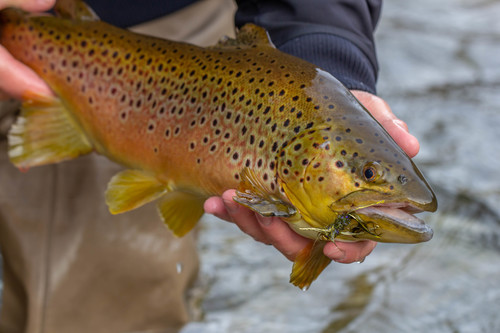
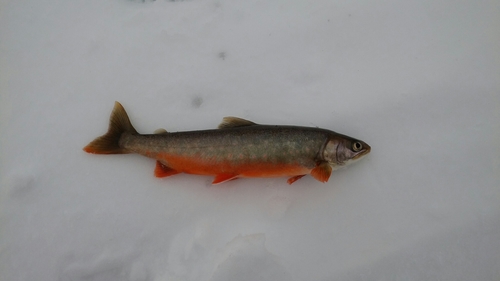
These species look like the Atlantic salmon and live in the same waters.

Want the complete picture on the Atlantic salmon?
Point your camera at the fish and Fin names the species in seconds. Free, and the Atlantic salmon is one of 12,519 species in the app.
All data
Identification
Appearance
Habitat & distribution
Behaviour & biology
For anglers
Safety
Status & sources
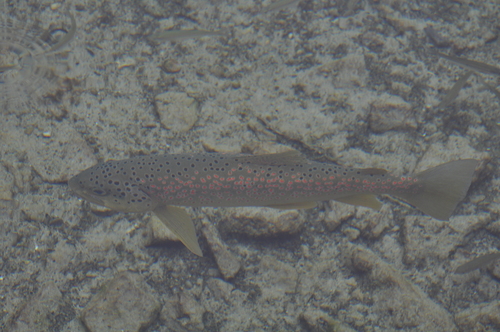
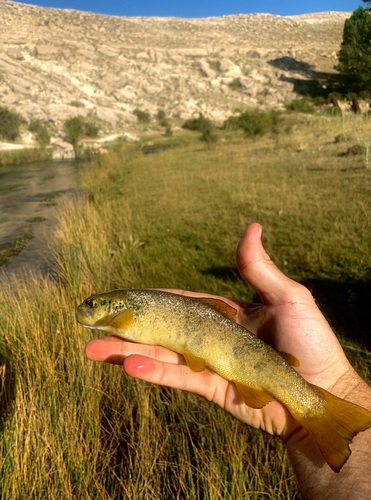
Same genus Salmo


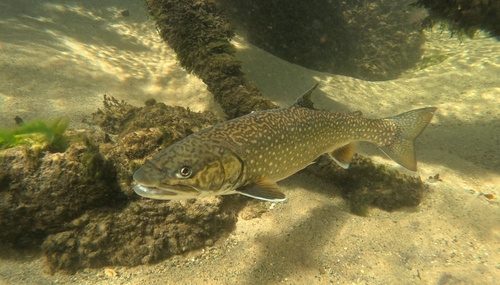
More from the family Salmonidae



Want the complete picture on the Atlantic salmon?
Point your camera at the fish and Fin names the species in seconds. Free, and the Atlantic salmon is one of 12,519 species in the app.