 Fin's Fish Guide
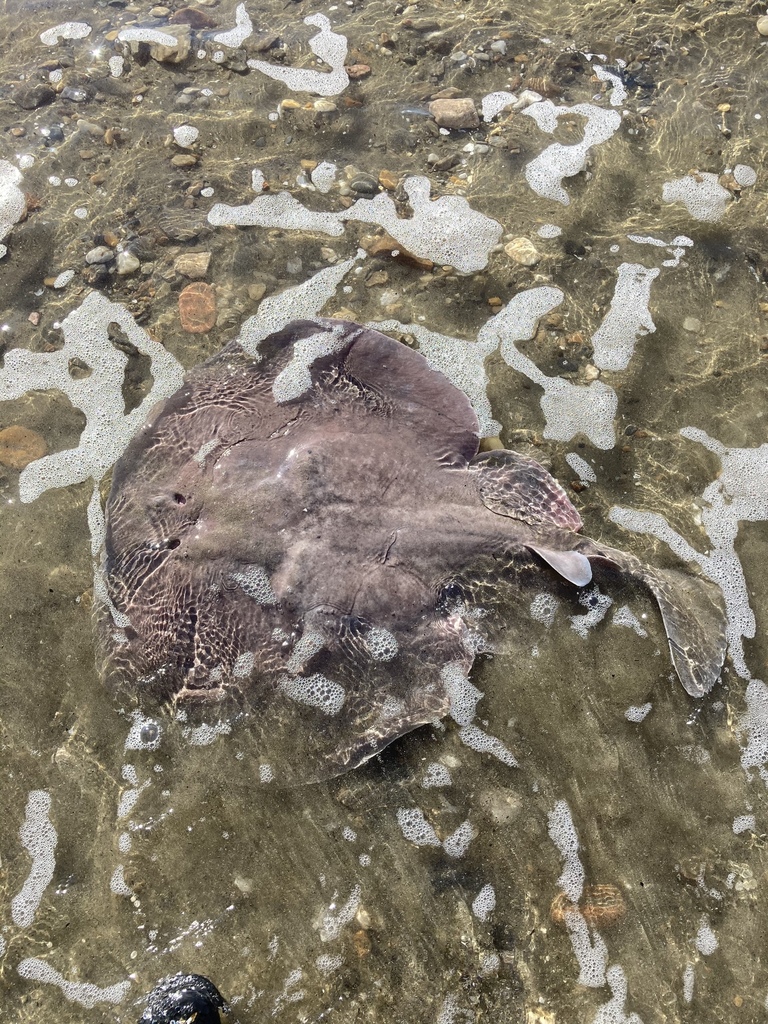
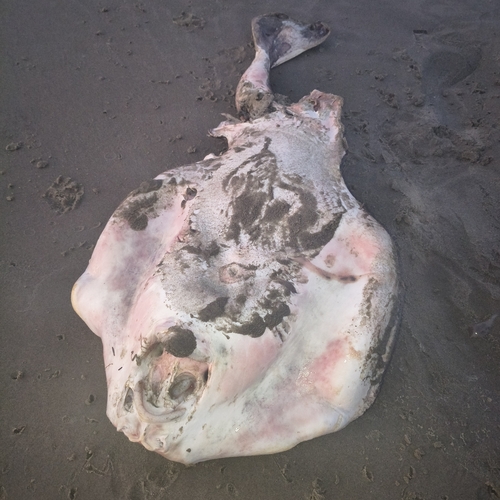
The Atlantic electric ray (Tetronarce nobiliana) is a saltwater fish of the family Torpedinidae that grows up to 180 cm.
Circumglobal in subtropical waters (60°N-48°S): Atlantic Ocean, Indian Ocean and southwest Pacific, including the Mediterranean Sea.
Description
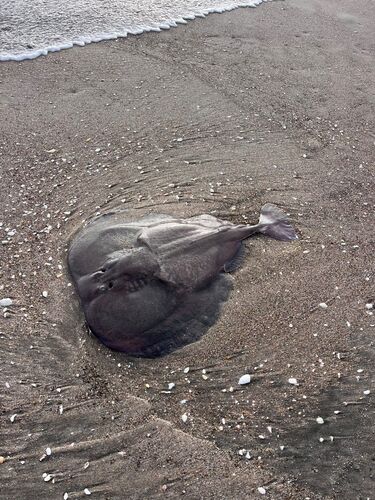
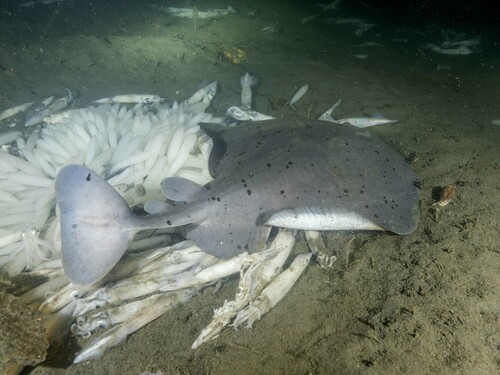
The Atlantic torpedo is a large electric ray of the family Torpedinidae reaching about 180 cm. The body is uniformly dark chocolate to purplish-brown above and white below, with a notably large, paddle-shaped tail. The species has the most powerful electric organs of any torpedo ray and can deliver a shock of up to about 220 volts, enough to knock a person down. It occurs circumglobally in subtropical seas, including the Mediterranean; juveniles live near the bottom while adults are semi-pelagic and travel long distances. Its food consists of bony fishes and small sharks. This ray should never be touched.
Frequently asked questions
How do you recognise the Atlantic electric ray?
The Atlantic electric ray has an irregular in shape body, is mainly black and shows a plain pattern. Large, uniformly dark electric ray with a paddle-shaped tail; the most powerful electric ray, with a shock of up to ~220 volts.
Where does the Atlantic electric ray live?
The Atlantic electric ray lives in the sea (marine waters) and is mostly found around mixed bottom. Circumglobal in subtropical waters (60°N-48°S): Atlantic Ocean, Indian Ocean and southwest Pacific, including the Mediterranean Sea.
How big does the Atlantic electric ray get?
The Atlantic electric ray grows to a maximum of about 180 cm. On average the species is around 40 cm.
Is the Atlantic electric ray dangerous to humans?
The Atlantic electric ray can cause injury; handle it with care. Do not touch this fish: it delivers a very strong electric shock (up to ~220 volts), enough to knock a person down. Move to safety and seek medical help if symptoms occur.
Is the Atlantic electric ray edible?
The Atlantic electric ray is not usually eaten.
More photos
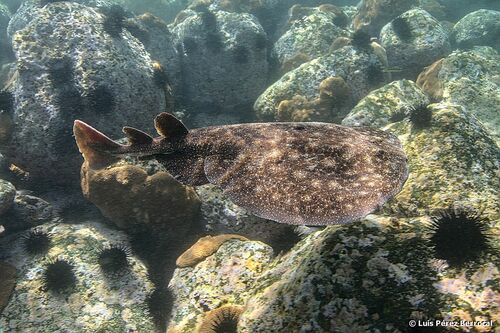
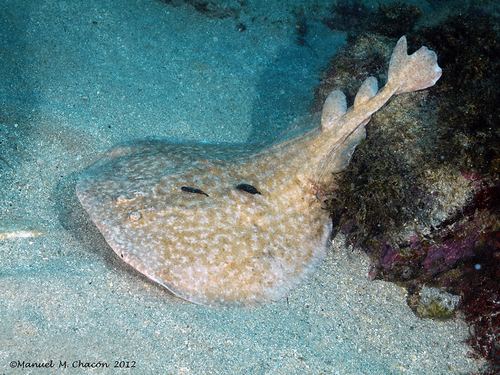
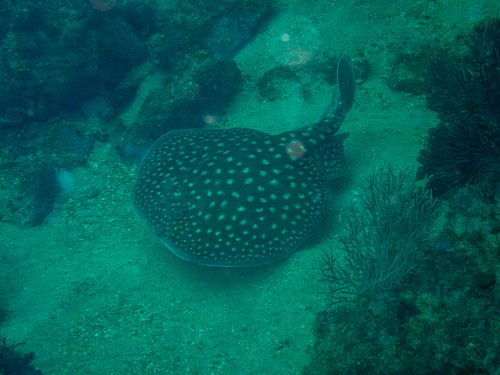
Easily confused with
These species look like the Atlantic electric ray and live in the same waters.


Want the complete picture on the Atlantic electric ray?
Point your camera at the fish and Fin names the species in seconds. Free, and the Atlantic electric ray is one of 12,519 species in the app.
All data
Identification
Appearance
Habitat & distribution
Behaviour & biology
For anglers
Safety
Status & sources
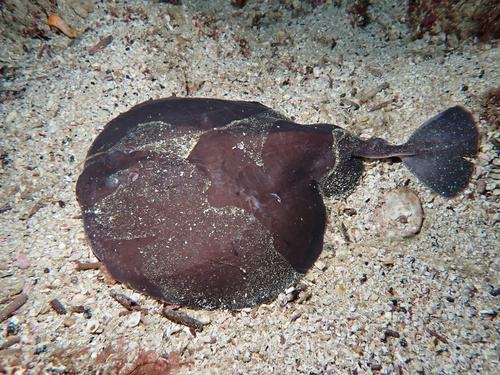
Same genus Tetronarce
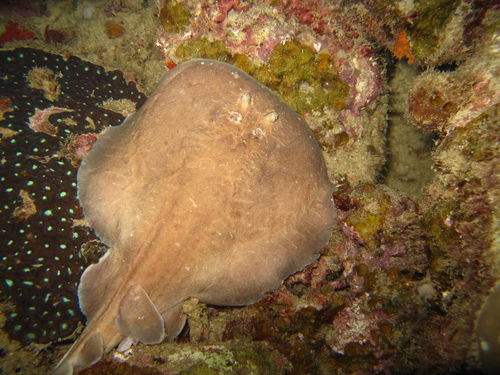
More from the family Torpedinidae


Want the complete picture on the Atlantic electric ray?
Point your camera at the fish and Fin names the species in seconds. Free, and the Atlantic electric ray is one of 12,519 species in the app.