 Fin's Fish Guide
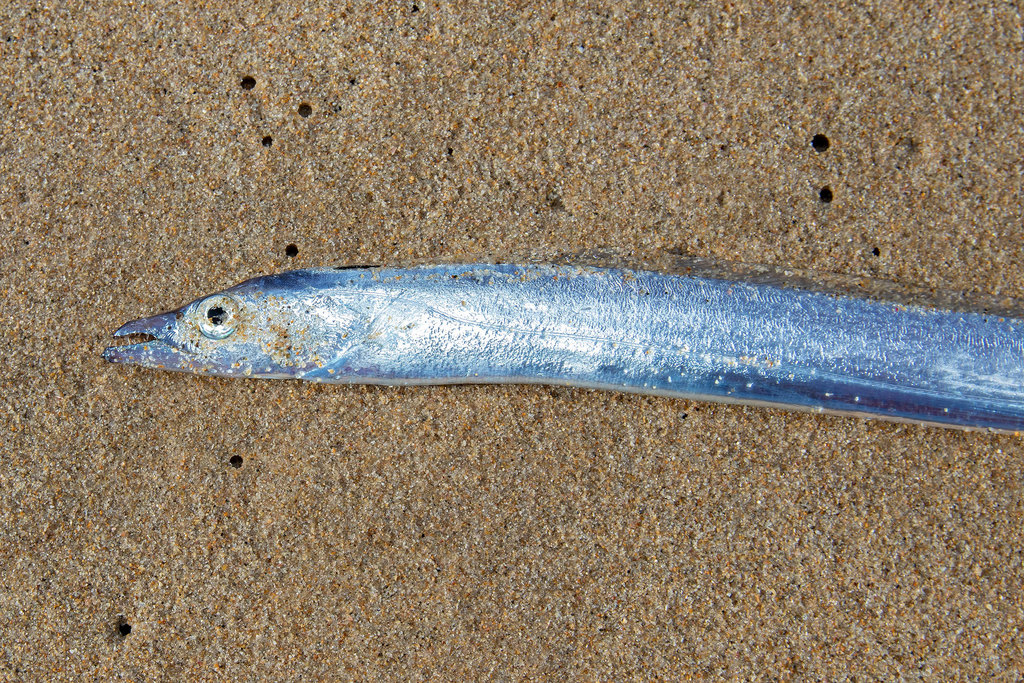
The Atlantic Cutlassfish (Trichiurus lepturus) is a brackish-water fish of the family Trichiuridae that grows up to 234 cm.
Circumtropical and circumtemperate, including in the Gulf of Mexico, the Caribbean, the Mediterranean Sea, the Red Sea and the Persian Gulf.
Description
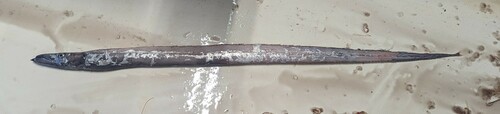
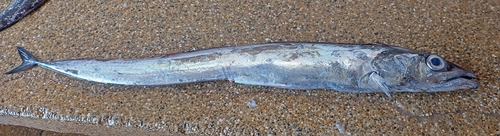
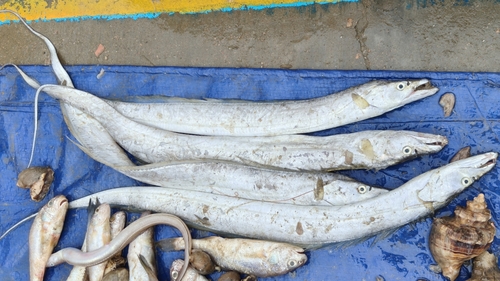
The largehead hairtail is a striking predator of the family Trichiuridae growing to over 230 cm. The body is greatly elongated, ribbon-like and strongly compressed, tapering to a fine point with no true caudal fin; a single long dorsal fin runs the length of the back. The large mouth carries dagger-like teeth. Freshly caught it is steely blue with silvery sheen, fading to uniform silver-grey after death. The species occurs circumtropically in coastal and open water and makes daily vertical migrations, schooling near the bottom by day and hunting fish, squid and crustaceans near the surface at night. It is an important commercial fish.
Frequently asked questions
How do you recognise the Atlantic Cutlassfish?
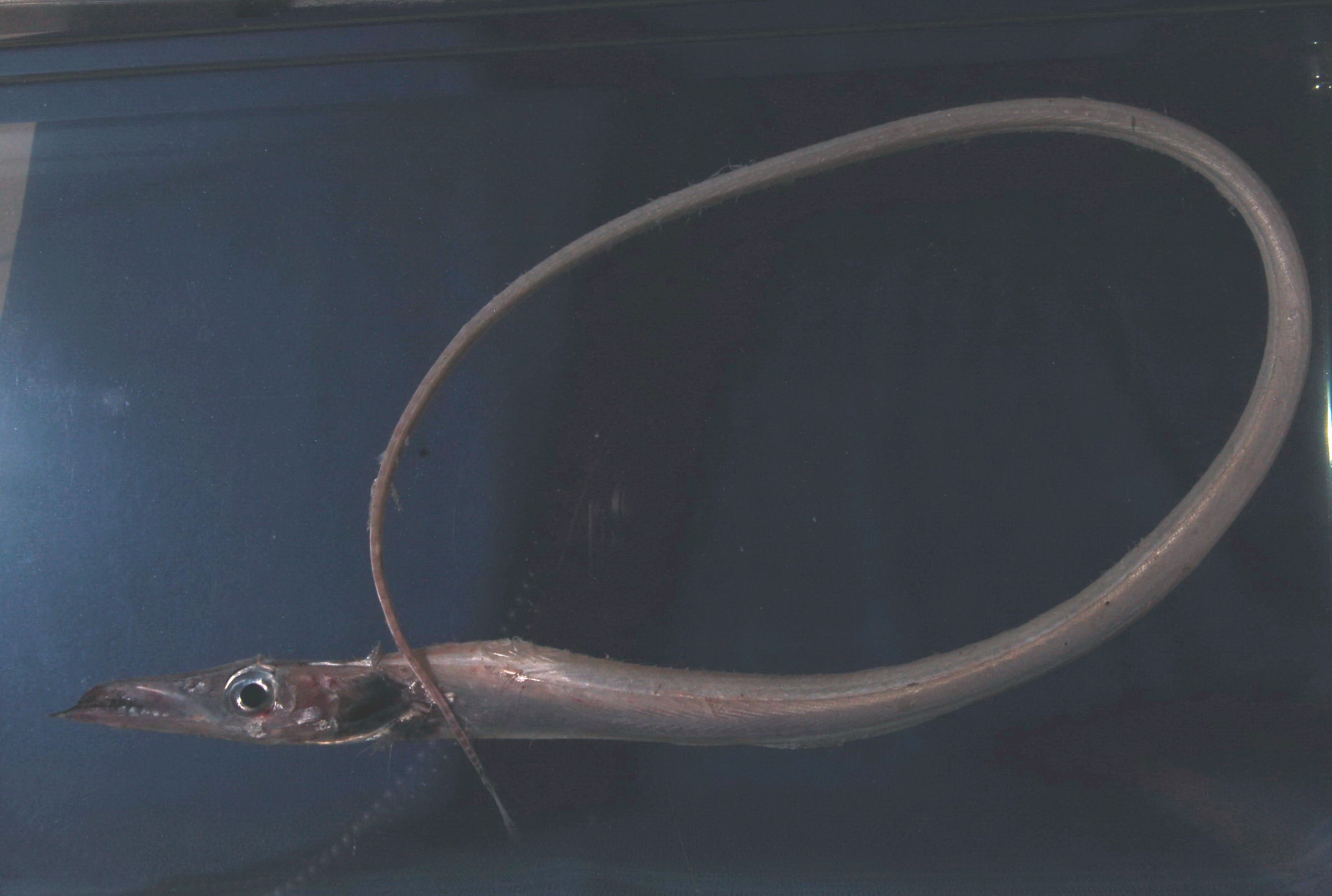
The Atlantic Cutlassfish has a snake-like body, is mainly silver-grey and shows a plain pattern. Strongly elongated, ribbon-shaped and laterally compressed body that ends in a point without a caudal fin; large mouth with dagger-like teeth.
Where does the Atlantic Cutlassfish live?
The Atlantic Cutlassfish lives in brackish water and is mostly found around mixed bottom. Circumtropical and circumtemperate, including in the Gulf of Mexico, the Caribbean, the Mediterranean Sea, the Red Sea and the Persian Gulf.
How big does the Atlantic Cutlassfish get?
The Atlantic Cutlassfish grows to a maximum of about 234 cm. On average the species is around 100 cm.
Is the Atlantic Cutlassfish dangerous to humans?
No, the Atlantic Cutlassfish is harmless to humans. None required: this species is harmless to humans.
Is the Atlantic Cutlassfish edible?
Yes, the Atlantic Cutlassfish is commonly eaten.
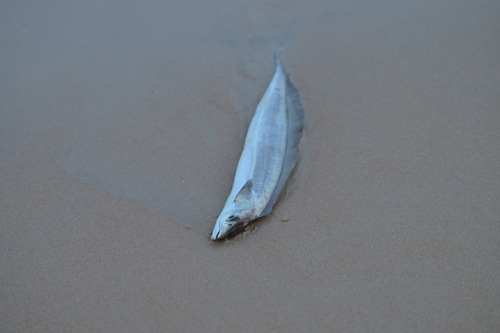
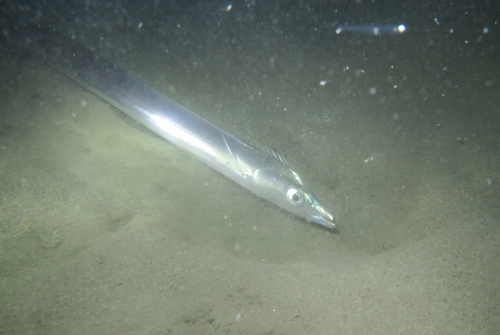
More photos
Easily confused with
These species look like the Atlantic Cutlassfish and live in the same waters.

Want the complete picture on the Atlantic Cutlassfish?
Point your camera at the fish and Fin names the species in seconds. Free, and the Atlantic Cutlassfish is one of 12,519 species in the app.
All data
Identification
Appearance
Habitat & distribution
Behaviour & biology
For anglers
Safety
Status & sources
Same genus Trichiurus
More from the family Trichiuridae




Want the complete picture on the Atlantic Cutlassfish?
Point your camera at the fish and Fin names the species in seconds. Free, and the Atlantic Cutlassfish is one of 12,519 species in the app.