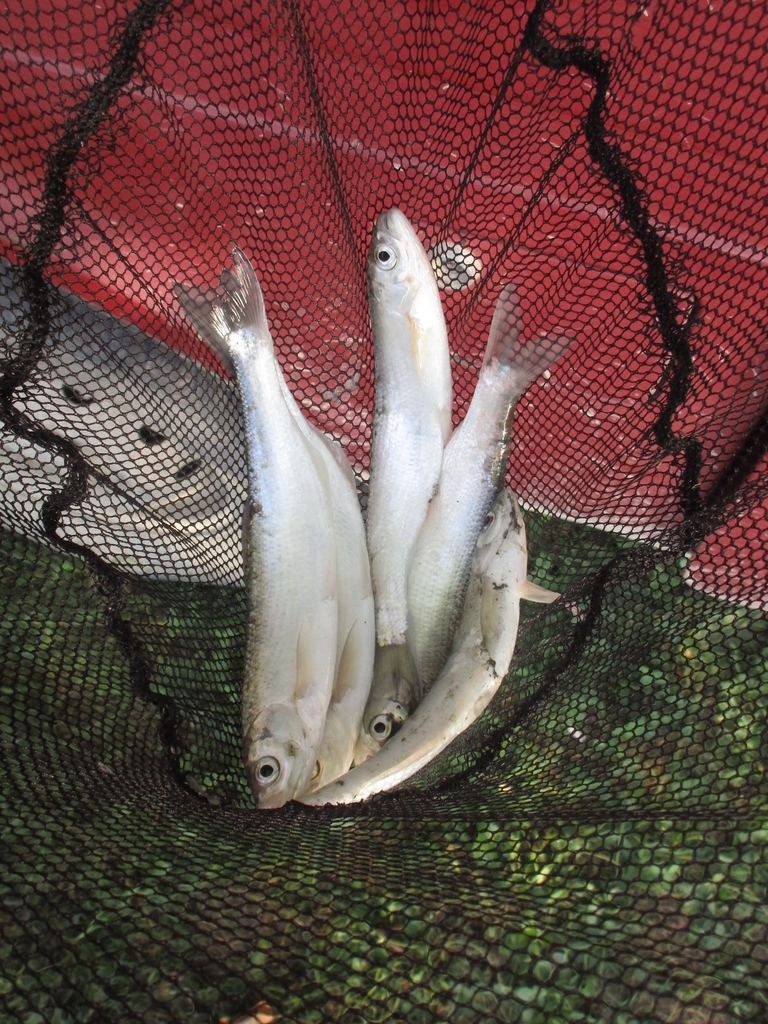
The Danube bleak (Alburnus chalcoides) is a freshwater fish of the family Cyprinidae that grows up to 40 cm.
Description
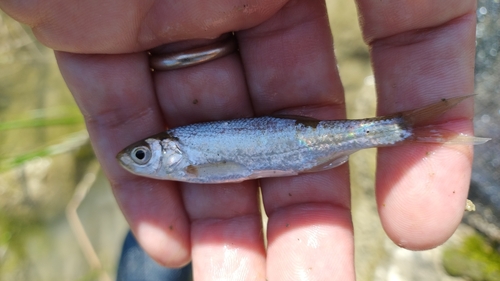
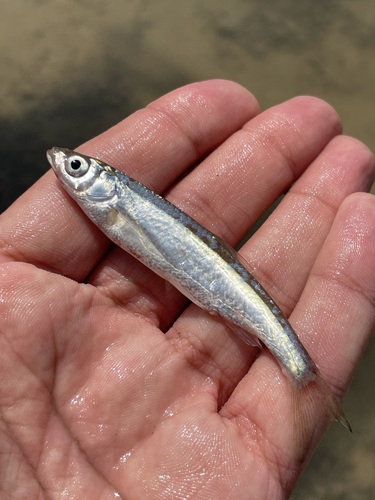
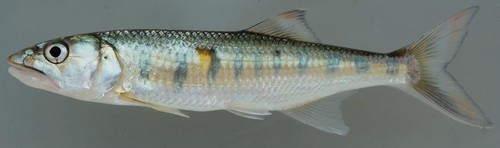
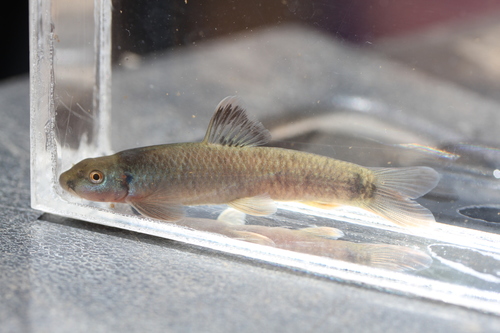
The Danube bleak is a slender, bright-silver cyprinid of the family Cyprinidae reaching about 40 cm. The strongly compressed body has a blue-green back and an upturned mouth, a build suited to feeding just below the surface. The species occurs in the drainages of the Black Sea and the Caspian Sea and their tributaries; some populations are anadromous and run up rivers from brackish coastal water to spawn, while others stay year-round in fresh water of lakes and rivers. In schools it hunts zooplankton, insects and algae. Through dams and habitat loss the migratory populations have declined locally, though the species as a whole is assessed as not threatened.
Frequently asked questions
How do you recognise the Danube bleak?
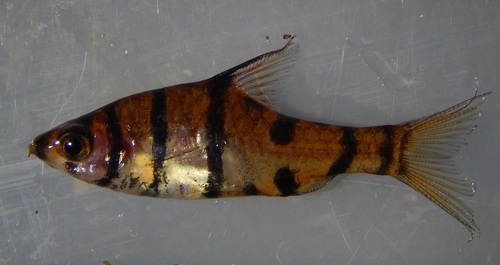
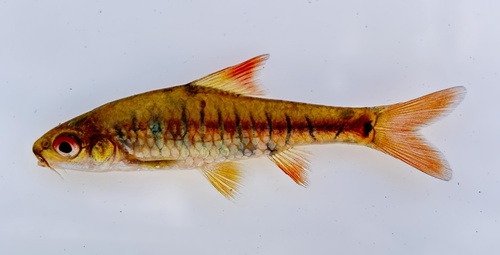
The Danube bleak has a torpedo-shaped body, is mainly silver-grey and shows a plain pattern.
Where does the Danube bleak live?
The Danube bleak lives in fresh water and is mostly found around mixed bottom.
How big does the Danube bleak get?
The Danube bleak grows to a maximum of about 40 cm. On average the species is around 20 cm.
Is the Danube bleak dangerous to humans?
No, the Danube bleak is harmless to humans.
Is the Danube bleak edible?
The Danube bleak is rarely eaten.
Download Fin's Fish Guide
Identify fish in seconds, log your catches and dives. Join the TestFlight beta.
All data
Identification
Appearance
Habitat & distribution
Behaviour & biology
For anglers
Safety
Status & sources
Same genus Alburnus
More from the family Cyprinidae


Download Fin's Fish Guide
Identify fish in seconds, log your catches and dives. Join the TestFlight beta.