Home · Erythrinidae · Aimara jeju
Aimara jeju (Hoplerythrinus unitaeniatus) — Erythrinidae

Aimara jeju

Hoplerythrinus unitaeniatus
Family: Erythrinidae
LC · Least Concern

The Aimara jeju (Hoplerythrinus unitaeniatus) is a freshwater fish of the family Erythrinidae that grows up to 29 cm.

Length
28.5 cm
Water
Freshwater
Diet
Carnivore
Behaviour
Solitary
Activity
Nocturnal
Body shape
Torpedo-shaped
Substrate
Algae or seagrass meadow
Danger
Harmless
Range
Fresh water of Central and South America, in slow-moving, densely vegetated water of swamps, pools and rivers.
Edibility
Commonly eaten

Want the complete picture on the Aimara jeju?

Get the app

Description

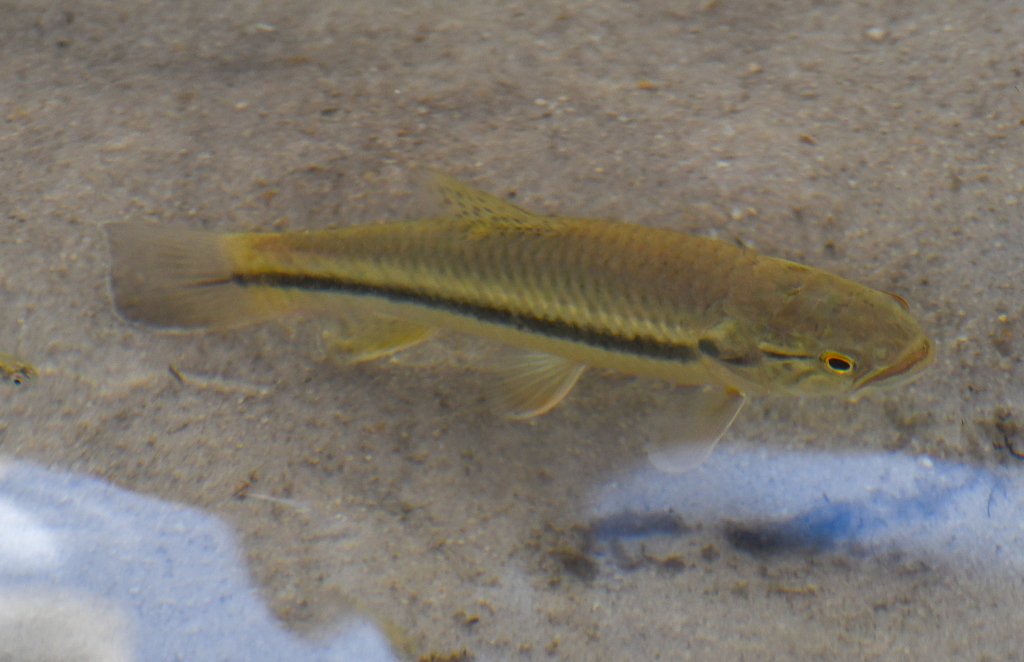
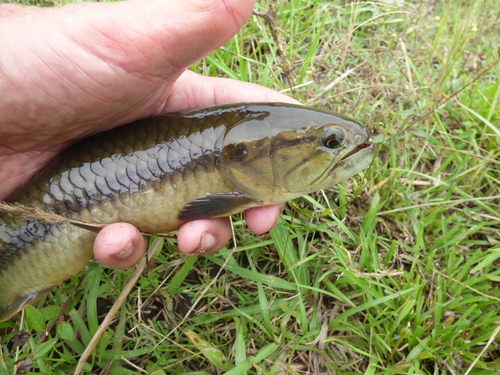
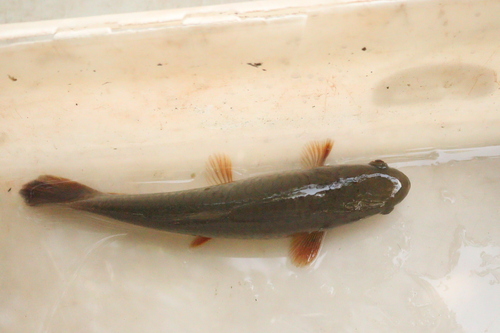
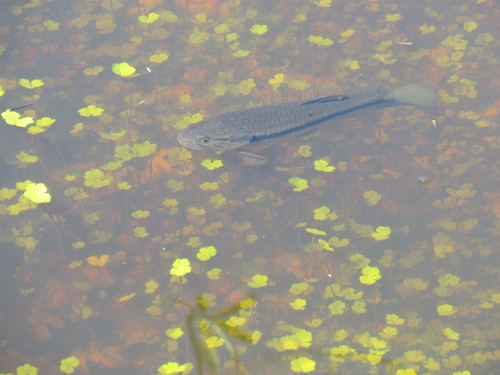
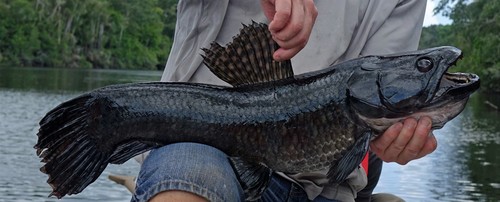
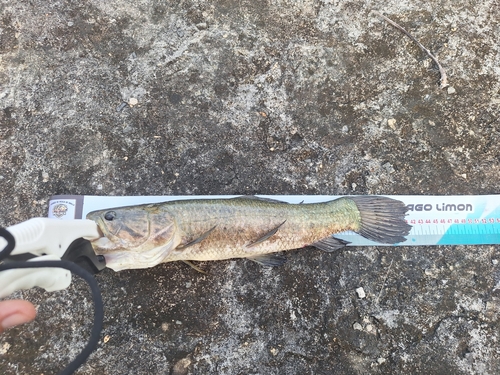
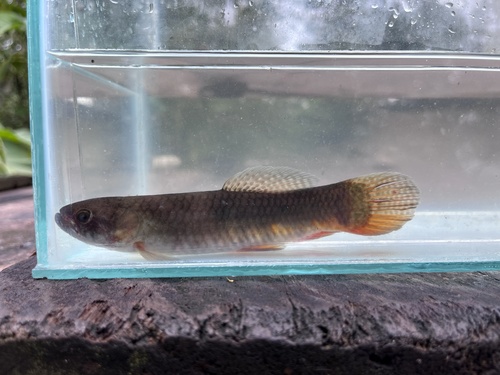
The aimara jeju is a cylindrical predator of the family Erythrinidae reaching about 29 cm. The elongate, brownish body bears a dark lengthwise stripe and a conspicuous eyespot on the gill cover. Like relatives it can gulp air with its muscular swim bladder and so survive in warm, oxygen-poor swamp water, and wait out short droughts. The species comes from Central and South America and lives in slow, densely vegetated water of swamps, pools and rivers. As an ambush predator it lies still among plants and hunts fish, insects and crustaceans. The male guards a nest pit with eggs and young. It is a locally valued food fish and occasionally appears in the aquarium.

Frequently asked questions

How do you recognise the Aimara jeju?

The Aimara jeju has a torpedo-shaped body, is mainly brown and shows a horizontal stripes pattern. Cylindrical predator with a dark longitudinal stripe and an eyespot on the operculum; can gulp air with the swim bladder in oxygen-poor water.

Where does the Aimara jeju live?

The Aimara jeju lives in fresh water and is mostly found around algae or seagrass beds. Fresh water of Central and South America, in slow-moving, densely vegetated water of swamps, pools and rivers.

How big does the Aimara jeju get?

The Aimara jeju grows to a maximum of about 29 cm.

Is the Aimara jeju dangerous to humans?

No, the Aimara jeju is harmless to humans. None required: this species is harmless to humans.

Is the Aimara jeju edible?

Yes, the Aimara jeju is commonly eaten.

More photos

Aimara jeju (Hoplerythrinus unitaeniatus) — Erythrinidae — 2
Wikimedia Commons — Naturalis Biodiversity Center (CC0)
Aimara jeju (Hoplerythrinus unitaeniatus) — Erythrinidae — 3
iNaturalist ((c) Bernardo Lartigau, some rights reserved (CC BY-NC))
Aimara jeju (Hoplerythrinus unitaeniatus) — Erythrinidae — 4
iNaturalist ((c) IPBio - Reserva Jutuarana, some rights reserved (CC BY-NC))
Aimara jeju (Hoplerythrinus unitaeniatus) — Erythrinidae — 5
iNaturalist ((c) Leonel Roget, some rights reserved (CC BY))
Fin

Want the complete picture on the Aimara jeju?

Point your camera at the fish and Fin names the species in seconds. Free, and the Aimara jeju is one of 12,519 species in the app.

Get the app →

All data

Identification

English name
Aimara jeju verified
Scientific name
Hoplerythrinus unitaeniatus
Family
Erythrinidae
Other names
Aimara; Yarrow verified

Appearance

Size class
Medium verified
Max length (cm)
28.5 verified
Body shape
Torpedo-shaped verified
Dominant colour
Brown sourced
Pattern
Horizontal stripes sourced
Tail shape
Rounded inferred
Mouth position
Terminal inferred
Lips
Thick / fleshy inferred
Barbels
No verified
Dorsal fins
One continuous sourced
Dorsal spines
No verified

Habitat & distribution

Water type
Freshwater verified
Substrate
Algae or seagrass meadow verified
Natural range
Fresh water of Central and South America, in slow-moving, densely vegetated water of swamps, pools and rivers. verified
Origin
Native verified

Behaviour & biology

Diet
Carnivore verified
Diet (detail)
Fishes, insects and crustaceans sourced
Social behaviour
Solitary verified
Territorial
Yes verified
Activity
Nocturnal inferred
Reproduction
Separate sexes verified
Sexual dimorphism
No verified
Seasonality
Gulps air in oxygen-poor water and can survive short droughts; the male guards a nest pit with eggs. sourced
Special features
Cylindrical predator with a dark longitudinal stripe and an eyespot on the operculum; can gulp air with the swim bladder in oxygen-poor water. sourced

For anglers

Edibility
Commonly eaten verified
Fishing method
Fishing with natural bait (fish, shrimp, worm) or lures close to reef and rock structures. inferred
Regulations source
FishBase ↗ inferred

Safety

Danger to humans
Harmless verified
First aid
None required: this species is harmless to humans. sourced

Status & sources

Sources
FishBase via GBIF (DwC-A), CC-BY-NC 4.0

More from the family Erythrinidae

Fin

Want the complete picture on the Aimara jeju?

Point your camera at the fish and Fin names the species in seconds. Free, and the Aimara jeju is one of 12,519 species in the app.

Get the app →
Is this the Aimara jeju? Get the app