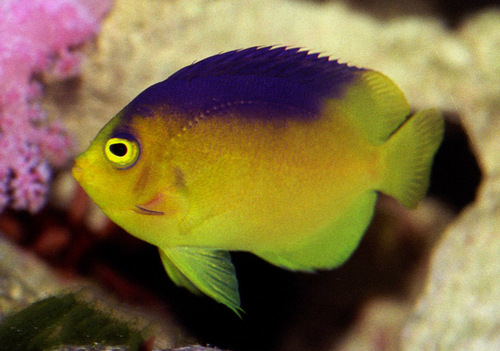
Home · Pomacanthidae · West African angelfish
West African angelfish (Holacanthus africanus) — Pomacanthidae

West African angelfish

Holacanthus africanus
Family: Pomacanthidae
LC · Least Concern

The West African angelfish (Holacanthus africanus) is a saltwater fish of the family Pomacanthidae that grows up to 45 cm.

Length
45 cm
Water
Saltwater
Depth
1.0–40.0 m
Diet
Omnivore
Behaviour
Small groups
Activity
Diurnal
Body shape
Flat / disc-shaped
Substrate
Stone or rock
Danger
Can cause injury
Range
Eastern Atlantic along the coast of West Africa, near rocky bottoms and reefs of shallow coastal water.
Edibility
Rarely eaten

Want the complete picture on the West African angelfish?

Get the app

Description

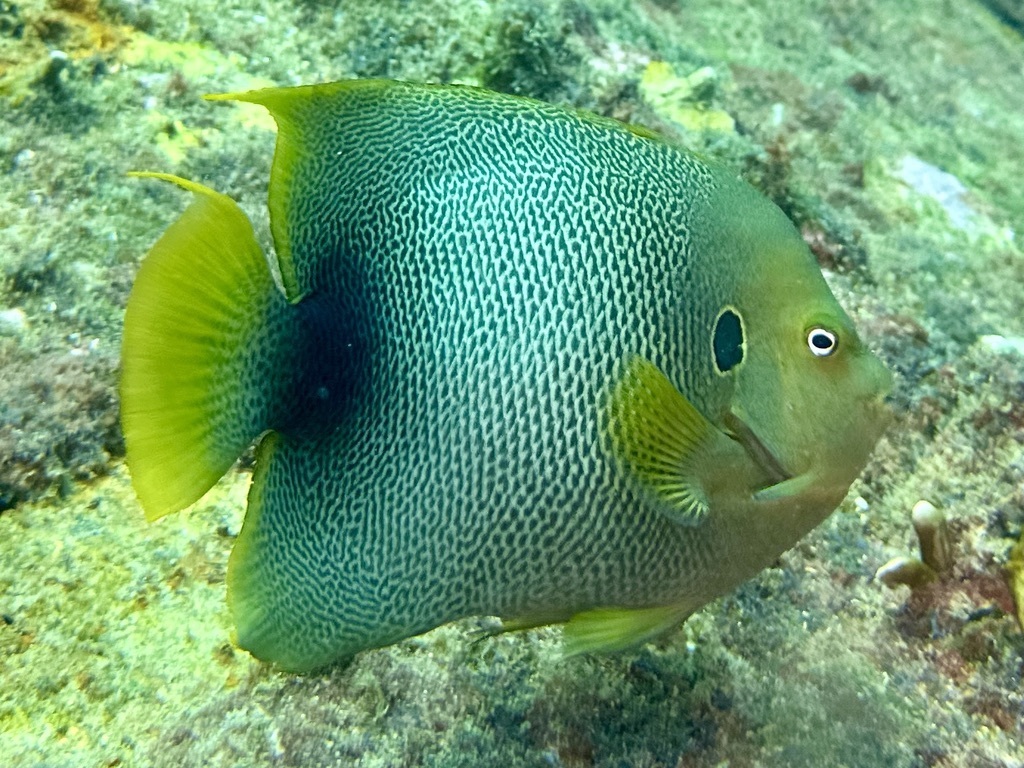
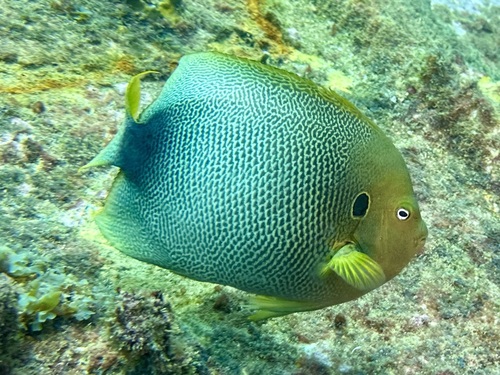
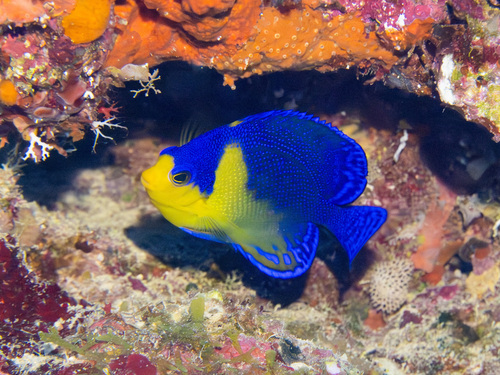
The West African angelfish is a deep, disc-shaped angelfish of the family Pomacanthidae reaching about 45 cm. Characteristic of the family is the strong, sharp spine at the lower edge of the gill cover. Young fish are dark with yellow cross-bands and a 'false eyespot', while adults take on a more brownish-yellow tint with bluish margins. The species lives near rocky bottoms and reefs of shallow coastal water along the West African coast, often in pairs or small groups. It is an omnivore eating sponges, growth, small invertebrates and algae from the reef; young fish sometimes clean parasites off other fish. For its handsome colours it is prized but difficult to keep.

Frequently asked questions

How do you recognise the West African angelfish?

The West African angelfish has a flattened, disc-shaped body, is mainly yellow-gold and shows a vertical stripes pattern. Deep-bodied, disc-shaped angelfish with a strong spine on the operculum; juveniles have yellow vertical bars, adults a brownish-yellow tint.

Where does the West African angelfish live?

The West African angelfish lives in the sea (marine waters) and is mostly found around stony or rocky ground. Eastern Atlantic along the coast of West Africa, near rocky bottoms and reefs of shallow coastal water.

How big does the West African angelfish get?

The West African angelfish grows to a maximum of about 45 cm.

Is the West African angelfish dangerous to humans?

The West African angelfish can cause injury; handle it with care. On the gill cover sits a strong, sharp spine that can cause cuts or punctures; handle a caught fish carefully and clean any wound.

Is the West African angelfish edible?

The West African angelfish is rarely eaten.

More photos
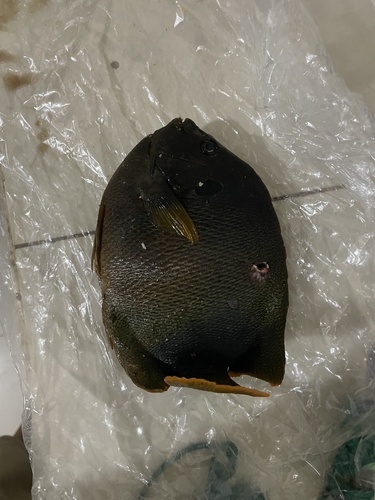
West African angelfish (Holacanthus africanus) — Pomacanthidae — 2
Naturalis Biodiversity Center (CC0 1.0) via GBIF
West African angelfish (Holacanthus africanus) — Pomacanthidae — 3
iNaturalist ((c) eliot_rbls, some rights reserved (CC BY-NC))
West African angelfish (Holacanthus africanus) — Pomacanthidae — 4
Wikimedia Commons — Reeffish (CC BY-SA 4.0)
West African angelfish (Holacanthus africanus) — Pomacanthidae — 5
Rui Ribeiro (CC BY 4.0) via GBIF — iNaturalist
Fin

Want the complete picture on the West African angelfish?

Point your camera at the fish and Fin names the species in seconds. Free, and the West African angelfish is one of 12,519 species in the app.

Get the app →

All data

Identification

English name
West African angelfish verified
Scientific name
Holacanthus africanus
Family
Pomacanthidae
Other names
Guinean angelfish; West African angelfish verified

Appearance

Size class
Large verified
Max length (cm)
45.0 verified
Body shape
Flat / disc-shaped sourced
Dominant colour
Yellow / gold sourced
Pattern
Vertical bars sourced
Tail shape
Rounded inferred
Mouth position
Terminal inferred
Lips
Thick / fleshy inferred
Barbels
No verified
Dorsal fins
One continuous sourced
Dorsal spines
Yes verified

Habitat & distribution

Water type
Saltwater verified
Substrate
Stone or rock verified
Min depth (m)
1.0 verified
Max depth (m)
40.0 verified
Natural range
Eastern Atlantic along the coast of West Africa, near rocky bottoms and reefs of shallow coastal water. verified
Origin
Native verified

Behaviour & biology

Diet
Omnivore verified
Diet (detail)
Sponges, biofilm, small invertebrates and algae from the reef sourced
Social behaviour
Small groups verified
Territorial
Yes verified
Activity
Diurnal inferred
Reproduction
Separate sexes verified
Sexual dimorphism
No verified
Seasonality
Resident at reefs, often in pairs or small groups; juvenile fish sometimes clean other fishes. sourced
Special features
Deep-bodied, disc-shaped angelfish with a strong spine on the operculum; juveniles have yellow vertical bars, adults a brownish-yellow tint. sourced

For anglers

Edibility
Rarely eaten verified
Fishing method
Fishing with natural bait (fish, shrimp, worm) or lures close to reef and rock structures. inferred
Regulations source
FishBase ↗ inferred

Safety

Danger to humans
Can cause injury verified
First aid
On the gill cover sits a strong, sharp spine that can cause cuts or punctures; handle a caught fish carefully and clean any wound. sourced

Status & sources

Sources
FishBase via GBIF (DwC-A), CC-BY-NC 4.0

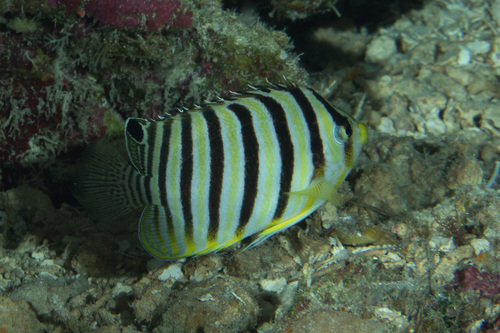
Same genus Holacanthus

More from the family Pomacanthidae
Fin

Want the complete picture on the West African angelfish?

Point your camera at the fish and Fin names the species in seconds. Free, and the West African angelfish is one of 12,519 species in the app.

Get the app →
Is this the West African angelfish? Get the app