 Fin's Fish Guide
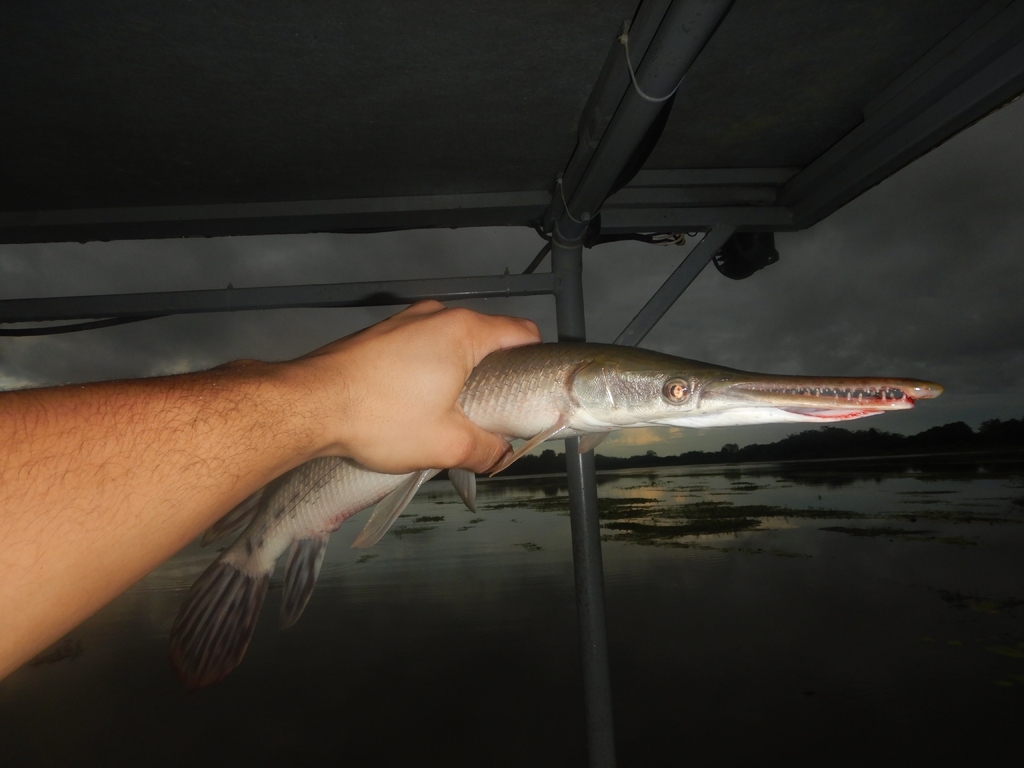
The Tropical gar (Atractosteus tropicus) is a freshwater fish of the family Lepisosteidae that grows up to 125 cm.
Description
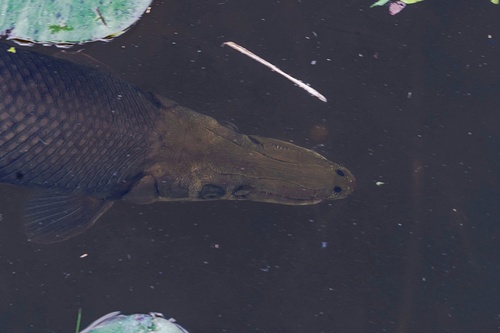
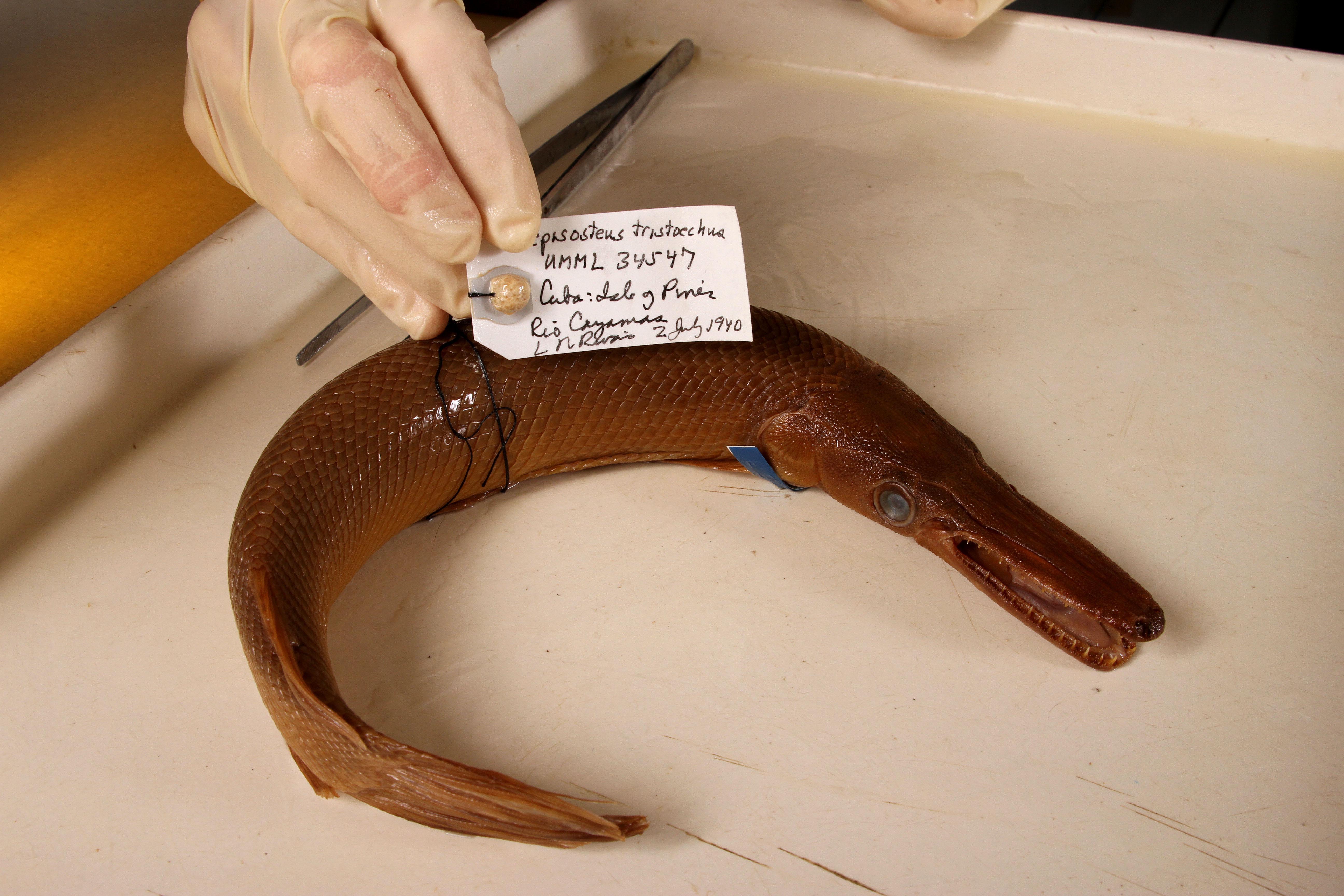
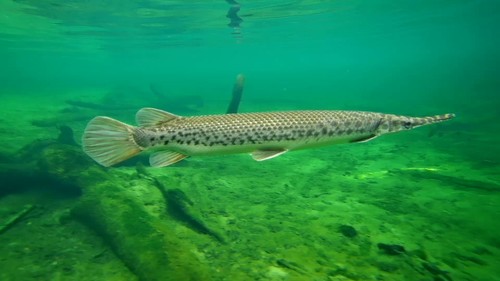
The tropical gar is a gar (Lepisosteidae) from the fresh waters of Central America. The species has an elongate body armoured with hard, diamond-shaped scales and a long snout with sharp teeth. It inhabits calm river sections, backwaters and lakes, often in warm, stagnant lowland water, and can gulp air with its vascularised swim bladder to survive oxygen-poor water. As an ambush hunter it springs on fishes. Beware: the teeth can cause cuts and the roe is poisonous and must not be eaten.
Frequently asked questions
How do you recognise the Tropical gar?
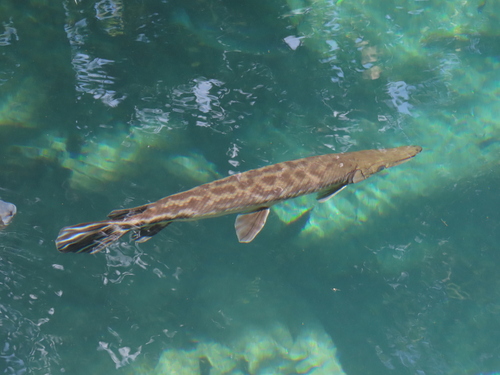
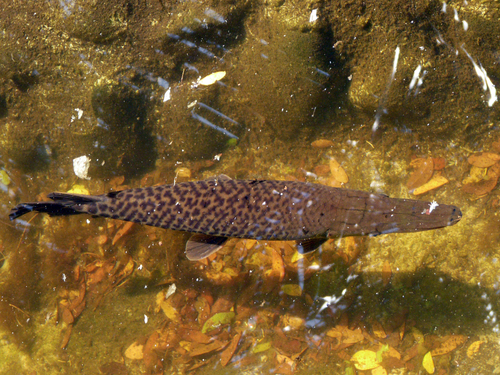
The Tropical gar has an elongate, eel-like body, is mainly brown and shows a spots pattern. Armoured with diamond-shaped scales; gulps air in oxygen-poor water; teeth sharp and roe poisonous.
Where does the Tropical gar live?
The Tropical gar lives in fresh water and is mostly found around sand or mud bottom. Freshwater of Central America; calm river sections, oxbows and lakes.
How big does the Tropical gar get?
The Tropical gar grows to a maximum of about 125 cm.
Is the Tropical gar dangerous to humans?
The Tropical gar is venomous — handle spines with care and seek medical help after a sting if needed. The long jaws with sharp teeth can cause cuts when handled; grasp a caught animal carefully. Note: the roe (eggs) is poisonous to humans and must not be eaten.
Is the Tropical gar edible?
Yes, the Tropical gar is commonly eaten.
More photos


Want the complete picture on the Tropical gar?
Point your camera at the fish and Fin names the species in seconds. Free, and the Tropical gar is one of 12,519 species in the app.
All data
Identification
Appearance
Habitat & distribution
Behaviour & biology
For anglers
Safety
Status & sources
Same genus Atractosteus

More from the family Lepisosteidae


Want the complete picture on the Tropical gar?
Point your camera at the fish and Fin names the species in seconds. Free, and the Tropical gar is one of 12,519 species in the app.