Home · Lepisosteidae · Gar
Gar (Lepisosteus osseus) — Lepisosteidae

Gar

Lepisosteus osseus
Family: Lepisosteidae
LC · Least Concern

The Gar (Lepisosteus osseus) is a brackish-water fish of the family Lepisosteidae that grows up to 200 cm.

Length
200 cm
Water
Brackish
Depth
0.0–? m
Diet
Carnivore
Behaviour
Solitary
Body shape
Elongated (eel-like)
Substrate
Sand / mud bottom
Danger
May bite
Range
Rivers and lakes of North and Central America.
Edibility
Rarely eaten

Want the complete picture on the Gar?

Get the app

Description

The longnose gar (Lepisosteus osseus) is an ancient North American predator of the family Lepisosteidae. The species has a strongly elongate, cylindrical body covered with hard, diamond-shaped ganoid scales, and a very long, narrow snout full of sharp teeth; it can exceed two metres. Adults live in sluggish pools, backwaters and oxbows of rivers and lakes, often near vegetation, and sometimes enter brackish water. Thanks to a swim bladder that functions as a lung it can breathe air. As an ambush predator it hunts fishes. The toothy snout can bite and the roe (eggs) is poisonous to humans.

Frequently asked questions

How do you recognise the Gar?

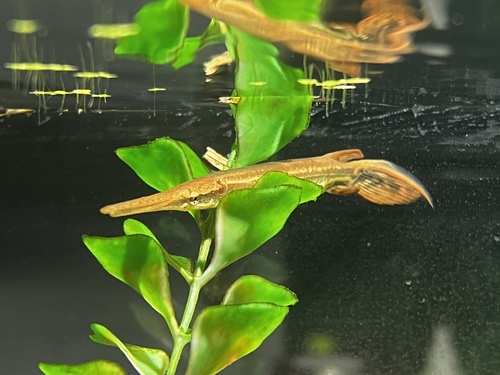
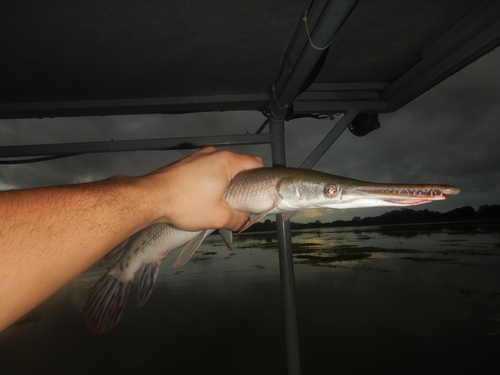
The Gar has an elongate, eel-like body, is mainly brown and shows a spots pattern. Very long toothed snout and hard ganoid scales; air-breathing, with poisonous roe.

Where does the Gar live?

The Gar lives in brackish water and is mostly found around sand or mud bottom. Rivers and lakes of North and Central America.

How big does the Gar get?

The Gar grows to a maximum of about 200 cm. On average the species is around 18 cm.

Is the Gar dangerous to humans?

The Gar can bite, but is otherwise not dangerous to humans. The toothy snout can give a painful bite wound; keep hands out of the mouth when unhooking. Note: the roe (eggs) of gars is poisonous and must not be eaten, even though the flesh is edible. For a bite wound, clean, disinfect and seek medical help for a deep wound.

Is the Gar edible?

The Gar is rarely eaten.

More photos
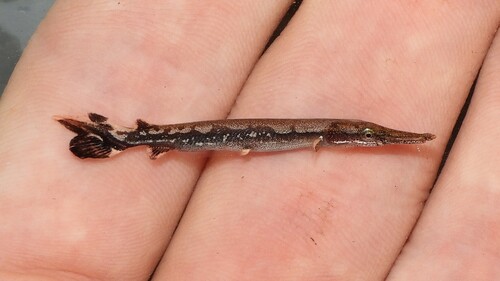
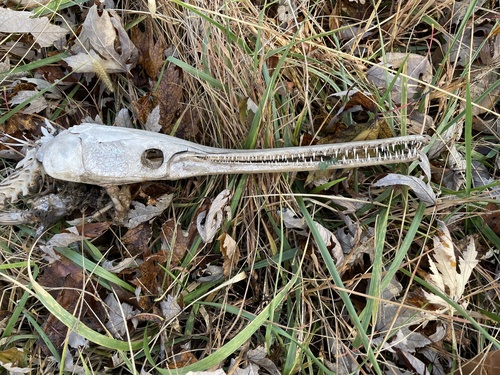
Gar (Lepisosteus osseus) — Lepisosteidae — 2
iNaturalist ((c) Emilio Concari, some rights reserved (CC BY-NC))
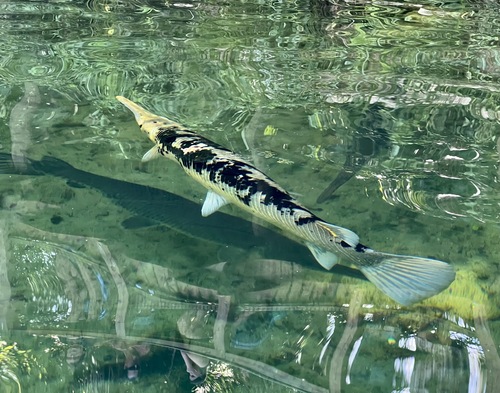
Gar (Lepisosteus osseus) — Lepisosteidae — 3
iNaturalist ((c) Paul Marcum, some rights reserved (CC BY-NC))
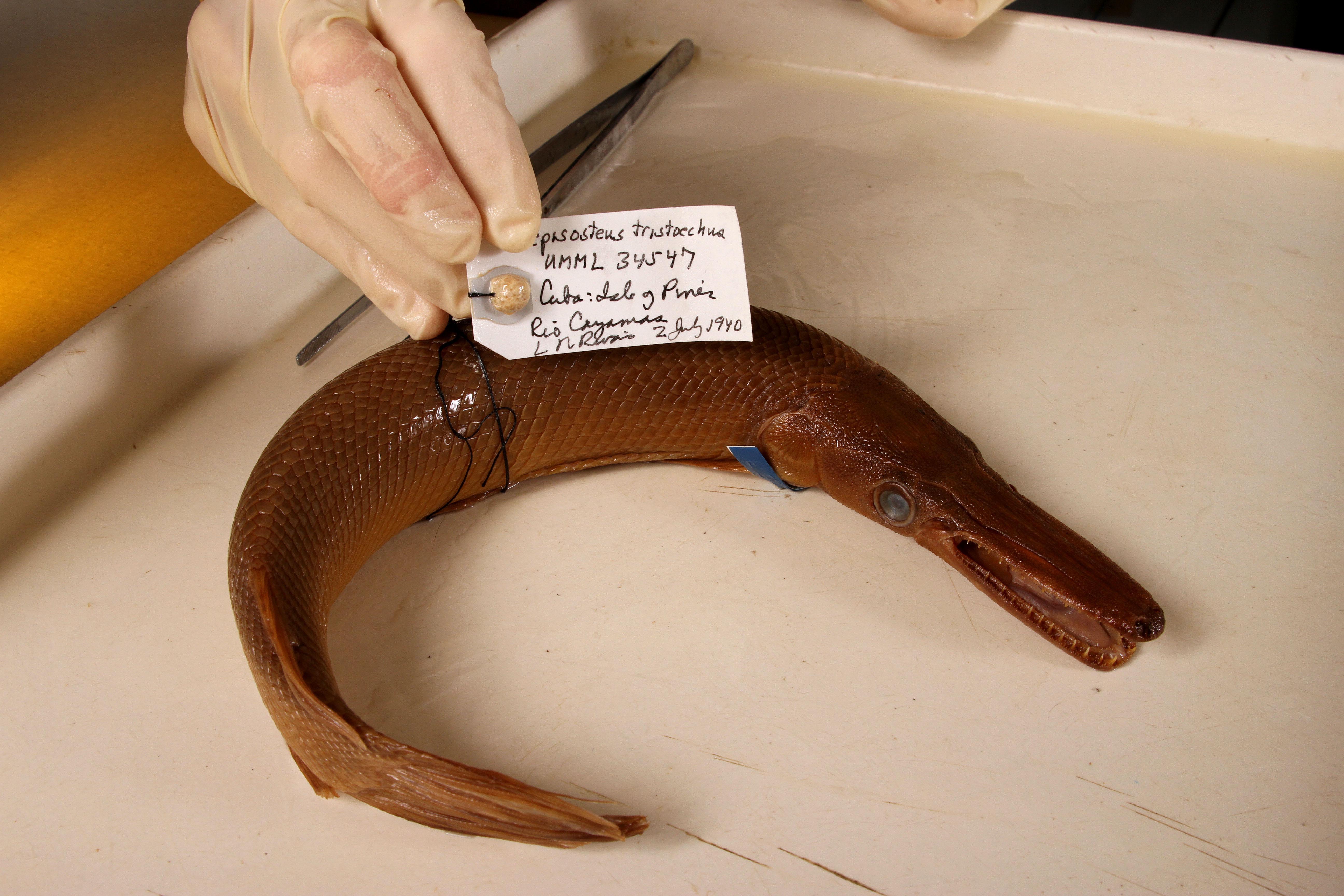
Gar (Lepisosteus osseus) — Lepisosteidae — 4
iNaturalist ((c) Lois Posey, some rights reserved (CC BY-NC))
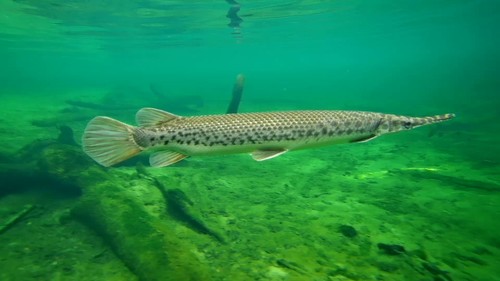
Gar (Lepisosteus osseus) — Lepisosteidae — 5
Wikimedia Commons — Stan Shebs (CC BY-SA 3.0)
Fin

Want the complete picture on the Gar?

Point your camera at the fish and Fin names the species in seconds. Free, and the Gar is one of 12,519 species in the app.

Get the app →

All data

Identification

English name
Gar verified
Scientific name
Lepisosteus osseus
Family
Lepisosteidae
Other names
Longnose gar; Long-nosed gar verified

Appearance

Size class
Extra large verified
Max length (cm)
200.0 verified
Average length (cm)
17.5 verified
Body shape
Elongated (eel-like) sourced
Dominant colour
Brown inferred
Pattern
Spots inferred
Tail shape
Rounded inferred
Mouth position
Beak-shaped inferred
Lips
Thin inferred
Barbels
No sourced
Dorsal fins
One continuous inferred
Dorsal spines
No sourced

Habitat & distribution

Water type
Brackish sourced
Substrate
Sand / mud bottom sourced
Min depth (m)
0.0 verified
Natural range
Rivers and lakes of North and Central America. inferred
Origin
Native sourced

Behaviour & biology

Diet
Carnivore sourced
Diet (detail)
Fishes (from ambush) sourced
Social behaviour
Solitary inferred
Territorial
No inferred
Reproduction
Separate sexes sourced
Sexual dimorphism
No inferred
levensduur_max_jaar
36.0 verified
Seasonality
Present year-round in its habitat; no pronounced seasonality known. inferred
Special features
Very long toothed snout and hard ganoid scales; air-breathing, with poisonous roe. sourced

For anglers

Edibility
Rarely eaten sourced
Fishing method
Caught by anglers with live baitfish or special rope lures in which the teeth become tangled; handle the toothy snout with care. sourced
Regulations source
FishBase ↗ inferred

Safety

Danger to humans
May bite sourced
First aid
The toothy snout can give a painful bite wound; keep hands out of the mouth when unhooking. Note: the roe (eggs) of gars is poisonous and must not be eaten, even though the flesh is edible. For a bite wound, clean, disinfect and seek medical help for a deep wound. sourced

Status & sources

Sources
FishBase via GBIF (DwC-A), CC-BY-NC 4.0

Same genus Lepisosteus

More from the family Lepisosteidae

Fin

Want the complete picture on the Gar?

Point your camera at the fish and Fin names the species in seconds. Free, and the Gar is one of 12,519 species in the app.

Get the app →
Is this the Gar? Get the app