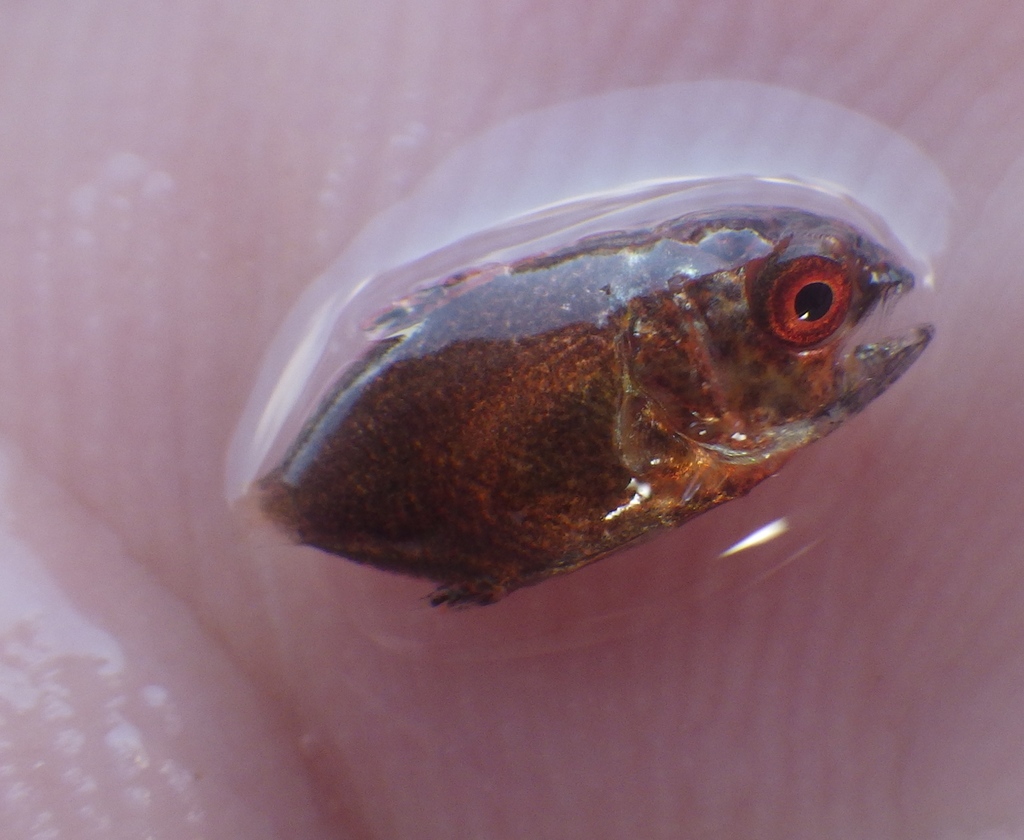
The Permit (Trachinotus falcatus) is a fish that lives in both fresh and salt water of the family Carangidae that grows up to 122 cm.
Description
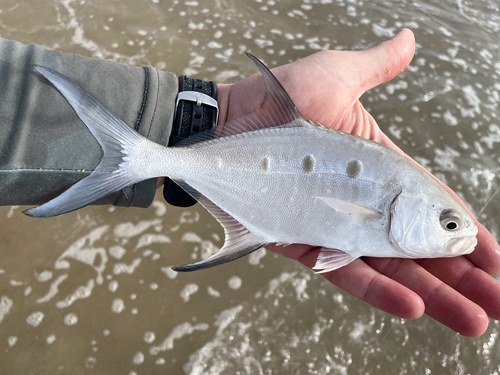
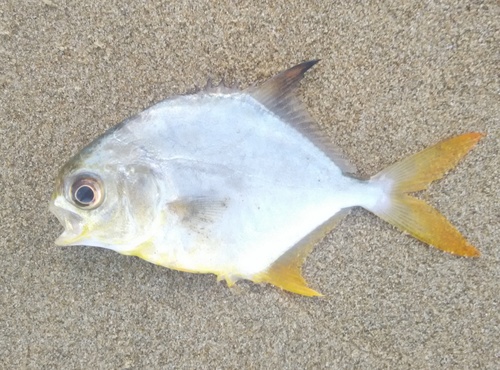
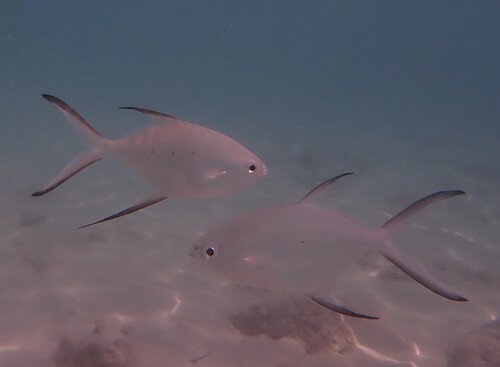
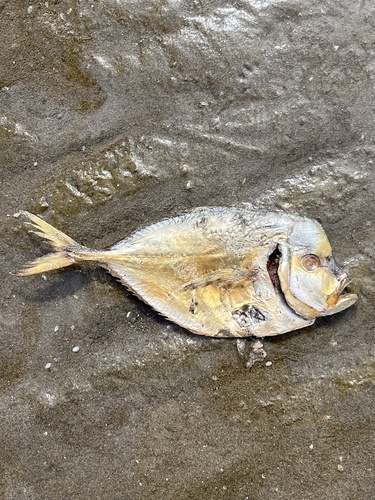
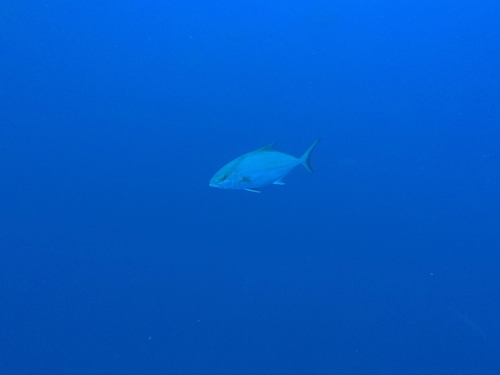
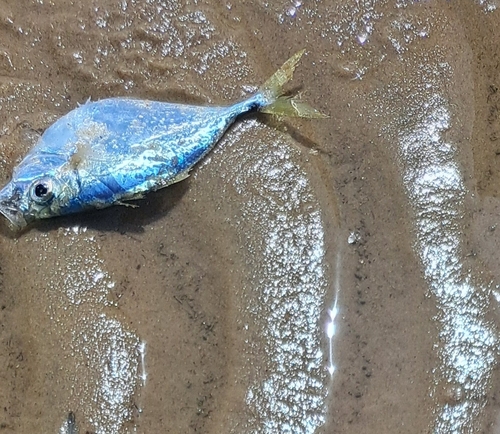
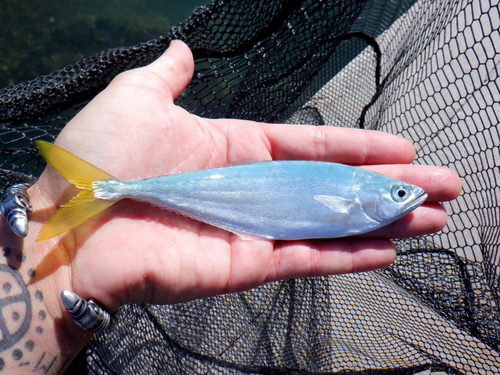
The permit is a deep, silvery jack of the family Carangidae reaching about 1.2 metres. The strongly compressed body has elongated, sickle-shaped front lobes on the dorsal and anal fins, a deeply forked tail and often a yellowish belly. The species lives over sand flats, seagrass beds and near reef of shallow coastal water from the USA to Brazil and tolerates brackish water. With strong throat teeth it crushes crabs, shellfish, shrimps and small crustaceans, which it tracks down on the shallow flats with the rising tide. The permit is one of the most prized and challenging targets for saltwater flats fly fishing worldwide, known for its wariness and strength.
Frequently asked questions
How do you recognise the Permit?
The Permit has a flattened, disc-shaped body, is mainly silver-grey and shows a plain pattern.
Where does the Permit live?
The Permit lives in both fresh and salt water and is mostly found around sand or mud bottom.
How big does the Permit get?
The Permit grows to a maximum of about 122 cm. On average the species is around 94 cm.
Is the Permit dangerous to humans?
No, the Permit is harmless to humans.
Is the Permit edible?
Yes, the Permit is a highly prized food fish.
Download Fin's Fish Guide
Identify fish in seconds, log your catches and dives. Join the TestFlight beta.
All data
Identification
Appearance
Habitat & distribution
Behaviour & biology
For anglers
Safety
Status & sources
Same genus Trachinotus
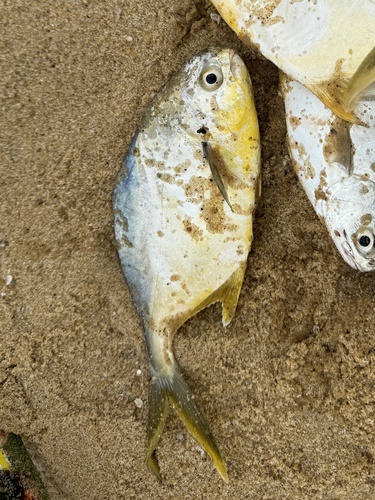
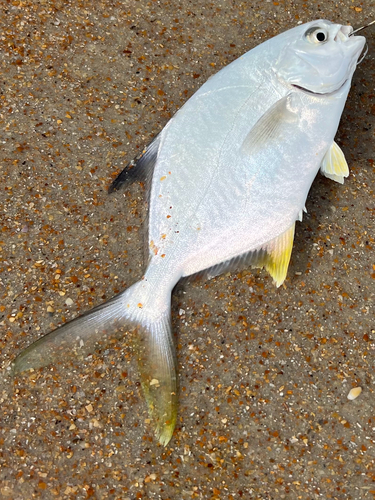
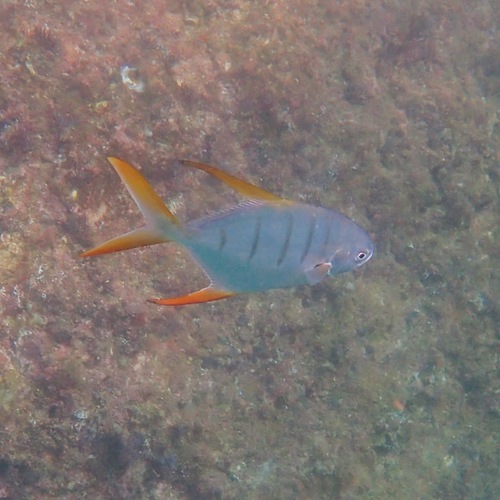
More from the family Carangidae

Download Fin's Fish Guide
Identify fish in seconds, log your catches and dives. Join the TestFlight beta.