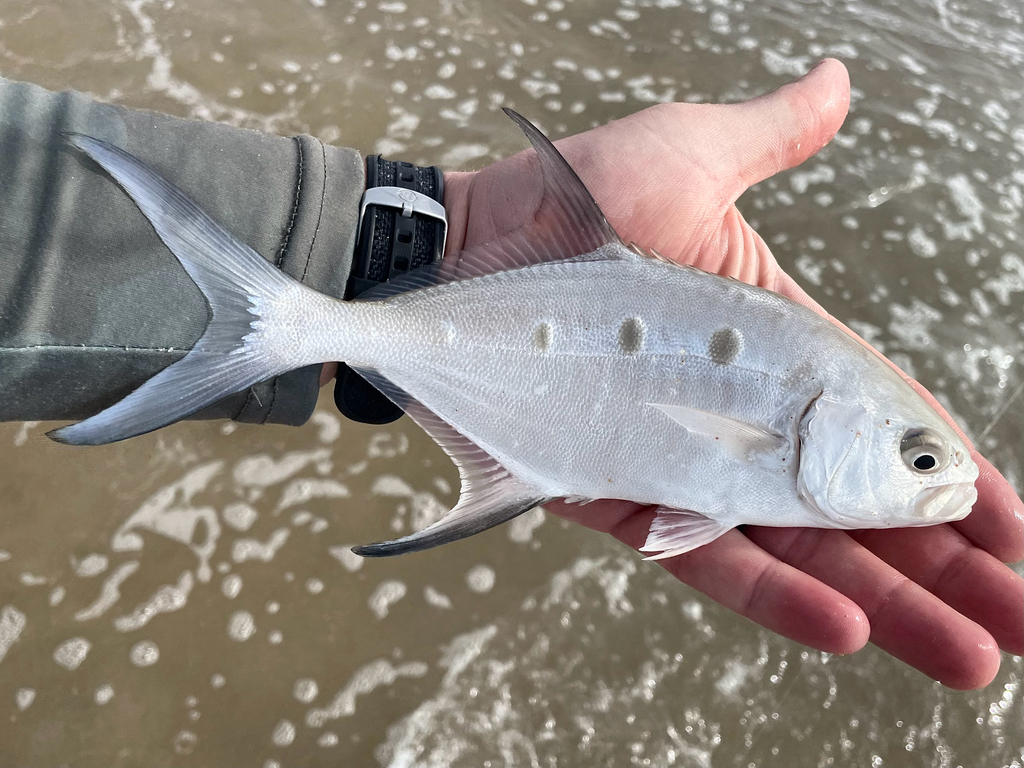
The Black-spotted swallowtail (Trachinotus botla) is a brackish-water fish of the family Carangidae that grows up to 75 cm.
Description
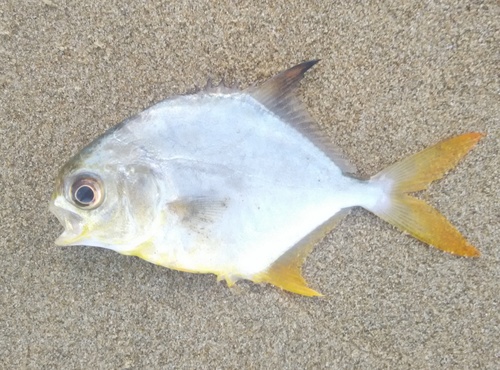
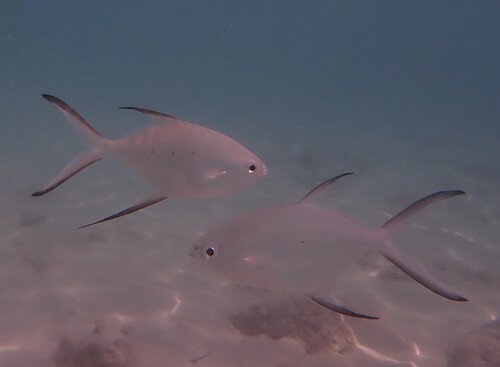
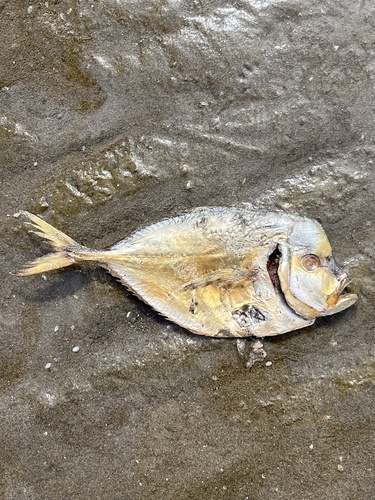
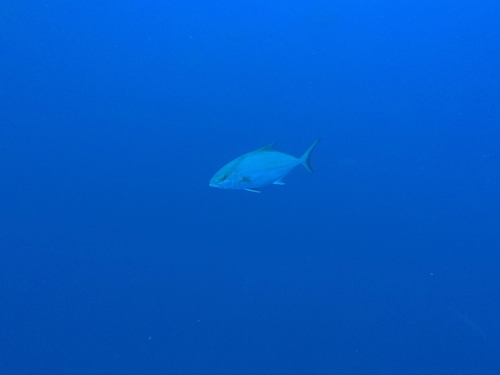
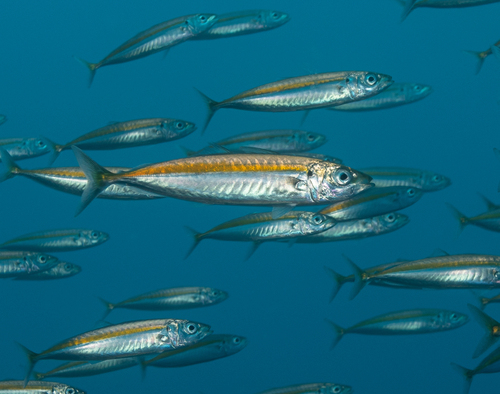
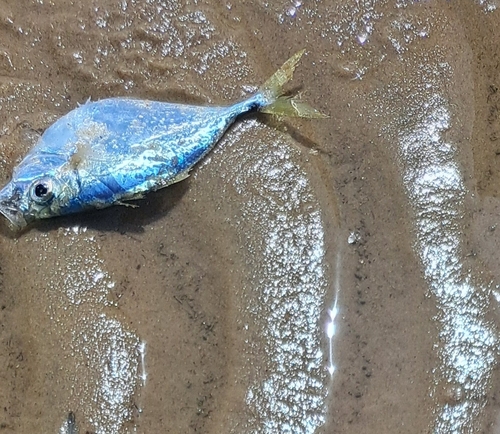
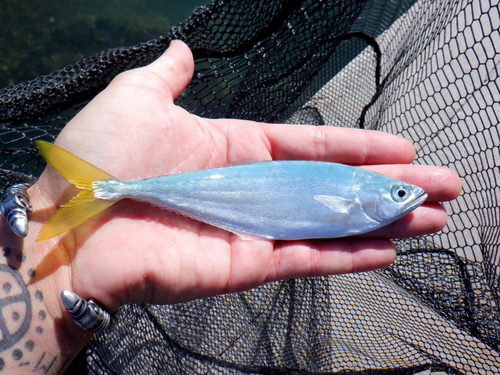
The largespotted dart is a jack (family Carangidae) of the Indo-West Pacific. The species grows to about 75 cm and has a deep, laterally compressed, silvery body with a few large dark spots on the flank and a deeply forked tail. Adults live close inshore in sandy surf zones, while juveniles stay in the shallow surf. They feed on crabs, mussels and worms. The species is a fast swimmer, of modest commercial value and a prized sport fish. It is harmless to humans.
Frequently asked questions
How do you recognise the Black-spotted swallowtail?
The Black-spotted swallowtail has a torpedo-shaped body, is mainly silver-grey and shows a spots pattern.
Where does the Black-spotted swallowtail live?
The Black-spotted swallowtail lives in brackish water and is mostly found around stony or rocky ground.
How big does the Black-spotted swallowtail get?
The Black-spotted swallowtail grows to a maximum of about 75 cm. On average the species is around 60 cm.
Is the Black-spotted swallowtail dangerous to humans?
No, the Black-spotted swallowtail is harmless to humans.
Is the Black-spotted swallowtail edible?
Yes, the Black-spotted swallowtail is commonly eaten.
Download Fin's Fish Guide
Identify fish in seconds, log your catches and dives. Join the TestFlight beta.
All data
Identification
Appearance
Habitat & distribution
Behaviour & biology
For anglers
Safety
Status & sources
Same genus Trachinotus
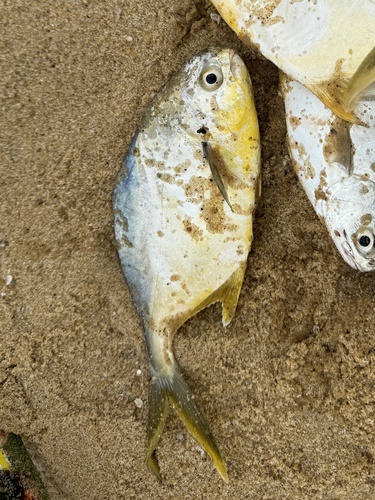
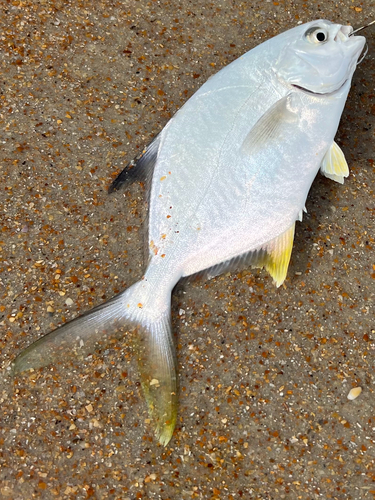
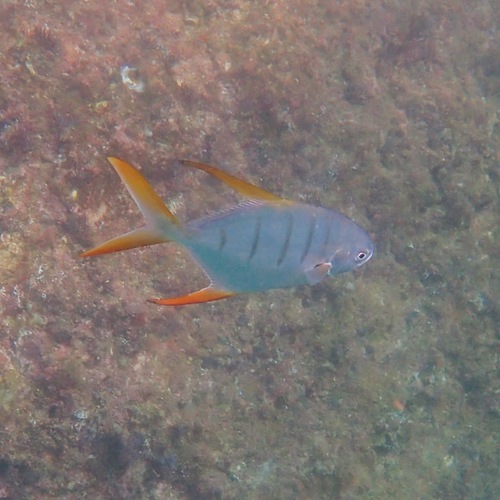
More from the family Carangidae

Download Fin's Fish Guide
Identify fish in seconds, log your catches and dives. Join the TestFlight beta.