 Fin's Fish Guide

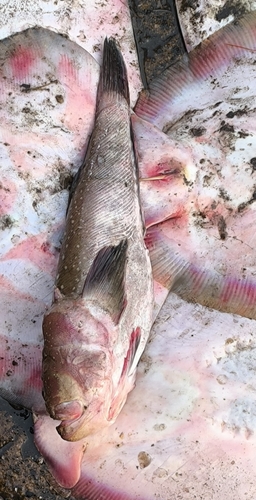
The Tosa stargazer (Uranoscopus tosae) is a saltwater fish of the family Uranoscopidae that grows up to 25 cm.
Description
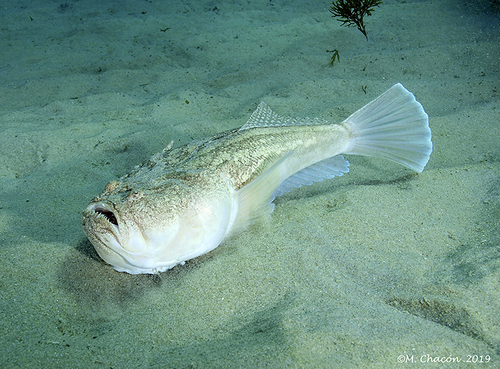
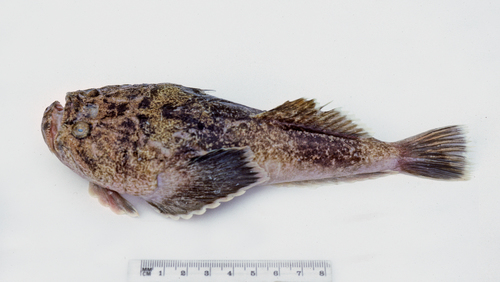
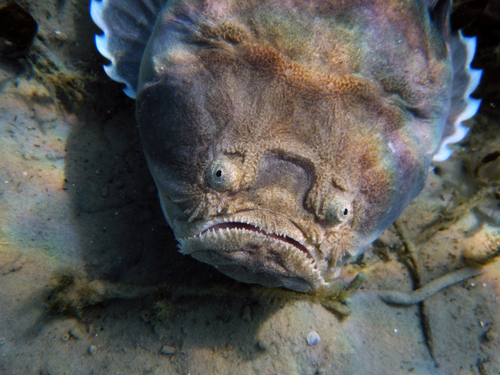
The Tosa stargazer is a stargazer (Uranoscopidae) from sand and mud bottoms of the northwest Pacific. The species grows to about 20 cm and has a stocky body with a large, armoured head and, characteristically, the eyes and the upward-facing mouth on top. Half-buried it waits motionless and suddenly snaps at passing small fish. Behind the head it carries venomous shoulder spines that give a painful puncture wound, and it can deliver a shock with an electric organ.
Frequently asked questions
How do you recognise the Tosa stargazer?
The Tosa stargazer has a torpedo-shaped body and is mainly brown. Bears venomous spines or tissue; handle with great care.
Where does the Tosa stargazer live?
The Tosa stargazer lives in the sea (marine waters) and is mostly found around sand or mud bottom. Asia: China, Taiwan/Ch Taipei, Hong Kong, Japan, Korea (South)
How big does the Tosa stargazer get?
The Tosa stargazer grows to a maximum of about 25 cm.
Is the Tosa stargazer dangerous to humans?
The Tosa stargazer is venomous — handle spines with care and seek medical help after a sting if needed. For a sting from a fin spine: rinse the wound, remove any visible spine fragments and immerse the part for 30-90 minutes in water as hot as can be tolerated (about 45 C) to break down the venom. The pain can be severe. For marked swelling, a retained spine or signs of infection seek medical care and check tetanus status.

Want the complete picture on the Tosa stargazer?
Point your camera at the fish and Fin names the species in seconds. Free, and the Tosa stargazer is one of 12,519 species in the app.
All data
Identification
Appearance
Habitat & distribution
Behaviour & biology
For anglers
Safety
Status & sources
Same genus Uranoscopus



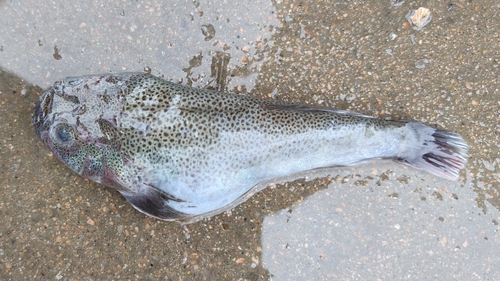
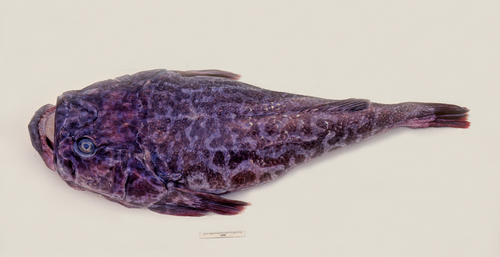
More from the family Uranoscopidae

Want the complete picture on the Tosa stargazer?
Point your camera at the fish and Fin names the species in seconds. Free, and the Tosa stargazer is one of 12,519 species in the app.