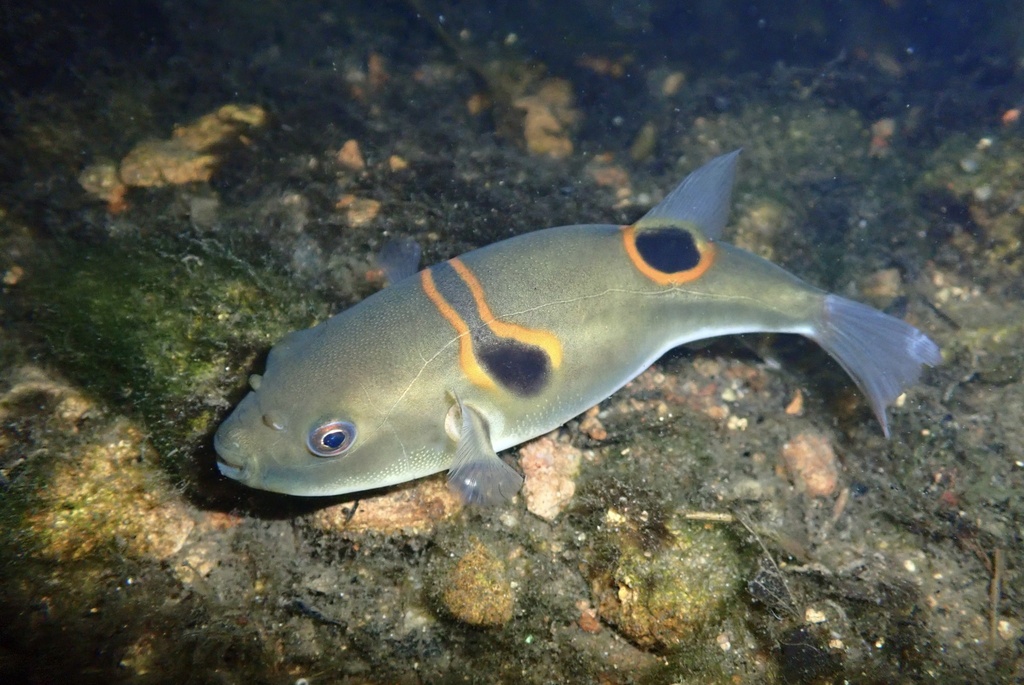
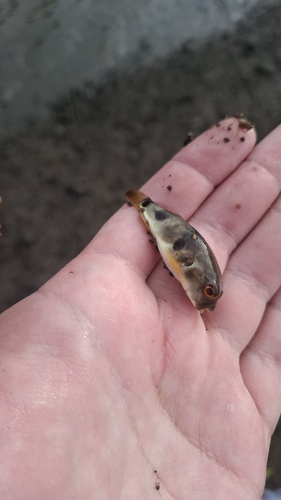
The Eclipse puffer (Takifugu ocellatus) is a fish that lives in both fresh and salt water of the family Tetraodontidae that grows up to 18 cm.
Description
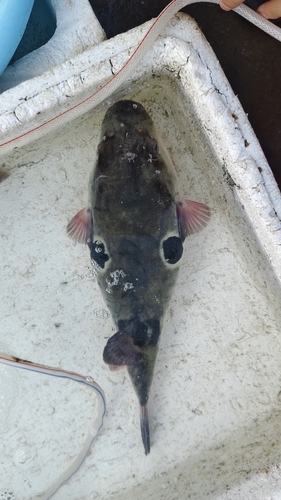
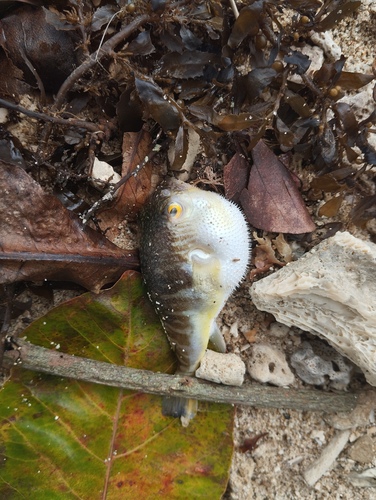
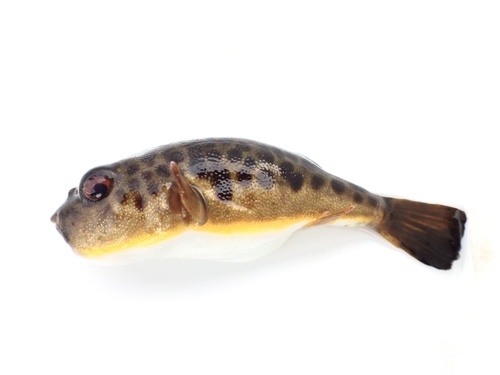
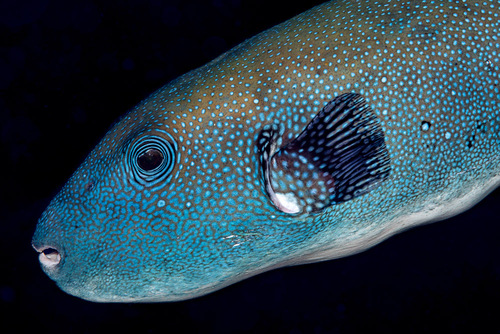
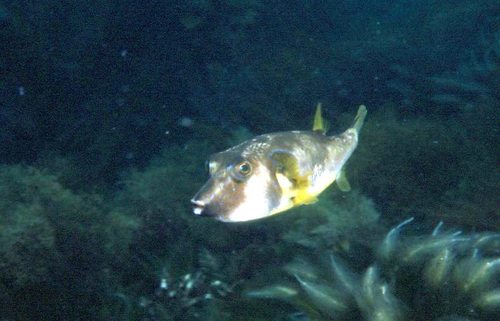
The eclipse puffer is a pufferfish (Tetraodontidae) from fresh, brackish and coastal water of East Asia, including the Chinese coast and river mouths. The species grows to about 18 cm and has a stocky, scaleless body with two large, orange-rimmed eyespots on the back. When threatened it gulps water and inflates into a ball. As a bottom-oriented predator it crushes molluscs and crustaceans. Its skin and organs contain the potent toxin tetrodotoxin; eating it is life-threatening.
Frequently asked questions
How do you recognise the Eclipse puffer?
The Eclipse puffer has a flattened, disc-shaped body.
Where does the Eclipse puffer live?
The Eclipse puffer lives in both fresh and salt water and is mostly found around sand or mud bottom.
How big does the Eclipse puffer get?
The Eclipse puffer grows to a maximum of about 18 cm. On average the species is around 10 cm.
Is the Eclipse puffer dangerous to humans?
The Eclipse puffer is venomous — handle spines with care and seek medical help after a sting if needed.
Is the Eclipse puffer edible?
The Eclipse puffer is not usually eaten.
Download Fin's Fish Guide
Identify fish in seconds, log your catches and dives. Join the TestFlight beta.
All data
Identification
Appearance
Habitat & distribution
Behaviour & biology
For anglers
Safety
Status & sources
Same genus Takifugu
More from the family Tetraodontidae

Download Fin's Fish Guide
Identify fish in seconds, log your catches and dives. Join the TestFlight beta.