 Fin's Fish Guide

The Smoothback angelshark (Squatina oculata) is a saltwater fish of the family Squatinidae that grows up to 160 cm.
Eastern Atlantic and the Mediterranean Sea, buried in sandy and silty bottoms of the continental shelf and the upper slope.
Description
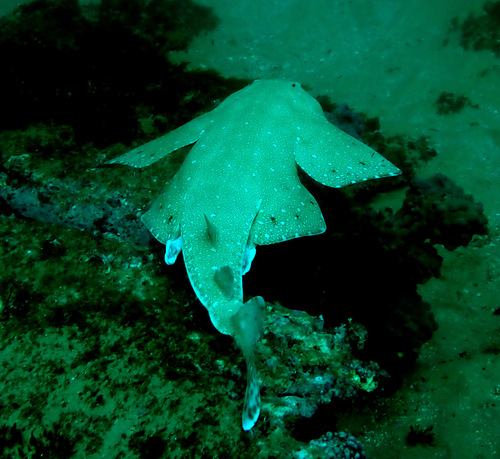
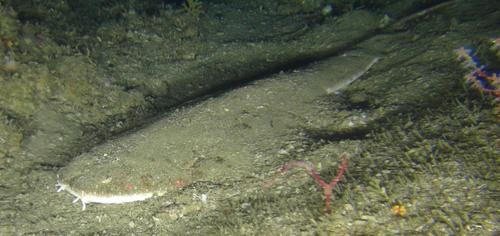
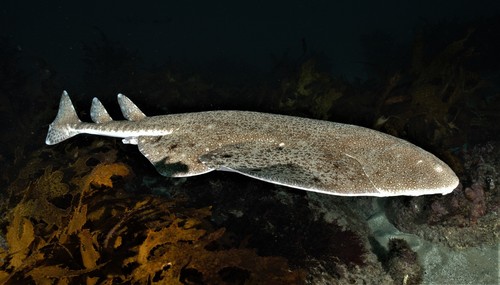
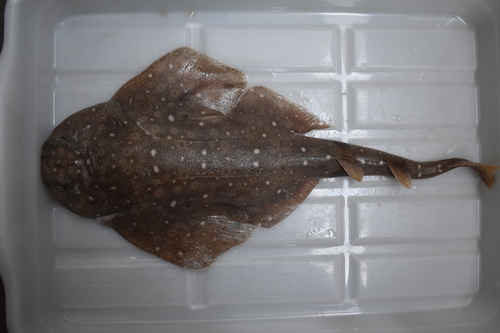
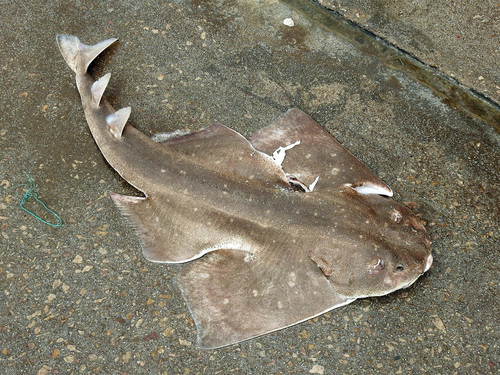
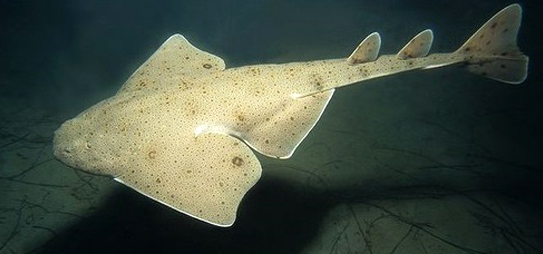
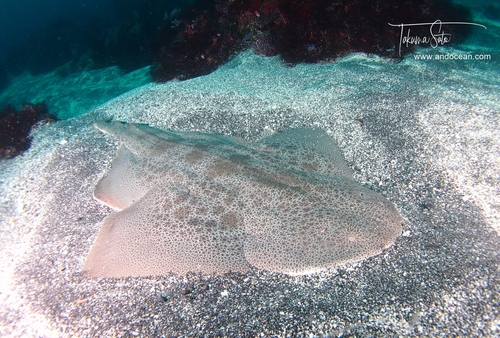
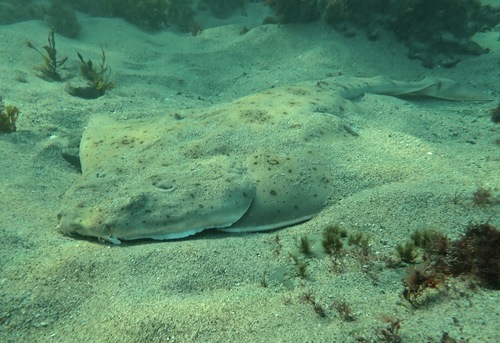
The smoothback angelshark is a strongly flattened, ray-like shark of the family Squatinidae (angelsharks) reaching about 1.6 metres. The broad, flat body with large, wing-like pectoral fins recalls a ray, but the gill slits lie on the sides, as in sharks. The grey-brown upper side bears white spots and several large, dark-edged eyespots. The species lies half-buried by day on sand and mud bottoms of the continental shelf in the eastern Atlantic and the Mediterranean and ambushes bottom fish, crustaceans and squid at night. It is viviparous. Through heavy fishing and bycatch it has largely disappeared and is assessed as Critically Endangered (CR).
Frequently asked questions
How do you recognise the Smoothback angelshark?
The Smoothback angelshark has a flattened, disc-shaped body, is mainly brown and shows a spots pattern. Strongly flattened, ray-like shark with broad pectoral fins; greyish-brown with white spots and a few large, dark-rimmed eyespots on the back.
Where does the Smoothback angelshark live?
The Smoothback angelshark lives in the sea (marine waters) and is mostly found around sand or mud bottom. Eastern Atlantic and the Mediterranean Sea, buried in sandy and silty bottoms of the continental shelf and the upper slope.
How big does the Smoothback angelshark get?
The Smoothback angelshark grows to a maximum of about 160 cm. On average the species is around 120 cm.
Is the Smoothback angelshark dangerous to humans?
The Smoothback angelshark can bite, but is otherwise not dangerous to humans. Not venomous, but a predatory shark with sharp teeth: keep your distance from a hooked or landed shark and handle only with proper equipment.
Is the Smoothback angelshark edible?
The Smoothback angelshark is rarely eaten.
More photos

Easily confused with
These species look like the Smoothback angelshark and live in the same waters.

Want the complete picture on the Smoothback angelshark?
Point your camera at the fish and Fin names the species in seconds. Free, and the Smoothback angelshark is one of 12,519 species in the app.
All data
Identification
Appearance
Habitat & distribution
Behaviour & biology
For anglers
Safety
Status & sources
Same genus Squatina
More from the family Squatinidae

Want the complete picture on the Smoothback angelshark?
Point your camera at the fish and Fin names the species in seconds. Free, and the Smoothback angelshark is one of 12,519 species in the app.